
 772-228-6882




Approval depends on the specific biologic product: the FDA has not approved exosomes and many birth-tissue products for orthopedic conditions such as knee osteoarthritis or tendonitis. If you’re considering stem cells for pain relief in Vero Beach, it’s reasonable to want a clear answer about what an injection contains, what evidence supports its use, and whether it fits your condition. This article explains how clinics describe stem-cell injections for arthritis and tendon pain, why they are not suitable for everyone, and how options such as bone marrow-derived cells, adipose-derived cells, and birth-tissue products differ, so you can better understand the discussion before making a care decision.
Key Takeaways
- Understand why FDA approval depends on the specific biologic product, and how stem-cell approaches differ from traditional pain management.
- Learn which factors, including the extent of joint damage and findings from an exam and imaging, shape candidacy.
- Compare the cell sources clinics describe and get a clearer picture of how recovery and improvement may unfold.
- See how insurance coverage can depend on your diagnosis, plan requirements, provider network, and authorization rules.
Are stem-cell injections approved for arthritis or tendon pain?
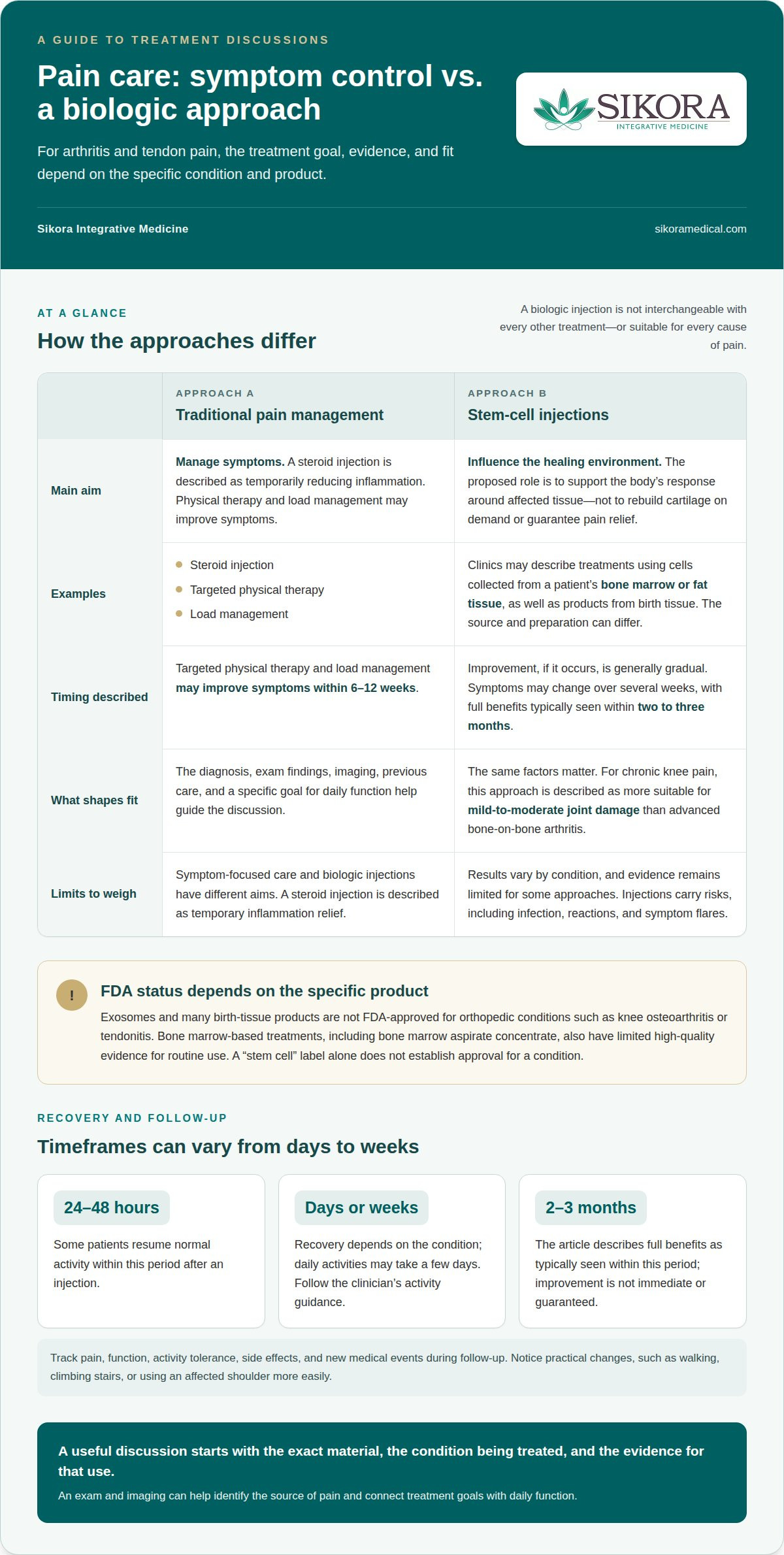
For arthritis or tendon pain, FDA status depends on the specific product, not the “stem cell” label. Exosomes and many birth-tissue products are not FDA-approved for orthopedic conditions such as knee osteoarthritis or tendonitis. That distinction matters because products marketed as stem-cell treatments can contain different materials. Bone marrow-based treatments, including bone marrow aspirate concentrate, also have limited high-quality evidence for routine use. A treatment’s marketing name alone does not establish that it is approved for your condition.
Stem-cell injections have been discussed or explored for osteoarthritis, degenerative disc disease, chronic back and neck pain, joint injuries, tendon or ligament damage, and peripheral neuropathy. Other concerns include connective tissue injuries and joint pain. These are areas of interest, not proof that injections work for every patient. Stem-cell therapy is often presented as less invasive than surgery, but it still involves an injection and carries risks, including infection, reactions, and symptom flares. It cannot address every cause of chronic pain.
To evaluate a clinic, focus on the exact material being injected, its source, the condition being treated, and the evidence supporting that use. Be cautious of claims that promise tissue repair or pain relief as a certainty, or that treat all biologic products as interchangeable.
Stem-cell treatments for pain may also be studied in clinical trials. To explore participation, search a clinical-trial registry by condition and treatment, then review the study’s eligibility rules and contact its research team. Enrollment depends on the protocol.
Traditional pain management and stem-cell therapy have different aims. A steroid injection is described as temporarily reducing inflammation, while targeted physical therapy and load management may improve symptoms within 6-12 weeks. Stem-cell injections are presented as an effort to influence the healing environment in affected tissue, but results vary by condition and evidence remains limited for some approaches. For chronic knee pain, for example, the degree of joint damage matters: stem-cell therapy is described as more suitable for mild-to-moderate damage than advanced bone-on-bone arthritis. Discussing the diagnosis, imaging, prior care, and a specific functional goal helps clarify whether this approach is relevant.
Is stem cell therapy right for everyone?
Stem-cell therapy is proposed to support the body’s response to damaged tissue by influencing signals around an affected area. Those signals may affect inflammation and the local healing environment. The intended effect is not simply to mask symptoms, but to support repair processes already taking place. That distinction matters when comparing a biologic injection with treatments focused mainly on temporary symptom control.
For arthritis, the joint’s condition is only one part of the assessment. A physical exam and imaging can help identify which structure contributes to pain and whether the symptoms match the findings. Pain that seems to come from a joint may also involve nearby tendons, ligaments, or nerves. Identifying the likely source helps avoid choosing an injection based on symptoms alone.
Cartilage has very little blood supply, which limits its natural repair capacity. Stem-cell treatment is proposed to influence the environment inside a joint and support existing cells, but it should not be understood as a way to rebuild cartilage on demand. The treatment goal should connect to a specific change in daily function, such as standing more comfortably or using an affected arm with less difficulty.
Medical history also matters. A clinician considers the diagnosis, symptoms, previous care, overall health, and injection risks before deciding whether this approach may fit. Stem-cell therapy cannot address every painful condition, and the same treatment may not suit people with similar symptoms if their underlying causes differ. Discussing the intended target, a realistic functional goal, and alternatives helps you weigh the decision.
If you’re considering this approach, an assessment can connect your symptoms with examination and imaging findings. Learn more about stem-cell care as you consider whether the proposed treatment goals fit your situation.
What Types of Stem Cells Are Used for Pain Management?
Stem cells for pain relief may come from a patient’s own adult cells, commonly collected from bone marrow or fat tissue. Adult stem cells are also found in blood. Mesenchymal stem cells, a type discussed in regenerative medicine, are associated with bone marrow, fat, and umbilical cord tissue. These sources differ, and a material’s origin and preparation shape what a treatment involves. A product marketed as a stem-cell treatment may not use the same source as a patient-derived option.
Clinicians discuss these cells because they may support the body’s response to injury and help tissue function. That proposed regenerative effect does not mean treatment replaces damaged tissue or guarantees pain relief. The source, treated area, and underlying condition affect the procedure and recovery. Your clinician can explain which cell-based option is under consideration and what it aims to address.
After an injection, recovery can involve a brief pause in activity or a longer adjustment. Some patients resume normal activity within 24-48 hours, while daily activities may take a few days. Recovery can take days or weeks depending on the condition, and a doctor may recommend limiting activity while an injury heals. Follow the guidance for your procedure rather than assuming an early return to movement means full recovery.
Improvement is generally gradual, not immediate. Symptoms may change over several weeks, with full benefits typically seen within two to three months. Track pain, function, activity tolerance, side effects, and new medical events during follow-up. For example, note whether walking, climbing stairs, or using an affected shoulder becomes easier. If you’re considering stem cells for pain relief, these changes can help show whether treatment is supporting a practical functional goal.
US Stem Cell Injection Costs and Insurance Coverage
Pricing varies by service and treatment plan. The cost depends on the proposed procedure, biologic material, and treatment area. A plan for one affected joint may differ from a plan for another condition or tissue. Sikora Integrative Medicine can explain the proposed care and its pricing as part of the treatment discussion.
Many regenerative services are self-pay. At Sikora Integrative Medicine, certain pain-management services may be in-network with Medicare, Cigna, and BlueCross BlueShield, and BCBS or Medicare may cover qualifying pain services. Coverage depends on the service and plan; coverage for another pain-management service does not establish coverage for a stem-cell procedure.
Before treatment, review your plan’s requirements for the specific procedure. Determine whether prior authorization is required and what documentation the plan needs. Authorization is not a guarantee of payment, so confirm how your plan handles the final claim and any patient responsibility. Keep written coverage details with your treatment records to help you understand the decision.
Financing is available through M Lend Financial. Whether financing applies to a particular treatment plan depends on its terms. A case-specific quote and a separate review of insurance benefits can help you understand the two options without treating either as guaranteed coverage. This distinction is useful when planning care, especially if your proposed treatment includes a specific biologic material or more than one treatment area.
For information about a proposed stem-cell treatment and its estimate, contact the clinic about your treatment plan. A clear discussion can help you understand the service being considered and what financial details apply.
Sikora Integrative Medicine: Stem Cells
At Sikora Integrative Medicine in Vero Beach, regenerative care starts with an individualized assessment of your pain concern, examination findings, and relevant imaging. The team explains the evidence and regulatory status of a proposed biologic treatment before you decide, so you can understand its intended use and limitations.
If you’re weighing an injection, musculoskeletal ultrasound can support evaluation and guide placement into a targeted joint or soft tissue. This helps connect the treatment discussion to the affected area and your goals, rather than relying on symptoms alone. Results and suitability vary, so the decision should reflect your individual clinical picture.
Choose a Next Step That Fits Your Goals
As you consider stem cells for pain relief, think beyond the treatment name and identify the change you hope to make in daily life. Is your priority walking more comfortably, returning to a familiar activity, or managing pain during routine tasks? A clear functional goal gives you and your care team a practical way to discuss whether a proposed approach matches your needs.
Sikora Integrative Medicine offers stem-cell care and PRP, with Hormone Therapy also available as a separate service. The clinical team can explain treatment options and their evidence so you can weigh the information in light of your health priorities. A thoughtful conversation can help you understand what the proposed care involves and decide what questions matter most to you.
For a discussion about your pain concerns and available care, contact Sikora Integrative Medicine. An informed next step can begin with a clear conversation about your goals.
Frequently Asked Questions
Do these injections work for knee osteoarthritis?
Stem-cell injections may help some people with knee osteoarthritis, but they aren’t a proven fix for every knee or stage of arthritis. Results depend on the diagnosis, joint damage, and biologic material used. For example, advanced bone-on-bone changes may call for a different plan than milder disease. Ask what functional change the treatment aims to support, such as walking more comfortably.
How Does It Help with Pain?
The proposed pain benefit comes from biological signals that may affect inflammation and the local healing environment. These signals could influence the body’s response to injured tissue, but they do not work like a numbing medicine that immediately blocks pain. If your pain may involve a nerve, joint, or tendon, identifying its source helps clarify whether a cell-based approach is appropriate to discuss.
Is It Safe?
No injection is risk-free. Stem-cell procedures can carry risks such as infection, a reaction to the injected material, or a temporary symptom flare. Safety also depends on the product source, preparation, injection site, and your health history. Cell-based and exosome products are not FDA-approved for orthopedic conditions. This information is educational, not medical advice; consult a qualified healthcare provider about your situation.
What Should I Expect?
Expect an evaluation before a treatment decision. The clinician reviews your symptoms, medical history, examination findings, and relevant imaging, then discusses the proposed material and target area. Afterward, follow the care instructions and track changes that matter to you, such as sleep, walking, or using stairs. Note new symptoms or side effects to discuss at follow-up.
What are stem cell treatments for pain, and how are they supposed to work?
These treatments involve placing cell-containing material near an affected joint or soft tissue, with the aim of influencing the body’s repair response. Products differ: some use a patient’s own bone marrow or fat-derived material, while others are marketed as birth-tissue products or exosomes. The label alone does not tell you the source, contents, or evidence for a particular condition.
What evidence supports stem cell therapy for chronic pain conditions such as osteoarthritis, back pain, and nerve pain?
Evidence varies by condition and product. Stem-cell approaches have been studied or described for osteoarthritis, chronic back pain, and peripheral neuropathy, but that doesn’t establish consistent benefit for every diagnosis. High-quality evidence remains limited for routine use of bone-marrow-based treatments such as bone marrow aspirate concentrate. Evidence for one cell source or condition should not be assumed to apply to another.

Article by
Alita G. Sikora, MD
Dr. Alita Gonsalves Sikora, MD, specializes in Physical Medicine and Rehabiltation (also known as Physiatry) and has practiced in Vero Beach since 2007. She started her own practice, Sikora Integrative Medicine, in 2017 in Vero Beach and also offers telemedicine to Florida residents.
Physical Medicine and Rehabilitation is a medical specialty focused on restoring function and treating pain in the bones, muscles, joints, and nervous system, most often without surgery. She trained at the University of Connecticut School of Medicine and did her residency training at NY Presbyterian (Columbia and Cornell) in NYC.
She offers regenerative and integrative approaches, treating chronic pain and musculoskeletal conditions with stem cells, PRP, exosomes, peptides, shockwave therapy, laser therapy, acupuncture, and prolotherapy, as well as traditional medications and injections. She also certifies qualified patients for medical marijuana in the state of Florida.
She also offers bioidenical hormone optimization including pellets, medical weight loss, peptides, IV vitamin therapy, and functional lab testing.

 1255 37th St. Suite B,