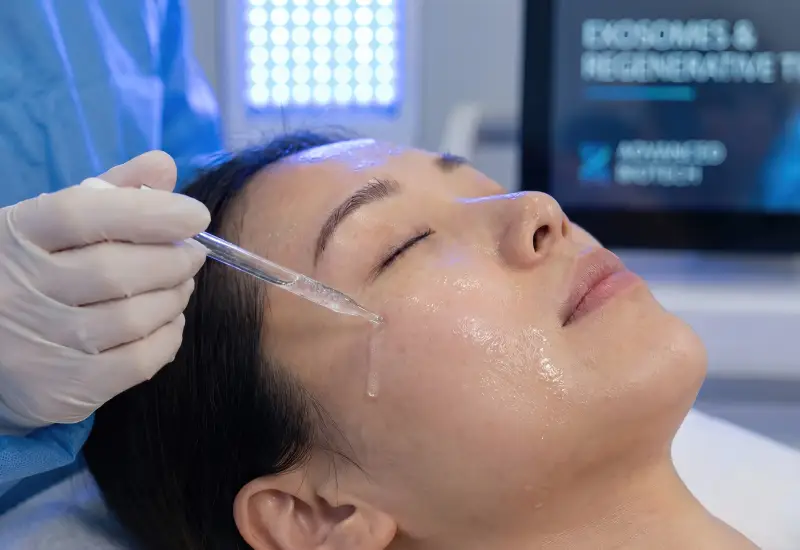
Exosome Therapy & Regenerative Medicine in Florida

Understanding Exosomes and Cellular Signaling

Exosomes are microscopic extracellular vesicles released by cells. They can carry proteins, lipids, and genetic material involved in communication between cells. Researchers are studying these processes to understand their potential medical applications.

If you are researching exosome stem cell therapy, it is important to distinguish the terminology from established treatment. Exosomes are not stem cells, and their biological functions do not establish that an injected product will repair tissue or improve symptoms. There are currently no FDA-approved exosome products.

At Sikora Integrative Medicine in Vero Beach, you can discuss your concerns, ask questions about regenerative medicine, and explore appropriate evaluation and care options.

Understanding Exosomes and Cellular Signaling
What’s Inside Exosome Products?

What’s Inside Exosome Products?

Naturally occurring exosomes can contain:

  • RNA molecules: Including microRNAs involved in regulating cellular processes.
  • Proteins: Components that can participate in signaling and other biological functions.
  • Lipids: Molecules that form the vesicle membrane.
  • Membrane proteins: Components involved in interactions with other cells.
  • Other cell-derived material: Contents that vary according to the source cell and biological conditions.

The contents of naturally occurring exosomes do not establish the composition, quality, or clinical effects of a commercially marketed product. Product-specific evidence and regulatory status matter.

What Is Known About the Potential Benefits of Exosome Therapy?

Research into exosomes is exploring how cell-derived signals might be used in medicine. Laboratory and animal findings provide reasons for further investigation, but they do not establish patient benefits.

Questions under investigation include:

  • How exosomes interact with recipient cells.
  • Which components influence biological responses.
  • Whether particular preparations have useful clinical applications.
  • How products can be manufactured consistently.
  • Which doses and delivery methods might be appropriate.
  • What short- and long-term risks may occur.

Terms such as stem cell exosome therapy may describe products derived from cells, but they do not indicate FDA approval or proven effectiveness. Combining exosomes with PRP or another biologic does not establish that the combination is safe or beneficial.

What Is Known About the Potential Benefits of Exosome Therapy?

Concerns to Discuss During a Medical Evaluation

The following concerns deserve diagnosis and a discussion of appropriate care. They should not be presented as established indications for exosome treatment.

Joint Pain or Degeneration

Evaluation can help identify the cause of pain and compare options such as rehabilitation, medication, injections, or specialist care.

Tendon or Ligament Injuries

The location and severity of an injury influence treatment. Imaging or further assessment may be needed.

Chronic Inflammation

Persistent symptoms require investigation. “Inflammation” alone does not establish a reason for an exosome injection.

Overuse-Related Pain

Activity patterns, rehabilitation needs, and other contributing factors may help guide care.

Soft-Tissue Injuries

Muscle, tendon, and other soft-tissue concerns require an individual assessment and an appropriate recovery plan.

Degenerative or Age-Related Musculoskeletal Changes

Treatment should address your diagnosis, function, and goals. Exosome products are not FDA-approved for orthopedic conditions.

When to Expect Results

When to Expect Results

There is no established improvement timeline for commercially marketed exosome injections for joint pain, soft-tissue injuries, or age-related musculoskeletal concerns.

Claims of predictable tissue repair, improvement within a set number of weeks, or lasting benefits are not established for these uses. Findings from one product or research setting cannot automatically be applied to another.

Discuss the evidence for your specific concern and the alternatives available before making treatment decisions.

What to Understand Before Considering Exosome Treatment

Exosome products intended to treat diseases or medical conditions require FDA approval or an appropriate investigational pathway. A routine consultation does not establish eligibility for an investigational treatment.

1

Evaluation

Begin with a diagnosis, a review of your medical history, and a discussion of established alternatives.

2

Product and Regulatory Review

Ask what the proposed product contains and whether its use is part of an FDA-authorized investigation. FDA advises patients to request the Investigational New Drug application information and relevant FDA correspondence from the investigator.

3

Risks and Consent

Understand the experimental nature of the procedure, known and unknown risks, and study-specific requirements before consenting. FDA has received reports of serious adverse events involving unapproved exosome products.

4

Follow-Up

Any investigational procedure should have a defined monitoring plan and instructions for reporting adverse effects. Expected follow-up must come from the authorized study protocol.

Who Can Discuss Exosome Therapy With Our Team?

Anyone with questions about regenerative medicine can request a consultation. Interest in a nonsurgical option, persistent pain, or limited improvement with previous care does not by itself establish suitability for an investigational product.

Your evaluation can help clarify the diagnosis, review established treatments, and identify questions that require specialist or research-team input. Participation in an exosome study depends on the eligibility criteria of an authorized investigation.

Who Can Discuss Exosome Therapy With Our Team?
Other Regenerative Biologic Options

Other Regenerative Biologic Options

Our regenerative medicine information also covers other products and approaches. These differ in composition, intended use, and regulatory requirements:

  • Wharton’s Jelly Products: Derived from umbilical cord tissue. Their source does not establish effectiveness for joint pain or orthopedic conditions.
  • Vittipure: Ask about the specific preparation, intended use, supporting evidence, and applicable regulatory status.
  • Adipose-Derived Approaches: Use material obtained from fat tissue. Processing and intended use affect regulatory requirements; using a patient’s own tissue does not automatically make a procedure approved or appropriate.

These products should not be presented as interchangeable or as proven additions to exosome treatment.

Why Choose Sikora Integrative Medicine

Our Vero Beach practice offers individualized evaluation and discussion of care options.

Our approach emphasizes:

  • Clear information: Distinguishing established treatments from investigational applications.
  • Individual assessment: Considering your symptoms, medical history, and relevant findings.
  • Treatment alternatives: Discussing appropriate options for your diagnosis.
  • Follow-up planning: Explaining next steps and when further evaluation is needed.
  • Patient questions: Helping you understand the purpose, evidence, and limitations of proposed care.
Why Choose Sikora Integrative Medicine

Frequently Asked Questions

How are exosomes different from stem cells?

Exosomes are extracellular vesicles, not living cells. Stem cells are cells with different biological properties. A product described as “stem cell-derived” does not necessarily contain stem cells, and the description does not establish clinical effectiveness.

Can exosomes be combined with PRP or Wharton’s Jelly?

A proposed combination requires its own evidence and regulatory review. Adding another biologic does not establish safety or improve outcomes. Discuss established alternatives and any investigational requirements before proceeding.

How long is the downtime after exosome therapy?

There is no universal recovery period. Risks and follow-up depend on the product, administration method, and research protocol. Claims that everyone can return to normal activity within 24 hours are not appropriate.

Is exosome therapy painful?

An injection can cause discomfort, but the more important considerations are the product’s evidence, regulatory status, and potential risks. Local anesthesia does not make an unapproved product safe or effective.

Does insurance cover exosome treatments?

Do not assume coverage. For an investigational treatment, ask the study team and insurer which costs are covered and which are your responsibility. Payment or financing availability does not establish regulatory authorization.

Schedule Your Consultation Today

If you are researching exosomes treatment in Florida, start with clear information about the product, evidence, and FDA requirements.

Patients searching for exosome therapy in Melbourne, FL, or exosome therapy in Destin can contact our Vero Beach office with questions about a medical consultation. Our office is in Vero Beach; this page does not establish exosome treatment availability or clinical-trial enrollment in any location.

Address: 1255 37th St., Suite B, Vero Beach, FL 32960
Phone: (772) 228-6882

Disclaimer: This information is educational and does not replace individualized medical advice. There are currently no FDA-approved exosome products. Investigational treatment requires appropriate regulatory oversight; a consultation does not guarantee access or eligibility. Services are available exclusively to Florida residents.