
 772-228-6882




Recovery doesn’t always end when surgery is over. Regeneration therapy, including platelet-rich plasma (PRP) and cell-based approaches, is being explored for certain joint conditions and to support healing after surgery. The right plan depends on the condition and recovery goals.
If you’re weighing options for pain or limited movement, it’s reasonable to ask what a personalized approach involves and how it may fit with your other care. Treatments differ in the biological material used, how it’s prepared, and the tissue being treated.
This article explains which conditions are being studied for cell-based therapies, how clinicians tailor treatment to the person and condition, and what regenerative medicine may contribute after surgery. You’ll also learn why rehabilitation can be part of recovery and how to weigh potential benefits against the limits of current evidence.
Key Takeaways
- Learn which joint concerns, including some cases of knee osteoarthritis, may be considered for cell-based or PRP approaches.
- Understand how the condition, treatment area, and biological material shape a personalized plan.
- See why regenerative care after surgery is still being studied and how rehabilitation can support functional recovery.
- Explore how PRP, stem cell, and exosome options may fit into a discussion about your care.
Which conditions may benefit from cell-based therapies?
Cell-based approaches are studied for joint pain, tissue injury, and recovery after surgery. Knee osteoarthritis is one example, but treatment choice depends on the condition and the goal.
Variation Across Cell-Based Treatments
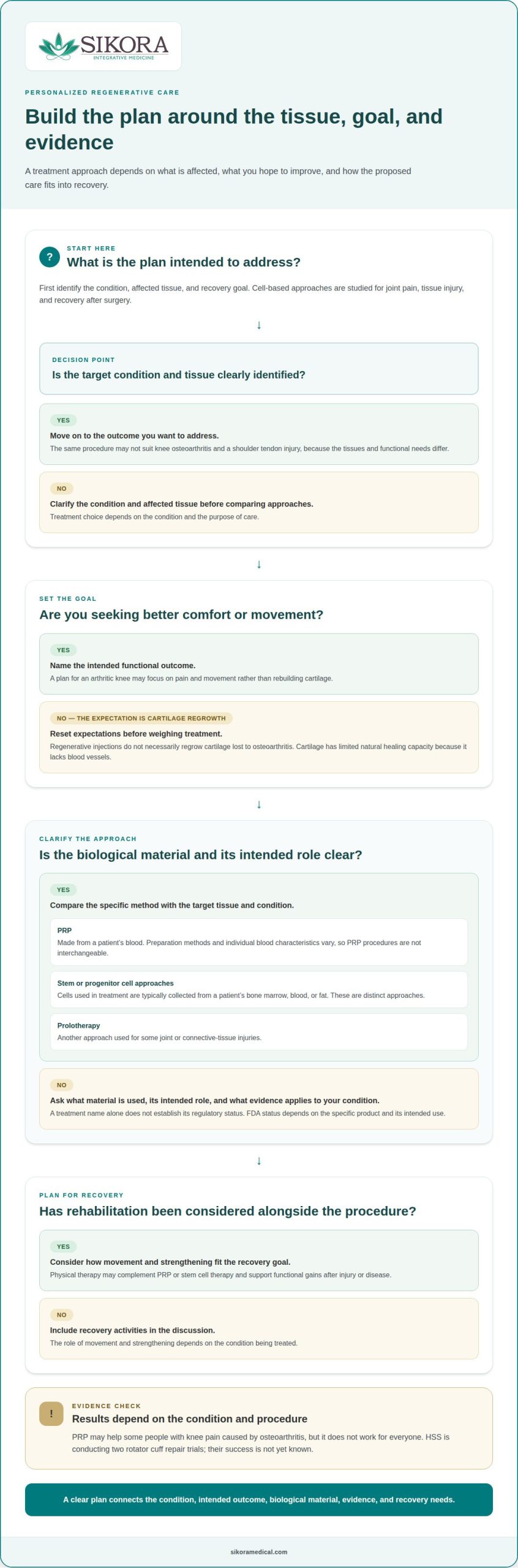
Cell-based treatments differ in their biological material, preparation, and target tissue. These differences matter because a procedure’s contents affect how it is delivered and what evidence applies. PRP, for example, comes from a patient’s blood, but preparation methods and individual blood characteristics vary. Plasma components can also differ between people and over time, so PRP procedures are not interchangeable.
Available Regenerative Therapy Types
In the United States, regenerative approaches include PRP injections, cell therapy involving stem or progenitor cells, and prolotherapy for some joint or connective-tissue injuries. Stem cells used in treatment are typically collected from a patient’s bone marrow, blood, or fat. These are distinct approaches, not one treatment with a single method. The option considered depends on the tissue involved and the purpose, such as addressing knee pain or an overuse injury.
For stem cell treatment, cells are collected and then delivered to a targeted area or used in another clinical approach. Cord blood applications for Type 1 diabetes, heart injury, and central nervous system conditions remain areas of study, not established indications described here as routine care.
Evidence and Treatment Effectiveness
Evidence varies by condition and procedure. PRP may help some people with knee pain caused by osteoarthritis, but it does not work for everyone. Regenerative injections may support repair processes, but they do not necessarily regrow cartilage lost to osteoarthritis. Researchers are also studying cell-based approaches after surgery. HSS is conducting two rotator cuff repair trials, and their success is not yet known.
Rehabilitation can be part of recovery after stem cell therapy or a PRP injection. Physical therapy may combine movement and strengthening with tissue-focused procedures to support functional gains after injury or disease. For example, a rotator cuff patient’s plan may include rehabilitation alongside a procedure. Evidence for the treatment, the target condition, and recovery goals all help set realistic expectations.
Is Regenerative Therapy Right For Me?
Regenerative medicine aims to restore function by supporting the body’s repair processes, but tissue recovery has biological limits. The condition, affected tissue, and treatment goal shape whether this approach fits.
Tissue Restoration and Regeneration Therapy
Tissue regeneration therapy refers to approaches intended to replace or regenerate cells and tissues, or stimulate the body’s repair mechanisms. The goal is to restore function, not necessarily to create new or fully restored tissue. For example, treatment for an arthritic knee may focus on pain and movement rather than rebuilding cartilage. This distinction helps you assess what a proposed treatment is designed to address.
Cellular and Tissue Healing Mechanisms
Biological materials may support healing by delivering cells or signaling substances to damaged tissue. In clinical practice, some materials release growth factors and cytokines that influence local repair activity. FDA status depends on the specific product and its intended use. A treatment name alone does not establish its regulatory status. Ask what material is used, its intended role, and what evidence applies to your condition.
Limits of Tissue Regeneration
Regenerative medicine does not necessarily regrow tissue lost to osteoarthritis. Cartilage has limited natural healing capacity because it lacks blood vessels, so reducing pain or inflammation is different from restoring lost cartilage. Scar tissue deposition, reduced muscle mass, and loss of nerve supply can also restrict function. Risks and side effects depend on the procedure and treatment site; a physician’s experience, track record, and discussion of risks, benefits, and recovery time help you assess care.
Insurance Coverage and Treatment Costs
Regenerative treatments are often not covered by insurance, so patients may pay out of pocket. There is no single national cost: the procedure, biological material, preparation method, and treatment area all affect the amount. A specific estimate depends on the case and proposed treatment. Compare the treatment’s purpose and evidence with its financial impact, and clarify what the proposed care includes.
Personalized treatment approaches
A personalized plan matches the treatment approach to the patient’s condition, affected tissue, and recovery goal. The same procedure may not suit knee osteoarthritis and a shoulder tendon injury, because they involve different tissues and functional needs.
Start by identifying the problem being addressed. Is the goal to ease pain, support tissue healing, or improve movement? These are distinct aims. Regenerative medicine does not necessarily restore tissue lost to arthritis, so a plan should name its intended outcome rather than imply every damaged structure will regrow.
The biological material is another consideration. Stem cells used for treatment are typically collected from a patient’s bone marrow, blood, or fat. Each source represents a different approach, so the material should be considered in relation to the condition and procedure. PRP is another option, made from a patient’s blood. Its preparation can vary, which affects how the treatment is delivered.
Then consider how treatment fits into recovery. For a joint concern, the plan may focus on the target area and the activities the patient hopes to resume. Rehabilitation can complement a regenerative procedure: physical therapy may help patients build strength and function while recovering from injury or disease. The role of movement and strengthening depends on the condition being treated.
Researchers at HSS have studied different cell sources in rotator cuff repair trials, illustrating how treatment design can vary even for a defined surgical concern. A personalized discussion can distinguish an established care goal from an approach still under investigation. Ask what material is proposed, what tissue it targets, and what outcome the plan seeks. Those answers help you compare the procedure with your recovery priorities and understand how rehabilitation fits.
Regenerative medicine after surgery
After surgery, regenerative medicine may be studied as an additional way to support tissue repair, but it does not replace the operation or recovery plan. Its role depends on the injury, procedure, targeted tissue, and evidence for that use. The key distinction is whether a treatment is established care or remains under investigation.
Rotator cuff repair illustrates this research. HSS researchers are studying regenerative treatments in two clinical trials involving the surgery. The trials use either cells from a patient’s fat tissue or cells isolated from donated umbilical cord blood. These approaches are being evaluated alongside a specific surgical repair, not as a general treatment for every shoulder problem. The trials were ongoing, and their success was not yet known.
That uncertainty makes the treatment’s timing and purpose worth discussing as part of the surgical care plan. A procedure intended to support healing after surgery should have a defined target, such as tissue involved in the repair. The proposed cell source also matters: patient-derived cells and donated cord blood cells are different materials. Ask how the approach relates to your operation and which outcome it aims to support.
Recovery involves function as well as tissue. Regenerative rehabilitation combines regenerative medicine with physical therapy techniques to support the body’s healing potential. After a rotator cuff operation, rehabilitation may address movement and strength as the shoulder heals. Physical therapists can help patients undergoing procedures such as stem cell therapy or PRP injections, coordinating exercises with the clinician’s treatment plan. Appropriate activities depend on the surgery and recovery stage.
Use three points to frame a post-surgical discussion: the specific tissue being treated, the evidence for the procedure, and how rehabilitation fits. Research on rotator cuff repair shows why these details matter: a promising biological approach still needs evaluation for its intended use. Keep your surgical team informed about any proposed regenerative procedure so treatment decisions and rehabilitation remain coordinated with your recovery goals.
Sikora Integrative Medicine: Stem Cells
Sikora Integrative Medicine offers stem cell options for people exploring regenerative care for musculoskeletal concerns in Vero Beach. The team explains the available evidence and regulatory status before you decide, helping you understand how an approach relates to your goals.
Care may also include PRP or exosomes, depending on the treatment being considered. PRP is prepared from your own blood, while stem cell and exosome approaches involve different biological materials. Understanding these distinctions can help you discuss what a proposed treatment is intended to address and how it relates to your recovery plan.
If you’re considering these options, contact Sikora Integrative Medicine to discuss your questions and next steps.
Choose a Next Step That Fits Your Goals
Before moving forward, define what progress would look like in daily life. Is your priority easier movement, returning to a routine, or understanding options after surgery? Naming that goal gives a clinical conversation a practical starting point and keeps the focus on function, not just the name of a procedure.
A decision about regeneration therapy also calls for clarity about its purpose, the evidence for your condition, and how other care may fit. Bring your questions and relevant treatment history, then ask how the proposed approach connects with your recovery priorities. A thoughtful plan should make its purpose clear without implying that one procedure suits everyone.
Sikora Integrative Medicine’s team can discuss your questions and explain how its care relates to your needs. If you’re ready to explore a next step, contact Sikora Integrative Medicine. Keep your goals at the center of the conversation, and move forward feeling informed and encouraged.
Frequently Asked Questions
What should I expect during cellular therapy?
Expect a clinical review before any procedure and clear instructions afterward. Bring a list of medications, prior procedures, and questions about recovery. The clinician can explain the planned steps, possible discomfort, and follow-up for the specific procedure. Some injections may cause temporary soreness, and downtime varies. This information is for educational purposes only, not medical advice. Consult a qualified healthcare provider about your care.
Why is cellular repair important?
Cellular repair matters because tissues need to maintain their structure for everyday tasks. Consider gripping a cup: that simple action depends on coordinated tissue function in your hand and arm. If a health concern interferes with a specific activity, describing that limitation can make a medical discussion more practical. You and your clinician can use it to clarify what meaningful progress would look like.
What is regenerative therapy?
In clinical conversations, regenerative therapy is an umbrella term for approaches intended to support the body’s response to tissue concerns. The label alone doesn’t tell you which procedure is proposed or what it aims to address. Ask for the exact treatment name, the material involved, and the intended outcome. Those details make it easier to understand the plan and discuss whether it fits your priorities.
What conditions is regenerative therapy used to treat?
These approaches are considered for selected musculoskeletal concerns, but a diagnosis and treatment goal matter more than a broad symptom label. Pain in one area, for example, can have different underlying causes. A clinician can review your history, examine the affected area, and consider prior care before discussing an option. Ask how the proposed treatment relates to your diagnosis and daily limitations.
How do stem cell therapy and PRP therapy work?
Both approaches use biological materials in a treatment plan, but their preparation and procedures differ. Before deciding, ask what the procedure involves, what follow-up is planned, and what evidence applies to your condition. You can also ask how the proposed treatment fits alongside other care. Cell-based and exosome products are not FDA-approved for orthopedic conditions. Discuss your situation with a qualified healthcare provider.
How can patients find a reputable regenerative medicine clinic?
Ask whether the physician performing the treatment has experience with that procedure. Find out what material is proposed, what tissue it targets, and what evidence supports its use for your condition.
Article by
Alita G. Sikora, MD
Dr. Alita Gonsalves Sikora, MD, specializes in Physical Medicine and Rehabiltation (also known as Physiatry) and has practiced in Vero Beach since 2007. She started her own practice, Sikora Integrative Medicine, in 2017 in Vero Beach and also offers telemedicine to Florida residents.
Physical Medicine and Rehabilitation is a medical specialty focused on restoring function and treating pain in the bones, muscles, joints, and nervous system, most often without surgery. She trained at the University of Connecticut School of Medicine and did her residency training at NY Presbyterian (Columbia and Cornell) in NYC.
She offers regenerative and integrative approaches, treating chronic pain and musculoskeletal conditions with stem cells, PRP, exosomes, peptides, shockwave therapy, laser therapy, acupuncture, and prolotherapy, as well as traditional medications and injections. She also certifies qualified patients for medical marijuana in the state of Florida.
She also offers bioidenical hormone optimization including pellets, medical weight loss, peptides, IV vitamin therapy, and functional lab testing.

 1255 37th St. Suite B,