
 772-228-6882




Pseudogout, also known as calcium pyrophosphate deposition disease (CPPD), occurs when crystals in a joint trigger inflammation and pain. Because its symptoms can resemble other joint conditions, identifying the cause is important.
The knee is commonly affected, though CPPD can also cause symptoms in other joints.
Learn how clinicians assess CPPD and which approaches may help manage flares and ongoing inflammation.
Key Takeaways
- Ask how joint-fluid crystal analysis can distinguish CPPD from gout and help assess other causes of inflammation.
- Learn what DECT imaging may add to the diagnostic picture alongside joint-fluid testing and conventional imaging.
- Understand why treatment focuses on easing inflammation and reducing flare recurrence rather than dissolving existing crystals.
- Explore how age, genetics, joint changes, and certain health factors may contribute to crystal deposits and symptoms.
Diagnosis by joint aspiration and crystal analysis
CPPD, or calcium pyrophosphate deposition disease, can cause sudden joint pain that resembles gout or an infection. Analysis of joint fluid can help identify the cause and guide medical care.
Joint Aspiration for Diagnosis and Relief
Joint aspiration uses a needle to remove fluid from a swollen joint for testing. Removing fluid may also ease pressure, so the procedure can help with diagnosis and provide relief during the same visit.
A clinician may examine the fluid for calcium pyrophosphate crystals and signs of infection. This distinction matters because an acute CPPD attack in one joint can produce white blood cell counts as high as those seen in septic arthritis. Symptoms alone cannot reliably distinguish these conditions, so sudden, intense swelling needs medical assessment.
Crystal Analysis and Imaging
Under polarized light microscopy, calcium pyrophosphate crystals typically appear rhomboid-shaped and weakly positively birefringent. Their appearance helps distinguish CPPD from gout, which involves different crystals. Joint-fluid testing can also look for infection and other causes of inflammation, offering clinicians more information than symptoms or blood tests alone.
X-rays may show chondrocalcinosis, or calcium deposits in cartilage, but this finding alone does not prove the deposits are causing current symptoms. Imaging and examination can also help assess osteoarthritis. CPPD may occur alongside osteoarthritis in the MCP joints, which connect the fingers to the hand, making that pattern relevant to the overall diagnosis.
Symptoms often include a warm, swollen, very painful joint that is difficult to move or bear weight on. The knee is most often affected, but symptoms can also occur in the wrists, ankles, hips, fingers, and toes. Because a flare can resemble gout, crystal analysis of joint fluid is often the clearest way to identify the crystals involved.
The long-term outlook varies. Crystal deposits may remain without symptoms, while recurrent inflammation can contribute to joint damage and osteoarthritis. No current treatment dissolves crystals that have already formed, so diagnosis helps clinicians address flares and ongoing joint problems.
CPP crystal detection with DECT imaging
DECT may come up in discussions of joint imaging, but a scan needs to be interpreted as part of the broader clinical assessment. The key question is not simply whether a report mentions a deposit, but whether the findings fit your symptoms and the affected joint.
Calcium Pyrophosphate Crystal Deposits
A report may describe chondrocalcinosis, meaning calcification in cartilage. This identifies an imaging finding, but does not by itself show that a deposit is causing current pain or inflammation. If a report mentions calcification, note the joint described and whether it matches where you feel symptoms.
Bring the imaging report and any earlier joint images to your medical visit. Comparing the location of a finding with your symptom history can clarify what the scan contributes. A finding in one joint may not explain pain elsewhere, and crystal deposits can occur without symptoms.
Diagnosing Acute CPP Crystal Arthritis
During an acute episode, imaging is only one part of assessing the cause. Joint-fluid analysis can identify calcium pyrophosphate crystals and may also help assess infection or other sources of inflammation. This matters because different causes of a hot, painful joint require different treatment.
DECT should not be treated as a substitute for the full diagnostic picture. Tell your clinician when symptoms began, which joint is affected, and whether you have had similar episodes. They can consider these details alongside examination findings, imaging, and fluid results, rather than relying on a scan description alone.
Before leaving an appointment, ask what the imaging finding means for the joint that hurts and whether further assessment would change your care plan. Keep the report with your medical records, especially if symptoms return or affect another joint. Clear records can help track changes over time and inform discussions about your symptoms and treatment.
Chronic inflammatory CPPD treatment
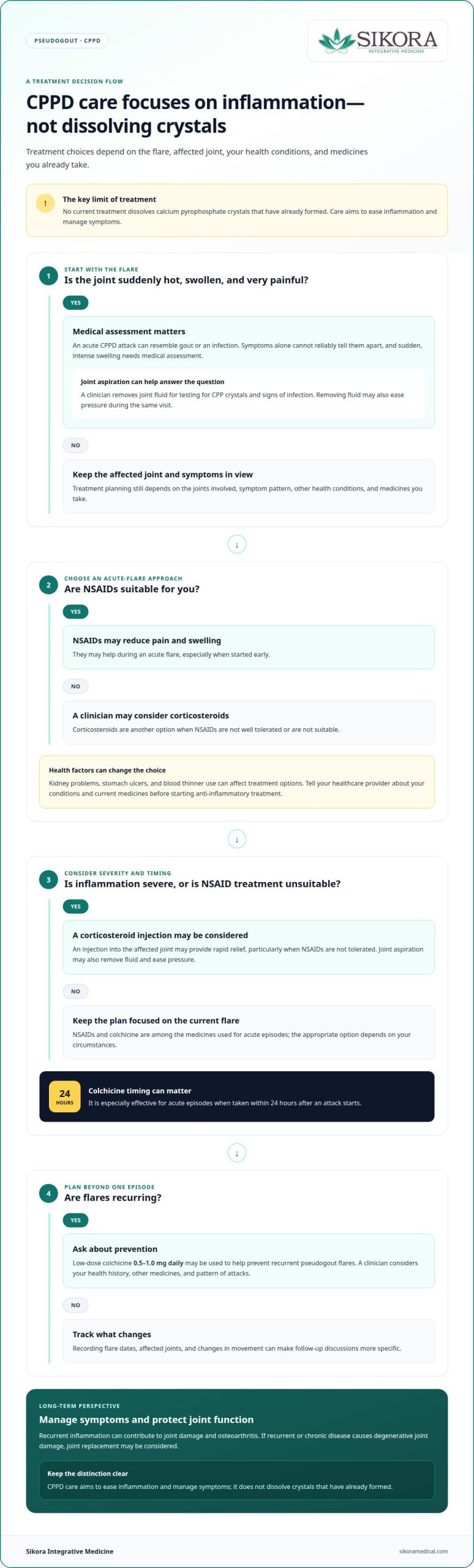
CPPD treatment focuses on controlling inflammation during an attack and reducing the impact of recurring symptoms. The plan depends on flare severity, affected joints, other health conditions, and medicines you already take.
Medications and Treatment Options
Medicines can ease pain and inflammation, but they don’t dissolve calcium pyrophosphate crystals. For preventing recurrent pseudogout flares, low-dose colchicine 0.5-1.0 mg daily may be used, according to the National Library of Medicine.
NSAIDs may reduce pain and swelling during an acute flare, especially when started early. Corticosteroids are another option when NSAIDs are not well tolerated or suitable. Kidney problems, stomach ulcers, and blood thinner use can affect treatment choices. Tell your healthcare provider about your health conditions and current medicines before starting anti-inflammatory treatment.
Managing Acute Flares
An acute CPPD flare can cause sudden pain and inflammation that restricts movement. NSAIDs and colchicine are among the medicines used to treat acute episodes. Colchicine is especially effective when taken within 24 hours after an attack starts, so timing can matter when symptoms begin.
For severe inflammation, a corticosteroid injection into the affected joint may provide rapid relief, particularly when NSAIDs are not tolerated. Joint aspiration can remove fluid and ease pressure. Testing the fluid also helps assess infection, which can resemble crystal-related inflammation but requires different care.
Preventing Flares and Removing Deposits
If episodes recur, preventive treatment may help reduce their frequency. Colchicine is one option, and a clinician will consider your health history, other medicines, and pattern of attacks. Recording flare dates, affected joints, and changes in movement can make follow-up conversations more specific.
No current treatment dissolves CPP crystals once they have formed. Care instead aims to ease inflammation and manage symptoms. If recurrent or chronic disease causes degenerative joint damage, joint replacement may be considered. This differs from gout, where uric-acid-lowering medicines can target the process that forms urate crystals.
Definition and causes of pseudogout
Pseudogout is the common name for calcium pyrophosphate deposition disease, or CPPD. It occurs when calcium pyrophosphate dihydrate crystals collect in joint cartilage and trigger inflammation. Gout and pseudogout can cause similar joint symptoms, though they are different conditions. CPPD is the second most common crystal-related joint disease after gout.
Deposits can exist without causing an attack, and risk rises with age, family history, joint trauma, or surgery. Related health factors include hemochromatosis, which stores excess iron, low magnesium, an underactive thyroid, and an overactive parathyroid. The National Library of Medicine reports an association between chondrocalcinosis and diuretic use (aOR=2.07); this association does not establish that diuretics cause deposits.
Symptoms commonly begin with sudden swelling, warmth, and intense pain in one joint, often the knee. Illness, dehydration, surgery, injury, or metabolic changes may precede an attack. Unlike gout, CPPD is not usually triggered by particular foods or drinks, so dietary changes alone do not address crystal buildup.
Repeated inflammation can damage cartilage and contribute to chronic joint pain or degenerative arthritis. CPPD may also occur alongside osteoarthritis, making the source of ongoing stiffness less obvious. NSAIDs and colchicine address inflammation, but they do not dissolve existing deposits. Most people with crystal deposits never develop symptoms, so an imaging finding does not automatically mean active disease.
Seek medical care for sudden, intense joint pain and swelling, especially if you also have a low-grade fever. A hot, painful joint can indicate infection as well as crystal arthritis, and the conditions can look alike. Prompt assessment helps identify the cause and guide treatment. A flare may limit movement for days or weeks, so do not dismiss new or severe symptoms as routine osteoarthritis.
A family history may reflect a genetic contribution and be associated with younger onset. X-rays show CPPD in ~50% of people in their 90s.
Sikora Integrative Medicine: Stem Cells
Sikora Integrative Medicine offers stem cell therapy for patients exploring regenerative medicine options for joint concerns. This service does not dissolve CPP crystals and should not replace medical care for an active CPPD flare or recurring inflammation.
If joint symptoms continue after diagnosis, you can discuss whether stem cell therapy or PRP fits your broader care goals. The team explains the evidence and regulatory status before you decide, helping you understand what an option may and may not address. Your diagnosis, symptoms, and existing treatment plan remain central to that conversation.
For information about care options, contact Sikora Integrative Medicine.
Choose a Next Step That Fits Your Goals
Living with pseudogout can mean balancing symptom management with the activities you want to keep doing. In your next medical conversation, describe how joint problems affect daily life, what you hope to maintain, and what questions you still have about your care. These priorities can help keep decisions focused on your health needs, rather than on a treatment name alone.
Sikora Integrative Medicine offers stem cell therapy and PRP as regenerative medicine options, as well as hormone therapy for hormone-related care. These services address different health concerns; they do not remove CPP crystals. The team can explain the evidence and regulatory status to help you make an informed decision about whether an option fits your goals.
For a conversation about care options, contact Sikora Integrative Medicine. A thoughtful next step can help you move forward with greater clarity.
Frequently Asked Questions
What is pseudogout?
Pseudogout is a crystal-related joint condition that can cause sudden inflammation. Crystal deposits can appear without causing symptoms, so an imaging finding alone does not necessarily explain your discomfort. If you have had more than one episode, note which joint was affected and how quickly symptoms began. That history can help your healthcare provider assess whether there is a recurring pattern.
How do healthcare providers diagnose pseudogout?
Healthcare providers diagnose CPPD by combining your symptom history and joint examination with tests that help identify the cause. Before an appointment, write down when the pain started, whether you have had similar episodes, and any recent illness or joint injury. Bring a list of medicines and relevant health conditions, as this context helps interpret test results and plan next steps.
What are the risk factors?
Risk factors include older age, family history, previous joint trauma or surgery, and certain metabolic conditions. Examples include hemochromatosis, thyroid or parathyroid disorders, and low magnesium. These factors make crystal deposits more possible, but they do not establish the cause of new joint pain. Share relevant diagnoses and past joint procedures during a medical assessment.
What is the difference between gout and pseudogout?
Gout involves monosodium urate crystals, while CPPD involves calcium pyrophosphate crystals. Both can cause an abrupt, painful, swollen joint, so symptoms may not reveal which condition is present. A high uric acid result alone does not identify crystals in joint fluid. Distinguishing the conditions matters because the crystal type guides diagnosis and treatment.
What is pseudogout (calcium pyrophosphate deposition disease)?
Calcium pyrophosphate deposition disease, or CPPD, is the medical name for the condition commonly called pseudogout. The formal name describes the crystal deposits, not necessarily an active attack: a person can have deposits without joint symptoms. If an imaging report mentions CPPD or chondrocalcinosis, ask how the finding relates to your symptoms and examination.
What are the symptoms of pseudogout, and which joints are most often affected?
Symptoms can include abrupt joint pain, swelling, warmth, and difficulty moving the affected area. The knee is most often involved, but the wrists, ankles, hips, fingers, and toes may also be affected. A low-grade fever can occur during a flare. Sudden, intense pain and swelling need medical attention because joint inflammation can have causes beyond crystal disease.

Article by
Alita G. Sikora, MD
Dr. Alita Gonsalves Sikora, MD, specializes in Physical Medicine and Rehabiltation (also known as Physiatry) and has practiced in Vero Beach since 2007. She started her own practice, Sikora Integrative Medicine, in 2017 in Vero Beach and also offers telemedicine to Florida residents.
Physical Medicine and Rehabilitation is a medical specialty focused on restoring function and treating pain in the bones, muscles, joints, and nervous system, most often without surgery. She trained at the University of Connecticut School of Medicine and did her residency training at NY Presbyterian (Columbia and Cornell) in NYC.
She offers regenerative and integrative approaches, treating chronic pain and musculoskeletal conditions with stem cells, PRP, exosomes, peptides, shockwave therapy, laser therapy, acupuncture, and prolotherapy, as well as traditional medications and injections. She also certifies qualified patients for medical marijuana in the state of Florida.
She also offers bioidenical hormone optimization including pellets, medical weight loss, peptides, IV vitamin therapy, and functional lab testing.

 1255 37th St. Suite B,