
 772-228-6882




The same knee pain can call for very different care: a sudden twist may injure a ligament or meniscus, while arthritis can gradually wear down joint cartilage and cause stiffness. The cause, how symptoms began, and how they affect movement help shape which treatment makes sense.
If your knee hurts during everyday activities, it’s natural to want relief and a clear explanation, not guesswork. This article explains common signs of injuries and arthritis, what an evaluation may consider, and how treatment options can differ, from activity changes and physical therapy to pain management and other approaches, so you can better understand the next steps toward moving with more comfort.
Key Takeaways
- Notice where discomfort occurs and what movements bring it on; those clues can help distinguish possible causes.
- Twisting, overuse, and sudden injury can affect different knee structures, so symptoms such as catching or swelling matter.
- Arthritis-related discomfort and the load placed on the joint can influence which treatment approaches are considered.
- Treatment may range from activity changes and physical therapy to medical options; the cause and severity help guide the choice.
What Is Knee Pain?
Aching, stiffness, swelling, or trouble bending your knee can make walking, standing, and climbing stairs difficult. Knee pain can have several causes, including injury and arthritis, so noting when it began and what worsens it can help guide an evaluation.
Common Knee Symptoms
Knee pain may feel like a dull ache, sharp discomfort, or stiffness, sometimes with swelling or tenderness. You may notice it when climbing stairs, standing, or bending your leg.
Note where the pain occurs and what brings it on. For example, pain at the front of the knee can be associated with arthritis, bursitis, or patellofemoral pain syndrome. Symptoms may also be more noticeable in the morning or at night, particularly after activity earlier in the day. Sharing these patterns gives a healthcare provider useful context.
Symptoms for Medical Discussion
Talk with a healthcare provider if symptoms last more than a few days or interfere with daily routines. For those seeking convenient initial guidance from home, telehealth platforms like AskMyDoc.ca allow patients to consult with a doctor virtually. Describe where the pain is, when it began, which movements trigger it, and whether it occurs at rest or during activity.
Knee pain accompanied by visible swelling or difficulty squatting may suggest structural damage. Seek emergency care if you can’t move your knee or leg, or think you have a broken bone. After serious trauma, such as a car accident or severe fall, call 911 or go to an emergency room. Symptoms that may indicate septic arthritis warrant prompt medical attention because it can quickly damage cartilage.
Knee Pain Diagnosis
Diagnosis starts with your symptom history and a physical examination. A clinician may check for swelling, tenderness, ligament looseness, and how well you bend and fully straighten the joint. They may also examine your hip, since hip osteoarthritis can cause pain that you feel in your knee.
X-rays can show signs of cartilage wear, but they don’t show ligaments, tendons, or menisci. MRI can image these soft tissues and may be considered if symptoms don’t improve after a few weeks of initial treatment. Recovery time depends on the cause: temporary irritation may ease as the trigger is removed, while structural injuries or osteoarthritis may need ongoing care.
Knee injuries
A sudden twist, impact, or repeated strain can injure knee ligaments, menisci, or tendons. How the injury happened and which movements trigger symptoms can help explain possible causes.
Types of Knee Injuries
The knee’s four main ligaments connect the thighbone and shinbone and help stabilize the joint during movement. They are the anterior cruciate ligament (ACL), posterior cruciate ligament (PCL), medial collateral ligament (MCL), and lateral collateral ligament (LCL).
The ACL and PCL sit inside the joint; the MCL and LCL support its sides. A stretched or torn ACL can result from a sudden pivot, while an MCL tear may cause pain along the inner knee. An LCL injury can affect the outer side. These differences help explain why injuries can affect knee stability in different ways.
Mechanical Knee Problems
Mechanical problems affect how structures move or absorb pressure inside the joint. A meniscus tear, for example, may follow a squat or twisting injury, or develop gradually with normal aging. It can cause pain on one side, popping, catching, or locking.
Tendons can become inflamed or partly or completely torn after trauma or repeated strain. Pain below the kneecap and tenderness when pressed can point to tendon involvement. Catching or instability may suggest more than temporary soreness. A previous injury can also increase the likelihood of another injury.
Injury prevention starts before sports or workouts. Conditioning prepares muscles for activity, while warming up and stretching can help reduce injury risk. Before running, begin with 10 to 15 minutes of walking or slow jogging before reaching peak speed.
After an injury, RICE guidance recommends applying ice for 20 minutes hourly during the first day and elevating the knee above heart level. Wrap ice in a towel rather than placing it directly on skin. These steps can reduce pressure and swelling while you observe how movement changes. If symptoms persist or affect daily activity, seek medical guidance for joint concerns.
Weight loss and arthritic knee pain
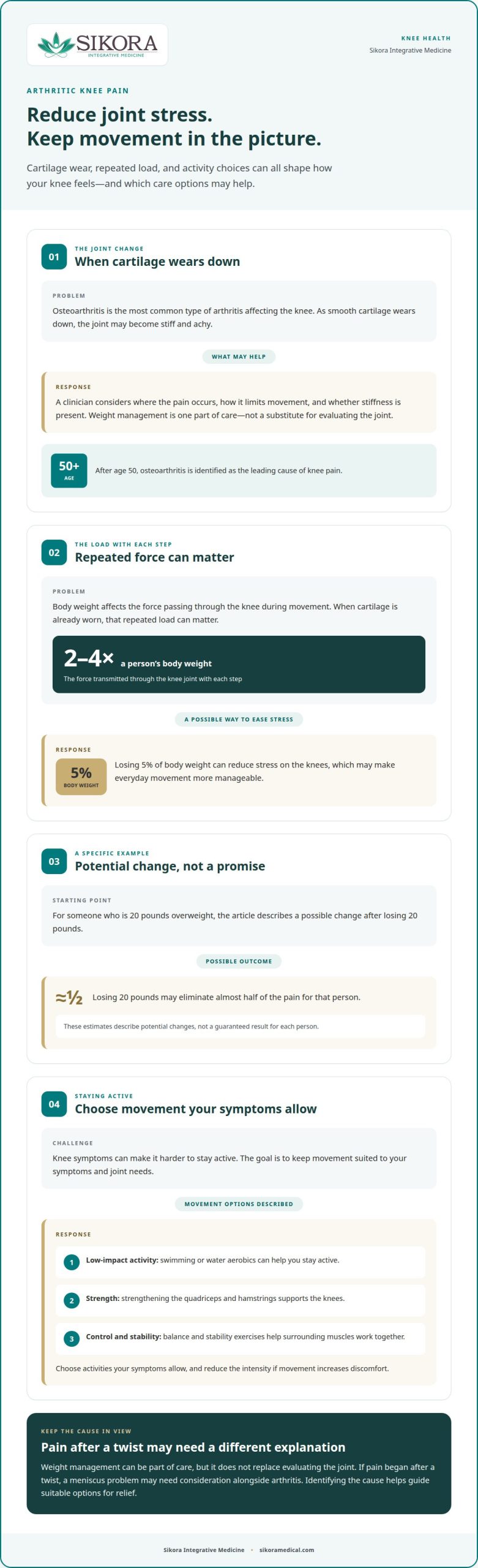
Osteoarthritis is the most common type of arthritis affecting the knee. As smooth cartilage wears down, the joint may become stiff and achy. After age 50, osteoarthritis is identified as the leading cause of knee pain. Arthritis can also occur alongside an injury, so symptoms after trauma may involve cartilage, a meniscus, or other joint structures.
Body weight affects the force passing through the knee during movement. With each step, the knee joint transmits two to four times a person’s body weight. That repeated load can matter when cartilage is already worn. Losing 5% of body weight can reduce stress on the knees, which may make everyday movement more manageable.
For someone who is 20 pounds overweight, losing 20 pounds may eliminate almost half of the pain. These estimates describe potential changes, not a guaranteed result for each person.
Weight management is one part of care, not a substitute for evaluating the joint. A clinician considers where knee pain occurs, how it limits movement, and whether stiffness is present. If pain began after a twist, for example, a meniscus problem may need consideration alongside arthritis. Identifying the cause helps guide suitable options for relief.
Movement still matters. For osteoarthritis, chronic symptoms, or recurring injuries, low-impact activities such as swimming or water aerobics can help you stay active. Strengthening the quadriceps and hamstrings supports the knees, while balance and stability exercises help surrounding muscles work together. Choose activities your symptoms allow, and reduce the intensity if movement increases discomfort. A weight-management plan can account for mobility, joint symptoms, and personal goals, helping you build activity into daily life.
Knee pain treatment options
Treatment depends on what’s affected and how severe the symptoms are. A strain, meniscus injury, ligament injury, and osteoarthritis can call for different approaches. For initial care, providers often consider activity changes, nonsteroidal anti-inflammatory drugs (NSAIDs), physical therapy, and exercise. Each can address a different need, from reducing irritation to strengthening the muscles around the joint.
For symptoms you can manage at home, pausing activities that aggravate your knee and using an over-the-counter pain reliever may help. A healthcare provider may recommend NSAIDs or acetaminophen based on your symptoms. Rest approaches such as RICE or MEAT may also be considered. The aim is to ease discomfort without adding strain through movements that worsen your knee pain.
Physical therapy focuses on the muscles that support the knee. A therapist can build strength and flexibility gradually, helping reduce pressure on the joint during everyday movement. For example, a plan for osteoarthritis may combine guided exercises with adjustments to activities that worsen stiffness. Complementary hands-on care, such as the bodywork and adjustments offered at Bella Family Chiropractic, can also assist in easing surrounding muscular tension and promoting healthy alignment. A knee brace may also support the joint and help maintain alignment.
Acute symptoms may respond to ice applied three to four times a day for 10 minutes at a time. For osteoarthritis, tendinitis, or damaged meniscus and ligaments, initial care often includes activity modification, NSAIDs, physical therapy, and exercise. These treatments address pain and function while limiting movements that increase irritation.
Surgery is considered based on the source and severity of the problem. For arthritis causing severe pain that hasn’t improved with other treatments, knee replacement may be recommended. Earlier steps matter: a clear evaluation helps match treatment to the affected cartilage, ligament, or other structure.
If you’re weighing non-surgical approaches for joint symptoms, discuss treatment options with a medical professional.
Sikora Integrative Medicine: Stem Cells
In Vero Beach, Sikora Integrative Medicine offers Stem Cells and Exosomes for people considering regenerative medicine for joint concerns. If symptoms persist despite initial care or you want to understand biologic approaches, a medical discussion can explain what each option involves and whether it may suit your situation.
Before you decide, the practice explains the available evidence and regulatory status of these treatments. Stem Cells and Exosomes aren’t interchangeable with physical therapy, medication, or surgery. The right choice depends on the condition being addressed. A careful discussion can help you weigh potential benefits, limitations, and alternatives against your movement and daily activity goals.
Contact Sikora Integrative Medicine to discuss your options, or visit sikoramedical.com.
Choose a Next Step That Fits Your Goals
Ongoing knee pain can make everyday movement feel uncertain, but you can start by discussing what matters most to you: comfort, mobility, or returning to an activity. Bring specific examples of movements that remain difficult and describe how symptoms affect your day. These details can make the conversation about care more focused.
Sikora Integrative Medicine offers Stem Cells, PRP, and Hormone Therapy. The clinical team can discuss how these options relate to your concerns and explain the evidence and regulatory status before you decide. These services aren’t interchangeable, and a thoughtful assessment keeps the conversation focused on your needs and treatment goals.
When you’re ready to discuss possible next steps, contact Sikora Integrative Medicine. A considered plan can help you move forward with greater clarity and confidence.
Frequently Asked Questions
What Makes the Knee So Complex?
The knee supports body weight while allowing the leg to bend, straighten, and adjust during movement. Muscle coordination adds to its complexity: four quadriceps muscles help straighten the leg, and they share one tendon attached to the kneecap. This helps explain why weakness or limited control elsewhere in the leg can affect comfortable movement.
What can go wrong with the knee?
A knee problem can affect how smoothly the joint bends, straightens, or supports your weight. You may notice a familiar movement feels different, such as standing from a chair or turning while walking. These changes don’t identify a specific injury by themselves, but describing exactly what feels different can help a clinician focus the assessment.
What causes knee problems?
Knee problems may develop gradually or begin after a specific event. A gradual change during everyday activities can suggest a different pattern from symptoms that start during one movement. Note when you first noticed the change and which daily tasks now feel difficult. This timeline gives a healthcare provider useful context beyond where the discomfort occurs.
What commonly causes discomfort in the knee?
Common causes include osteoarthritis, tendon irritation, bursitis, and injuries involving ligaments or the meniscus. Repeated activity, such as frequent deep bending, may aggravate some symptoms, while a sudden movement can precede others. What brings on discomfort is a useful clue, but a clinician considers it alongside your history and examination rather than treating it as a diagnosis.
What symptoms require urgent medical care?
Get emergency care if you can’t move your leg or knee, or suspect a broken bone. Serious trauma, including a severe fall or car accident, also calls for emergency care. A suspected joint infection needs prompt attention because it can damage cartilage quickly. If symptoms are severe or rapidly worsening, seek urgent evaluation rather than waiting to see whether routine measures help.
What home treatments can help?
Choose movement that doesn’t aggravate symptoms, and consider lower-impact activities such as swimming or water aerobics for ongoing joint concerns. If stairs are difficult, leading upstairs with the more comfortable leg may reduce strain. A clinician can demonstrate how to apply a compression wrap safely. These adjustments can help you stay active while tracking what worsens or eases symptoms.

Article by
Alita G. Sikora, MD
Dr. Alita Gonsalves Sikora, MD, specializes in Physical Medicine and Rehabiltation (also known as Physiatry) and has practiced in Vero Beach since 2007. She started her own practice, Sikora Integrative Medicine, in 2017 in Vero Beach and also offers telemedicine to Florida residents.
Physical Medicine and Rehabilitation is a medical specialty focused on restoring function and treating pain in the bones, muscles, joints, and nervous system, most often without surgery. She trained at the University of Connecticut School of Medicine and did her residency training at NY Presbyterian (Columbia and Cornell) in NYC.
She offers regenerative and integrative approaches, treating chronic pain and musculoskeletal conditions with stem cells, PRP, exosomes, peptides, shockwave therapy, laser therapy, acupuncture, and prolotherapy, as well as traditional medications and injections. She also certifies qualified patients for medical marijuana in the state of Florida.
She also offers bioidenical hormone optimization including pellets, medical weight loss, peptides, IV vitamin therapy, and functional lab testing.

 1255 37th St. Suite B,