
 772-228-6882




The name “Immune IV” doesn’t reveal the vitamin C dose. If you’re considering Immune IV at Sikora Integrative Medicine, ask for the specific formula and dose rather than relying on the label.
Before setting aside time for an infusion or comparing IV nutrients with oral supplements, it helps to understand what the formula contains and what the visit involves. Those details can support a more informed conversation about your wellness goals.
This guide explains how long an infusion takes, how IV nutrient delivery compares with oral supplements, and the vitamin C dose in the Immune blend. You’ll also learn what to expect from IV care at the Vero Beach practice, so you can approach the decision with clear information rather than relying on the treatment name alone.
Key Takeaways
- Understand what can affect the time an immune IV infusion takes, including how NAD+ infusions fit into the discussion.
- Compare IV nutrient delivery with oral supplements and see why hydration may matter when managing a chronic illness.
- Learn how nutrient absorption relates to immune function and which nutrients may support it.
- Find out what the Immune blend’s vitamin C dose is and what that amount can help you understand about the infusion.
IV infusion duration
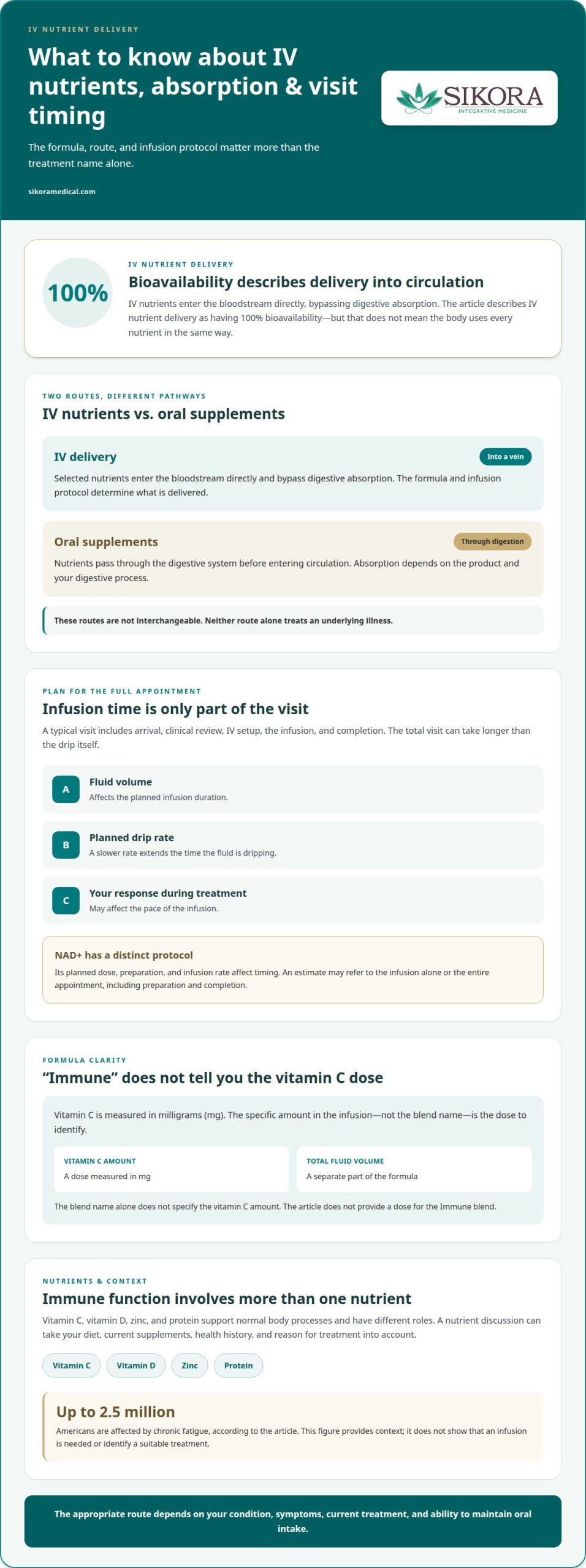
An immune IV’s duration depends on the fluid volume and planned drip rate. Your response during treatment may also affect the pace. Allow for the full appointment, including preparation and wrap-up, not just the time the fluid is dripping. Ask whether a time estimate covers check-in, setup, infusion, and completion.
A typical visit includes arrival, a clinical review, IV setup, and the infusion. During the review, the clinician considers the planned nutrients, relevant health information, and infusion rate. Once the IV is placed, the drip runs at the planned pace. A change in rate affects infusion time, while setup and wrap-up add to the total visit.
NAD+ infusions use a distinct protocol, so their timing may differ from an immune vitamin infusion. The planned dose, preparation, and infusion rate affect how long the drip takes. A slower rate extends the infusion itself, and the full visit also includes preparation and completion. If you’re considering NAD+, ask whether the estimate refers to infusion time or the entire appointment. That distinction helps you plan your day.
For any IV appointment, use the expected total visit time rather than the drip time alone when organizing your day. A short infusion estimate may not include the clinician’s review or IV setup. If an infusion runs longer than expected, the prescribed rate and your response during treatment can influence the schedule. The useful comparison is not simply “immune IV versus NAD+,” but the specific formula and protocol planned for each. Understanding those steps gives you a clearer picture of the time commitment without assuming every IV session follows the same schedule.
IV therapy compared with oral supplements
An Immune IV differs from other IV options in its nutrient blend and intended use. Compare the ingredients, fluid volume, and infusion protocol, not just the word “immune.”
Oral supplements pass through digestion before nutrients enter circulation. IV nutrients enter the bloodstream directly, bypassing digestive absorption. IV nutrient delivery is characterized as having 100% bioavailability. That describes delivery into circulation, not how the body uses each nutrient. With supplements, dose timing and absorption depend on the product and your digestive process.
Hydration depends on the route and the reason for treatment. When you drink water, it passes through the digestive tract; IV fluids enter a vein. A clinician considers fluid intake and hydration status when deciding whether IV fluids fit a care plan. An infusion doesn’t replace routine water intake or address the cause of dehydration.
With chronic illness, the appropriate route depends on the condition, symptoms, current treatment, and ability to maintain oral intake. An illness that disrupts eating or drinking raises a different practical question than routine supplement use. IV therapy delivers fluids and selected nutrients through a vein; oral supplements pass through the digestive system. These routes aren’t interchangeable, and neither alone treats the underlying illness. A clinician considers your care plan, including medicines and existing recommendations, before adding an infusion. Compare immune, hydration-focused, or nutrient-focused IV options by reviewing their ingredients and purpose. No single IV approach fits every chronic condition.
Chronic fatigue affects up to 2.5 million Americans. That figure provides context for why people may seek information about fatigue and nutrient delivery, but it does not identify a suitable treatment or establish that an infusion is needed. For someone weighing oral supplements against an infusion, the practical distinction remains the route: supplements are taken by mouth and IV delivery enters through a vein. The condition alone does not decide between them; the person’s care plan and ability to maintain oral intake remain relevant.
Major Autohemotherapy ozone treatment involves withdrawing blood, mixing it with medical-grade ozone, and reintroducing it intravenously. This is a distinct procedure, not another name for a nutrient blend or an oral supplement. When comparing options, consider the method and intended approach as part of a discussion with a clinician about your broader care plan.
Nutrient delivery and absorption
IV delivery puts nutrients into circulation, while oral nutrients pass through digestion. The route may matter if nausea, appetite changes, or digestive symptoms make supplements difficult to take. That alone doesn’t mean an infusion is the right choice. The nutrient, dose, health history, and reason for treatment all matter.
Immune function relies on coordinated activity across cells and tissues. Vitamin C, vitamin D, zinc, and protein each support normal body processes, but they have different roles. A nutrient plan should take account of your diet, current supplements, and health concerns rather than treating one vitamin as a stand-alone solution. Include any supplements you already take in the overall review.
Sikora Integrative Medicine is located at 1255 37th St., Suite B, Vero Beach, FL 32960. IV appointments take place during the practice’s scheduled operating hours; the hours depend on its clinic schedule. Appointments are arranged through the practice’s scheduling process.
During a clinical review, the team can consider your health history, diet, and current supplements when discussing nutrient support. Your use of vitamin C or zinc, for example, helps put a proposed formula in context. The discussion can distinguish a general wellness goal from a specific nutrition concern. Functional lab testing can explore factors such as hormones, gut health, and micronutrients, but it doesn’t replace an assessment of the question you want addressed. Consider nutrient choices as part of your overall health picture, not as a substitute for care directed at an underlying illness.
Vitamin C dose in the Immune blend
Vitamin C dose is measured in milligrams (mg). The relevant figure is the amount in the specific infusion, not the word “Immune.” Keep that dose separate from the IV’s total fluid volume and the amounts of other nutrients, since each describes a different part of the formula. The blend’s name alone can’t tell you the vitamin C dose.
To answer a dosage question about the Immune blend, look for the vitamin C amount listed for that specific infusion. A dose stated in milligrams is more precise than descriptions such as “high dose” or “immune support.” When comparing formulas, compare vitamin C amounts in the same unit, then review the other ingredients separately.
The ingredient list matters alongside the milligram amount. A formula may combine multiple nutrients, and the total quantity of all ingredients is not the vitamin C dose. For example, a list of several vitamins should be read ingredient by ingredient, rather than treated as one combined vitamin C amount. This distinction helps keep the comparison focused on the nutrient you’re asking about.
Vitamin C has a role in normal body function, but the amount in an infusion alone doesn’t establish a particular outcome. Food and supplements also contribute to your overall nutrient intake. Look for the vitamin C amount in milligrams and consider it alongside the full formula. Don’t infer a dose or expected effect from the word “Immune.”
Sikora Integrative Medicine
Sikora Integrative Medicine can help you discuss nutrient support in the context of your broader health. If you’re weighing an infusion against supplements or want to understand a formula, consider its ingredients alongside your health history and goals. The aim is an informed decision, not a choice based on the treatment name alone.
Dr. Alita Sikora and the clinical team can discuss the evidence and regulatory status of a treatment before you decide about care. Bring your current supplements and relevant health history to help clarify what the treatment is intended to address, what it does not establish, and how it relates to your priorities.
The practice also offers stem cell, PRP, hormone, and exosome services for different health concerns. These are distinct services, not interchangeable ways to address nutrient questions. A question about hormone-related symptoms, for example, calls for a different discussion than a question about a vitamin blend. The conversation should focus on the concern you want to address.
If you’re considering care in Vero Beach, a clinical conversation can help clarify your questions and the information relevant to your decision. It can also distinguish general wellness language from details specific to a treatment, so you can consider an approach alongside your existing care and personal goals.
Contact Sikora Integrative Medicine to discuss your questions and next steps.
Frequently Asked Questions
What is the Immune IV at Sikora Integrative Medicine?
Immune IV is an IV vitamin therapy offered through the practice’s dedicated drip lounge. It delivers a selected nutrient formula through a vein as a wellness service, not as a diagnosis or treatment for a specific infection. It is not a guaranteed way to prevent illness. A clinician can discuss its intended role in relation to your health goals.
Who is eligible for the Immune IV, and who should avoid it?
Suitability is determined through an individualized clinical evaluation; no single profile makes the infusion appropriate for everyone. Tell the team about chronic conditions, prescription and over-the-counter medicines, allergies, and any previous infusion reactions. A reaction to an ingredient, for example, matters when reviewing a proposed formula. A clinician considers these details before deciding whether treatment fits.
What are the possible side effects and risks of the Immune IV?
Potential risks include discomfort or bruising where the IV is placed and a reaction to an ingredient. Specific risks depend on the formula and your health circumstances. Share known allergies and past reactions before treatment, and promptly report unexpected symptoms to the clinical team. This information is for educational purposes only and doesn’t constitute medical advice or replace an individualized safety discussion.
How long does the Immune IV treatment take, and what should I expect during a visit?
Infusion duration varies with the selected protocol, so plan around the estimate for your appointment rather than assuming every formula takes the same time. IV care is coordinated by an RN with physician-led oversight. Be ready to discuss your health goals and provide an accurate list of medicines, supplements, and allergies to help the team plan your infusion.
Where is Sikora Integrative Medicine located, and what are its Immune IV hours?
Sikora Integrative Medicine is at 1255 37th St., Suite B, Vero Beach, FL 32960. Immune IV appointments take place during scheduled operating hours, which depend on the clinic schedule.

Article by
Alita G. Sikora, MD
Dr. Alita Gonsalves Sikora, MD, specializes in Physical Medicine and Rehabiltation (also known as Physiatry) and has practiced in Vero Beach since 2007. She started her own practice, Sikora Integrative Medicine, in 2017 in Vero Beach and also offers telemedicine to Florida residents.
Physical Medicine and Rehabilitation is a medical specialty focused on restoring function and treating pain in the bones, muscles, joints, and nervous system, most often without surgery. She trained at the University of Connecticut School of Medicine and did her residency training at NY Presbyterian (Columbia and Cornell) in NYC.
She offers regenerative and integrative approaches, treating chronic pain and musculoskeletal conditions with stem cells, PRP, exosomes, peptides, shockwave therapy, laser therapy, acupuncture, and prolotherapy, as well as traditional medications and injections. She also certifies qualified patients for medical marijuana in the state of Florida.
She also offers bioidenical hormone optimization including pellets, medical weight loss, peptides, IV vitamin therapy, and functional lab testing.

 1255 37th St. Suite B,