
 772-228-6882




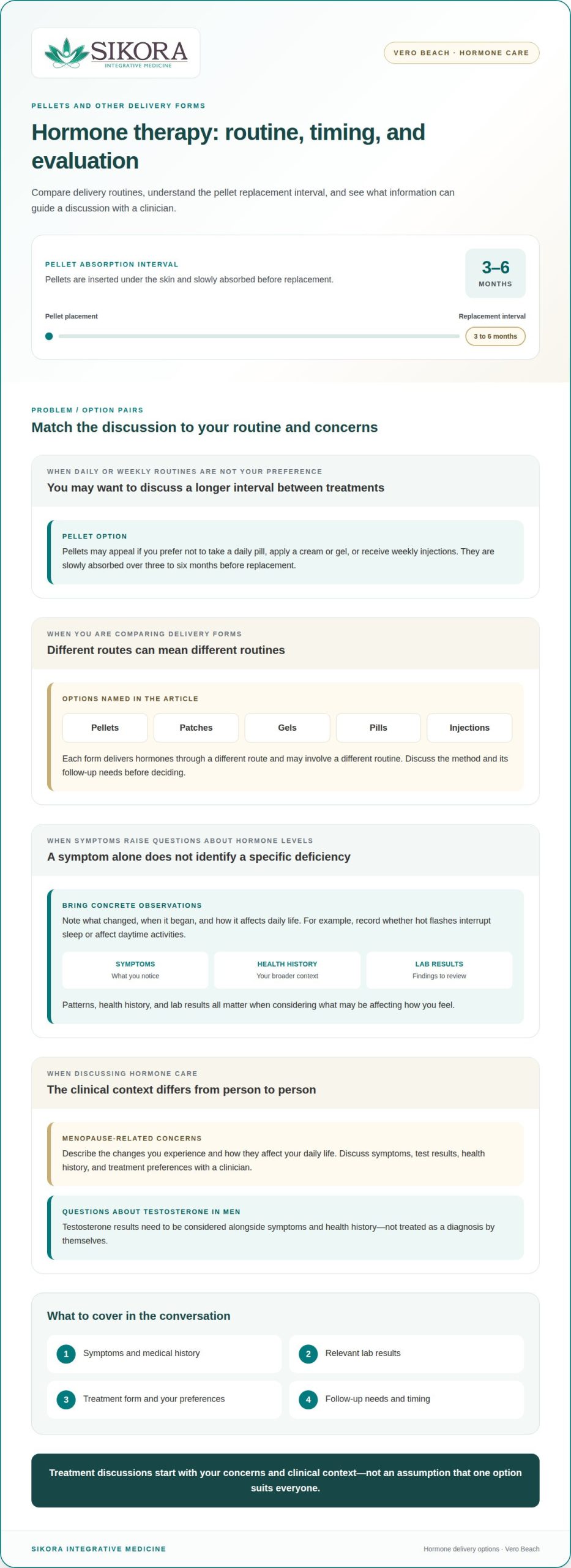
Yes, hormone pellet therapy in Vero Beach is an option for women and men exploring hormone care, and pellets may appeal if you prefer not to take a daily pill, apply a cream or gel, or receive weekly injections.
That preference is understandable: pellets are slowly absorbed over three to six months before they must be replaced, creating a longer interval between treatments than daily or weekly routines.
This guide explains how pellet therapy works for women and men, what the replacement timeline means, and what to expect when discussing hormone care with a clinician. You’ll also learn what factors may shape that conversation and how to consider whether this approach aligns with your needs, so you can take an informed next step toward hormone care in Vero Beach.
Key Takeaways
- Compare menopause care approaches and consider how bioidentical hormone replacement therapy may fit your preferences and symptoms.
- Learn which hormone-related changes may be worth discussing with a clinician, and how symptoms can affect women and men differently.
- Understand how lab results and follow-up timing can inform decisions about hormone treatment.
- Explore what to expect when discussing hormone therapy with a care team, including whether pellet treatment may suit your needs.
Menopause treatment options in Vero Beach
Hormone therapy options for menopause and andropause include pellets and other delivery forms. The right discussion considers your symptoms, test results, health history, and treatment preferences.
Menopause and Andropause Treatment
Hormone therapy may be discussed for menopause-related concerns or age-related changes in men. Before an appointment, note which symptoms you want addressed and how they affect daily life. In men, testosterone results need to be considered alongside symptoms and health history, not treated as a diagnosis by themselves. Ask how a proposed treatment fits your circumstances and what follow-up it requires.
Pellet Therapy and Other Hormone Options
Pellets are inserted under the skin and slowly absorbed over three to six months before replacement. Patches, gels, pills, and injections deliver hormones through different routes and may involve different routines. Pellets may suit you if you prefer not to take a daily pill, apply cream or gel, or receive weekly injections. Discuss the method and its follow-up needs before deciding.
Online testosterone therapy may involve a clinician reviewing symptoms and laboratory results before prescribing. That requirement addresses online TRT; it does not establish a separate pellet-specific rule.
Sikora Integrative Medicine in Vero Beach offers hormone therapy, including pellet therapy. Insurance coverage depends on your plan and its terms, so ask your insurer whether your plan covers this treatment. Dr. Alita Sikora is board-certified in Physical Medicine and Rehabilitation and has continuing medical education in bioidentical hormone therapy. Ask how the clinician evaluates your history, discusses risks and alternatives, and plans follow-up.
What Is Hormonal Imbalance?
Hormone levels and their effects can vary, and symptoms alone do not identify a specific deficiency. Patterns, health history, and lab results all matter. If you’re considering hormone pellet therapy in Vero Beach, understanding what symptoms can and can’t tell you is a useful starting point.
Possible Signs and Symptoms
If you experience hot flashes during perimenopause or menopause, note when they occur, how they affect sleep, and whether other changes accompany them. For men, changes that raise questions about testosterone deserve discussion in context, rather than assumptions based on one symptom. A symptom log gives the clinician concrete details to consider alongside your health history.
Changes in wellness can have different explanations. Describe what you notice, when it began, and how it affects your routine. This makes the conversation more specific without treating a symptom as proof of hormone imbalance. Your observations can also help explain what you hope treatment might address.
Hormone Imbalances and Deficiencies
Estrogen levels drop rapidly during perimenopause and menopause. Hormone levels are estimated to be less than 50% of functional capacity by people’s 40s. These figures describe broad patterns, not an individual diagnosis. Your symptoms, medical history, and test results help distinguish a possible deficiency from other factors that may affect how you feel.
Testosterone is one hormone people may ask about when they notice changes. A low result needs interpretation alongside symptoms and the broader clinical picture. Hormone care is not simply about raising a lab value; the goal is to understand whether a result relates to your concerns and health context.
For a useful evaluation, connect each symptom with a real-life example. For instance, note whether hot flashes interrupt sleep or affect daytime activities. Share the timeline and any changes you’ve observed with the clinician. These details provide a practical starting point and help guide discussion of relevant questions or tests.
A conversation about hormone pellet therapy in Vero Beach should start with your specific concerns, not an assumption that one treatment suits everyone. Menopause-related estrogen changes and questions about testosterone call for distinct discussions. Reviewing symptoms and test findings can help clarify possible next steps.
Do you offer hormone therapy for men, too?
Yes. Hormone therapy can be discussed with men as well as women, including men concerned about testosterone changes. Testosterone levels peak in men’s 20s, then gradually decrease in their 30s, 40s, and 50s. By age 70, men’s testosterone levels average about one-third of their functional levels. Those broad patterns don’t diagnose an individual hormone imbalance; symptoms, lab results, and health history guide the discussion.
During a consultation, describe the changes affecting your daily life and what you hope treatment will address. You might mention concerns about energy, sexual health, or maintaining muscle. These are reasons to begin a clinical conversation, not proof of low testosterone. A clinician can review your symptoms and results before discussing whether hormone therapy fits your goals.
Bioidentical describes a hormone with a molecular structure identical to one the body produces. The term doesn’t mean every product has the same source or formulation. Some hormone products are compounded, meaning they are prepared to meet a prescription. Compounded and commercially manufactured products are not interchangeable labels. Ask which formulation is being discussed and why it may suit your clinical needs.
Plant sources may be part of how some bioidentical hormone ingredients originate, but “plant-derived” alone doesn’t explain the finished product. Ask the clinician to clarify the hormone, formulation, and intended role. Estrogen may be discussed in women’s care, while testosterone is commonly part of men’s hormone conversations. The relevant option depends on the person, not simply the source label.
A practical consultation can cover symptoms and medical history, relevant lab results, and the treatment form and follow-up plan. Ask what training the clinician has in bioidentical hormone therapy and what monitoring the plan includes. Clarify the issuing organization and relevance of any credential rather than relying on a general claim in advertising.
Lab testing and treatment timing
Hormone test results are one part of treatment planning, not a diagnosis by themselves. A clinician considers symptoms, medical history, medications, and lab findings together. Changes in libido or weight, for example, can help frame questions, but neither symptom identifies a specific hormone imbalance. Your overall health and goals also shape which results matter.
Bloodwork offers a snapshot of hormone levels when the sample is collected. The clinician interprets the findings alongside the reason for testing and your treatment history. If you have recent results, share when they were collected and any treatment changes since then. That context helps show whether the results reflect your current situation.
Testing over a 24-hour period is different from a single blood draw. A timed collection gathers samples across the stated period, rather than measuring only one moment. Follow the collection instructions provided for the specific test, and report missed samples or timing issues. The ordering clinician can explain what the test measures and how its results fit your evaluation.
Before treatment begins, clarify which symptoms and lab findings the plan is intended to address. Ask how the clinician will assess your response and when follow-up testing may be considered. Timing depends on the treatment and your circumstances, so there is no single schedule for everyone. Keep a record of treatment changes and symptom patterns to discuss at follow-up.
Changes in weight, libido, or energy can give a clinician useful context, but they do not replace lab interpretation. If results and symptoms point in different directions, discuss that before making decisions. A careful review connects each proposed treatment to a specific concern and a follow-up approach.
For a personalized discussion of hormone testing and treatment timing, schedule a hormone care consultation.
Sikora Integrative Medicine: Hormone Therapy
Sikora Integrative Medicine offers hormone therapy for adults considering care for hormone-related concerns. If you’re weighing pellet therapy, a consultation can help connect your symptoms, lab findings, health history, and treatment preferences before you decide on a path.
Dr. Alita Sikora pursues continuing medical education in bioidentical hormone therapy. This informs discussions about hormone options, what a proposed treatment involves, and how it may fit your individual needs. Bring questions about timing, follow-up, and formulation differences to make the conversation specific to your priorities.
Choose a Next Step That Fits Your Goals
Your next step can be a focused conversation about what you want hormone care to support and which treatment routine feels workable. If you’re considering hormone pellet therapy in Vero Beach, bring questions about how the option fits your preferences and what follow-up may involve. A thoughtful discussion can help you weigh choices without assuming one approach is right for everyone.
Sikora Integrative Medicine offers hormone therapy, including pellet therapy, as well as regenerative medicine services such as stem cell and PRP therapies. The care team can discuss whether hormone care is appropriate for your concerns and explain the options before you decide. The aim is an informed decision grounded in your health priorities, not pressure to choose a particular treatment.
When you’re ready to talk through your goals, contact Sikora Integrative Medicine. A clear conversation is a constructive first step toward care that reflects your needs.
Frequently Asked Questions
Are there risks and side effects?
Hormone treatment and pellet insertion can involve risks and side effects. The specific concerns depend on the hormone, formulation, dose, procedure, and your health history. Before deciding, ask the prescribing clinician to explain the risks relevant to you, which symptoms need prompt attention, and how follow-up will address concerns. Share your medications and health conditions during the evaluation.
Can I make lifestyle changes that could improve my hormone levels?
Healthy routines can support overall wellness, but they don’t establish or correct a hormone deficiency by themselves. Consistent sleep, regular physical activity, and balanced meals, for example, can support general health. Track changes in sleep, energy, or other concerns as you adjust routines. Bring those observations to a clinician, and don’t use lifestyle changes as a substitute for evaluating persistent symptoms or discussing treatment.
How do I know if pellet therapy is right for me?
Pellet therapy may be worth discussing if your symptoms, test results, health history, and preferences make it a relevant option. Consider whether you prefer a method that doesn’t require a daily pill or cream, and whether its follow-up fits your plans. Ask the clinician to explain alternatives, potential risks, follow-up, and why this method may suit your individual needs.
How long can I stay on BHRT?
BHRT treatment should not be extended beyond seven years, according to the treatment guidance described for this topic. That limit doesn’t mean every person should continue for seven years. Treatment duration and ongoing need require review of your health, symptoms, and response over time. Discuss the reason for continuing at follow-up, along with whether the treatment plan still fits your goals.
How soon can I start treatment after my consultation?
There isn’t one start date that applies to every patient. Timing depends on what the consultation establishes, whether relevant lab results are available, and which option is being considered. If the clinician needs more information before making a plan, that review comes first. Ask what remains to be considered and what the next step is after your consultation.
What are Bioidentical Hormones?
Bioidentical hormones may be used in hormone therapy plans tailored to a person’s clinical needs. The name alone doesn’t identify the specific hormone, dose, or delivery method in a proposed plan. Ask which hormone is being considered, what concern it is meant to address, and how progress will be reviewed. Bringing your current medication and supplement list can make the discussion more specific.

Article by
Alita G. Sikora, MD
Dr. Alita Gonsalves Sikora, MD, specializes in Physical Medicine and Rehabiltation (also known as Physiatry) and has practiced in Vero Beach since 2007. She started her own practice, Sikora Integrative Medicine, in 2017 in Vero Beach and also offers telemedicine to Florida residents.
Physical Medicine and Rehabilitation is a medical specialty focused on restoring function and treating pain in the bones, muscles, joints, and nervous system, most often without surgery. She trained at the University of Connecticut School of Medicine and did her residency training at NY Presbyterian (Columbia and Cornell) in NYC.
She offers regenerative and integrative approaches, treating chronic pain and musculoskeletal conditions with stem cells, PRP, exosomes, peptides, shockwave therapy, laser therapy, acupuncture, and prolotherapy, as well as traditional medications and injections. She also certifies qualified patients for medical marijuana in the state of Florida.
She also offers bioidenical hormone optimization including pellets, medical weight loss, peptides, IV vitamin therapy, and functional lab testing.

 1255 37th St. Suite B,