
 772-228-6882




Bioidentical hormone replacement therapy (BHRT) uses hormones chemically identical to those produced by the body. BHRT for menopause relief in Vero Beach may be considered when menopause symptoms affect daily life. Some options, including certain estradiol patches and gels and micronized progesterone, are FDA-approved; compounded hormone products are not FDA-approved.
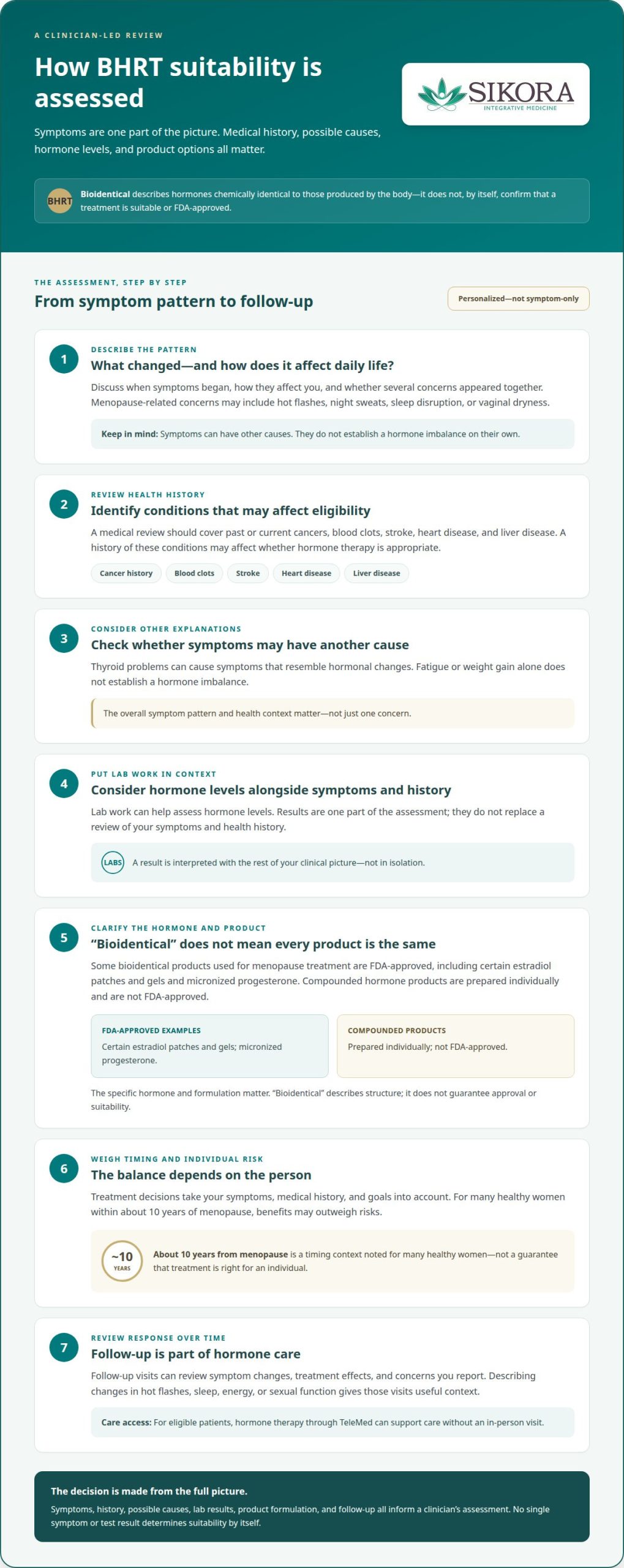
Whether treatment is appropriate depends on more than symptoms alone. Thyroid problems can cause similar symptoms, while a history of certain cancers, blood clots, stroke, heart disease, or liver disease may affect eligibility. This guide explains BHRT, the menopause symptoms it may address, potential benefits and risks, and how a clinician considers your medical history when assessing whether treatment may suit you.
Key Takeaways
- Learn how bioidentical hormones relate to hormones your body produces and how approved products differ from compounded options.
- Understand why symptoms alone may not determine whether hormone therapy is suitable, and which parts of your medical history matter.
- Recognize common menopause and perimenopause concerns to discuss with a clinician, including symptoms that may have other causes.
- Explore how reported benefits and potential risks can inform a personalized conversation about hormone therapy.
What is Bioidentical Hormone Replacement Therapy?
Bioidentical hormone replacement therapy (BHRT) uses hormones chemically identical to those the body produces. If you’re considering hormone therapy in Vero Beach, understanding your symptoms, treatment goals, and product options can help you have a focused discussion about personalized care.
Hormone Imbalance Symptoms
Hormone-related changes can look different in women and men. During menopause, women may experience hot flashes, night sweats, sleep disruption, or vaginal dryness. Men may report changes in energy, mood, sexual desire, or muscle strength alongside testosterone changes. These symptoms can have other causes, so they do not establish a hormone imbalance by themselves.
Age can provide context, but it isn’t a diagnosis. Testosterone levels peak in men’s 20s and may begin declining as early as age 30. A symptom discussion should consider when changes began, how they affect daily life, and whether several concerns appeared together. For women, noting hot flashes and sleep changes can help describe the menopause experience clearly.
BHRT and Personalized Hormone Care
“Bioidentical” means a hormone is chemically identical to one produced by the body. BHRT may use these hormones to address menopause-related concerns. Estrogen is one example. The term describes a hormone’s structure; it does not guarantee that treatment is suitable or that every product has the same regulatory status.
Personalized hormone care starts with your symptoms and health history, then considers your goals and product options. A useful discussion distinguishes menopause symptoms from concerns that may have another cause. If hot flashes are your main concern, for example, your clinician can consider them in the context of your overall health instead of treating one symptom as the whole picture.
FDA-Approved and Compounded Hormones
Some bioidentical hormone products used for menopause treatment are FDA-approved, including certain estradiol patches and gels and micronized progesterone. These products are not interchangeable with every therapy labeled “bioidentical,” so the specific hormone and formulation matter when discussing treatment.
Other hormone products are compounded for individual patients and are not FDA-approved. Compounded products are prepared individually, whereas FDA-approved products have approved status for their specific formulations. Ask which type is being considered and why it fits your treatment plan. This distinction helps clarify the choice without assuming that “bioidentical” alone indicates approval or suitability.
Eligibility, medical history, and treatment risks
Eligibility depends on your symptoms, medical history, and relevant hormone levels. No single symptom, including fatigue or weight gain, establishes a hormone imbalance or determines whether treatment is suitable.
Before starting BHRT, ask what the evaluation involves, which risks may apply to your history, and how follow-up will assess your response. Clarify which hormone and formulation are being considered and what changes you should report.
Medical History and Lab Work
A medical review should cover past or current cancers, blood clots, stroke, heart disease, and liver disease. A history of these conditions may affect whether hormone therapy is appropriate. Thyroid problems can also cause symptoms resembling hormonal changes, so an evaluation should consider other possible explanations before attributing fatigue or weight gain to an imbalance.
Lab work can help assess hormone levels alongside your symptoms and history. Results are one part of the assessment, not a substitute for reviewing your health. For women near menopause, timing matters: for many healthy women within about 10 years of menopause, benefits may outweigh risks.
Estrogen and Testosterone Treatment
Estrogen treatment may be considered for menopause symptoms, while testosterone therapy addresses a different hormone. The appropriate option depends on the concern being evaluated, your history, and the treatment goals. Ask why a specific hormone is being considered, how its expected role relates to your symptoms, and which risks apply to you.
Hormone replacement therapy requires follow-up, not just a one-time decision. A clinician can review changes in symptoms, treatment effects, and any concerns you report, then use that information to guide ongoing care. Your experience is personal; describing changes in hot flashes, sleep, energy, or sexual function gives follow-up visits useful context.
There is no single timeline that fits every treatment plan. Follow-up visits help assess response and review emerging concerns; bring a clear account of symptom changes and side effects to each visit. For eligible patients, hormone therapy through TeleMed can support care without an in-person visit.
Menopause and perimenopause symptoms
Menopause symptoms vary, and their pattern matters as much as any single change. Tracking when symptoms began and how they affect daily activities can help a clinician assess whether hormone changes may be involved.
During perimenopause, menstrual cycles may become irregular as the body approaches menopause. Hot flashes, night sweats, mood changes, and difficulty concentrating can also occur. These experiences may disrupt sleep, work, or relationships, but symptoms alone don’t establish that hormone therapy is appropriate. A clinician considers the overall pattern and other possible causes.
After menopause, vaginal dryness or discomfort during sex may affect comfort and libido. Describe these concerns directly, including when they occur and how they affect daily life. “Vaginal rejuvenation” can refer to different approaches, so it isn’t another name for bioidentical hormone replacement. Discuss the specific concern and proposed treatment with a clinician.
Men can also experience hormone-related changes, sometimes described as andropausal symptoms. Men in their 40s-60s may experience low testosterone, with concerns such as reduced energy, changes in sexual desire, or shifts in physical function. These symptoms can have other explanations, so a clinician evaluates the pattern rather than assuming testosterone is the cause.
BHRT for menopause relief in Vero Beach may be discussed when symptoms align with menopause and your treatment goals. Bioidentical hormones are chemically identical to hormones the body produces, but that description alone doesn’t establish whether therapy fits a particular symptom. Changes in weight or libido, for example, should be considered alongside menstrual history, vaginal concerns, and overall health. Clear details about your symptoms can help guide a focused discussion of potential options and their limits.
Reported benefits for women
Potential benefits of hormone therapy are best considered in relation to a specific concern. For someone in perimenopause, that might mean addressing hot flashes that interrupt sleep or symptoms that make daily activities harder. Defining the goal keeps the discussion practical instead of treating “balance” as a general outcome.
Start by identifying what you want to improve. You might focus on disrupted sleep, vaginal discomfort, or changes affecting intimacy. Describe how often the concern occurs and what it prevents you from doing. These details help frame an individualized discussion about whether a treatment option may address your needs.
Consider quality of life, too. If nighttime symptoms leave you tired the next day, explain how they affect work or routines. If discomfort affects intimacy, describe that impact plainly. These examples connect treatment goals to daily function without assuming one hormone explains every change.
Hormone levels can inform a discussion about care, but your experience matters, too. A clinician can consider your symptoms, medical history, and goals together when reviewing possible options. Ask what a proposed bioidentical hormone is intended to address and how you’ll assess whether your symptoms change.
Keep expectations specific. For example, track whether one symptom becomes less disruptive rather than expecting treatment to improve unrelated concerns. If you have several symptoms, discuss which matters most to address first. A clear priority makes follow-up conversations more focused.
Testosterone should also be considered as a distinct hormone, not a general wellness measure. If libido is a concern, describe the change and its effect on your life. Discussing that goal directly helps keep the treatment conversation centered on your needs and the potential benefits relevant to them.
Sikora Integrative Medicine
Sikora Integrative Medicine offers hormone therapy for women exploring care for menopause-related symptoms. If hot flashes, disrupted sleep, or other changes affect your daily life, a consultation can help determine whether hormone treatment may fit your situation. Dr. Alita Sikora pursues continuing medical education in bioidentical hormone therapy, supporting informed discussions about treatment options and their regulatory status.
Care should account for your symptoms, health history, and personal goals rather than treating one lab result as the whole picture. Discuss what you hope to address, potential risks, and how progress may be reviewed over time. Contact Sikora Integrative Medicine to discuss your menopause-related concerns and next steps.
Take the Next Step Toward Personalized Care
Your next step can be a focused conversation about the changes you want to address and how they affect your daily life. Dr. Alita Sikora is board-certified in Physical Medicine and Rehabilitation and brings medical expertise to discussions about your care and treatment goals.
Bring your questions and relevant health history to the conversation. Discuss what matters most to you and ask how the clinician will assess progress over time. This exchange can help you understand your options and decide what feels right for your situation.
If you’re ready to discuss your concerns, contact Sikora Integrative Medicine. A clear conversation can help you take an informed next step.
Frequently Asked Questions
What are Hormones?
Hormones are chemical signals released by glands and tissues that help coordinate activity throughout the body. Estrogen can influence reproductive processes, while testosterone has roles in several body functions. Their effects depend on where the signals act and how the body responds. Understanding a hormone therefore involves more than one lab result or a general label such as “hormone imbalance.”
Do I need labs before starting, and what should I bring?
Labwork may be part of your evaluation, but the clinician determines what is relevant to your situation. Bring the names and doses of your current medications and supplements, records of previous hormone treatment, and details of any reactions. Write down questions about specific formulations so you can discuss how they’re used and monitored during your consultation.
What treatment options may be discussed?
HRT isn’t one standardized treatment plan. A consultation can clarify which hormone formulation and method may suit your situation, whether further evaluation is needed, and what monitoring the plan involves. Ask about the options before making a decision: pellets, creams, troches, and injections are distinct options with different uses. The discussion should begin with the specific care plan being proposed.
How soon can I start treatment after my consultation?
After reviewing your consultation and any necessary evaluation, the clinician can outline the next step. A recommendation may require additional review. Ask whether the plan is ready, whether further information is needed, and how you’ll receive instructions if treatment is appropriate. A consultation is an assessment, not an automatic start to hormone therapy.
Indications of Possible Hormone Imbalance?
Possible signs may involve changes in areas such as sleep, reproductive function, or sexual health. These are clues to discuss, not a diagnosis. A clinician may consider their timing and pattern, your health history, and other possible causes. Don’t interpret one symptom or test result as proof of a specific hormone problem.
WHAT ARE THE BENEFITS OF HRT?
HRT may help relieve certain menopause symptoms, but potential benefits depend on the treatment and your health profile. A clinician weighs those possibilities against relevant risks and considers whether the potential benefit fits your circumstances. HRT isn’t suitable for everyone, and results aren’t guaranteed. This content is for educational purposes only and does not constitute medical advice.

Article by
Alita G. Sikora, MD
Dr. Alita Gonsalves Sikora, MD, specializes in Physical Medicine and Rehabiltation (also known as Physiatry) and has practiced in Vero Beach since 2007. She started her own practice, Sikora Integrative Medicine, in 2017 in Vero Beach and also offers telemedicine to Florida residents.
Physical Medicine and Rehabilitation is a medical specialty focused on restoring function and treating pain in the bones, muscles, joints, and nervous system, most often without surgery. She trained at the University of Connecticut School of Medicine and did her residency training at NY Presbyterian (Columbia and Cornell) in NYC.
She offers regenerative and integrative approaches, treating chronic pain and musculoskeletal conditions with stem cells, PRP, exosomes, peptides, shockwave therapy, laser therapy, acupuncture, and prolotherapy, as well as traditional medications and injections. She also certifies qualified patients for medical marijuana in the state of Florida.
She also offers bioidenical hormone optimization including pellets, medical weight loss, peptides, IV vitamin therapy, and functional lab testing.

 1255 37th St. Suite B,