
 772-228-6882




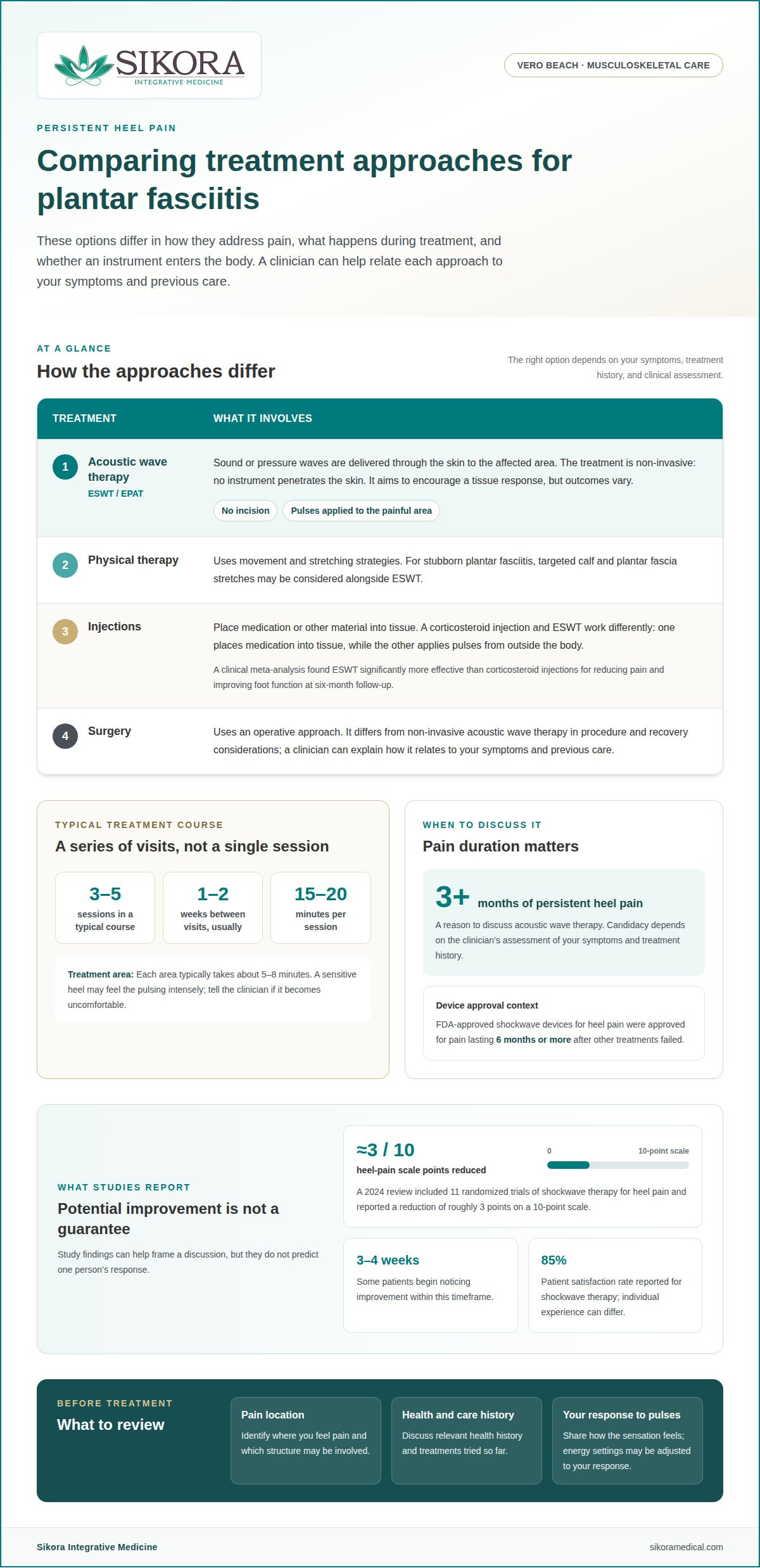
Acoustic wave therapy for plantar fasciitis in Vero Beach delivers sound waves through the skin to an affected area and may stimulate a tissue response that helps ease stubborn heel pain; pain lasting 3 months or more is a reason to discuss this treatment. Acoustic wave therapy and EPAT are non-invasive approaches, meaning no instrument penetrates the skin, and a typical course involves 3 to 5 sessions lasting 15 to 20 minutes, usually spaced a week or two apart.
If heel pain is limiting your steps, understanding how acoustic wave therapy for plantar fasciitis may work, what treatment can feel like, and how results can vary may help you decide what to discuss with a clinician. This guide covers the approach, what to expect, and how shockwave therapy may also be used for other musculoskeletal concerns, such as Achilles tendonitis and heel spurs.
Key Takeaways
- Understand which factors help determine whether acoustic wave therapy may suit persistent plantar fascia pain.
- See how shockwave therapy may apply to other tendon and heel concerns, including Achilles tendonitis and heel spurs.
- Learn how ESWT may fit alongside targeted calf and plantar fascia stretches for stubborn heel pain.
- Find out how EPAT delivers sound waves to targeted tissue and what that approach aims to stimulate.
StemWave for Plantar Fasciitis: Can Acoustic Wave Therapy Help Heel Pain That Won’t Go Away?
Acoustic wave therapy may be worth discussing when plantar fascia pain persists despite initial care. It is extracorporeal, meaning sound waves are delivered through the skin without an instrument entering the body.
Candidate Criteria and Treatment Precautions
Persistent heel pain lasting 3 months or more is a reason to discuss acoustic wave therapy, while candidacy depends on the clinician’s assessment of your symptoms and treatment history. FDA-approved shockwave devices for heel pain were approved for pain lasting 6 months or more after other treatments failed.
Before treatment, the clinician should review where you feel pain, your relevant health history, and your sensitivity to pulsing. During the session, describe how the pulses feel. Your feedback can help guide treatment and comfort, and energy settings may be adjusted to your response rather than assuming one setting suits everyone.
Treatment Session Timing
A typical course involves 3 to 5 sessions, generally spaced a week or two apart. This schedule gives time between visits to observe how your heel responds and whether pain or function changes.
Research on other shockwave devices often used 3 weekly sessions, but protocols vary by device and treatment plan. Ask the clinician to explain the planned number and spacing of visits, along with how progress will be assessed. A course is not a single-visit procedure.
Treatment Procedure and Duration
During treatment, a clinician applies the device to the affected heel and delivers pulses through the skin. Each treatment area typically takes about 5 to 8 minutes, while a session for plantar fasciitis commonly lasts 15 to 20 minutes.
The pulsing sensation may feel intense on a sensitive heel. Tell the clinician if it becomes uncomfortable so they can respond to your feedback. The treatment is non-invasive, so it does not require an incision or an instrument entering the foot.
Comparing Treatment Options
Physical therapy uses movement and stretching strategies; acoustic wave therapy delivers sound pulses to the painful area. Injections place medication or other material into tissue, while surgery uses an operative approach. These options differ in procedure and recovery considerations. A clinician can explain how each relates to your symptoms and previous care.
When considering treatment in Vero Beach, look for a clinician who evaluates your heel, explains the device and proposed plan, and discusses alternatives. Ask how your feedback will guide treatment settings and how the clinician will review progress.
Musculoskeletal soft tissue, tendon, muscle, bone, and joint conditions
Acoustic pressure waves are used in musculoskeletal care to target damaged tissue without an incision. Their potential role depends on the affected area and the condition being treated.
How Acoustic Pressure Waves Stimulate Repair
Acoustic pressure waves carry energy into tissue and may prompt a response associated with repair. Proposed effects include stimulating new blood vessel formation, tissue regeneration, and removal of metabolic waste products.
New vessel formation may support blood flow to an affected area, while waste removal relates to the local tissue environment. These proposed processes help explain why clinicians may consider shockwave treatment for persistent soft-tissue concerns. They do not mean every tissue responds in the same way or that a particular outcome is assured.
Acoustic Pulses and Tissue Regeneration
Acoustic pulses are brief sound waves directed toward a treatment area. The aim is to encourage biological activity in damaged tissue, rather than physically repairing it with an instrument or surgery.
In musculoskeletal care, shockwave therapy may be used for Achilles tendonitis and heel spurs. These examples do not mean the same approach suits every muscle, bone, or joint concern. A clinician’s assessment of the affected structure helps determine whether treatment is appropriate to discuss.
For example, heel pain linked to the plantar fascia differs from pain around the Achilles tendon. Identifying the painful structure matters because the treatment area and clinical goal should match the concern. If you’re exploring options for persistent musculoskeletal pain, musculoskeletal care in Vero Beach can be a starting point for understanding available treatment approaches.
ESWT for stubborn plantar fasciitis
Extracorporeal shockwave therapy (ESWT) delivers pressure waves through the skin without an instrument penetrating the foot. For persistent plantar fasciitis, it may be considered alongside targeted calf and plantar fascia stretches, particularly when heel pain continues to interfere with walking.
A 2024 review included 11 randomized trials of shockwave therapy for heel pain. Across those trials, shockwave therapy reduced heel pain by roughly 3 points on a 10-point scale. That finding gives a useful sense of the potential change reported in studies, but it doesn’t predict the response of any one patient.
A clinical meta-analysis found ESWT significantly more effective than corticosteroid injections for reducing pain and improving foot function at six-month follow-up. The treatments work differently: ESWT applies pulses from outside the body, while a steroid injection places medication into tissue. This comparison can inform a discussion, but treatment choice depends on your symptoms and care history.
Some patients begin noticing improvement after 3 to 4 weeks, and some report benefits from EPAT within four weeks of starting treatment. These timelines aren’t the same as immediate relief during a session. Changes in heel pain and foot function over the following weeks offer a more useful way to consider progress.
Shockwave treatment is non-invasive, so it doesn’t require an incision or surgical recovery. An 85% patient satisfaction rate has been reported for shockwave therapy, though satisfaction doesn’t guarantee the same experience for everyone. Your clinician can explain the treatment plan and pair it with targeted stretches when appropriate. That combination addresses both the heel area and calf flexibility without presenting ESWT as a stand-alone fix.
For chronic heel pain, consider whether a non-surgical approach fits your goals and current condition. Discuss how ESWT might complement stretching, what changes to track, and how your response could inform the next step. This helps set realistic expectations while keeping other options open if symptoms continue.
EPAT technology and sound wave delivery
EPAT uses sound-wave pulses delivered from outside the body to a selected area. The clinician positions the applicator over the target and directs acoustic energy into the tissue. Unlike an injection, this does not place medication or a needle into the foot. The intended effect is to stimulate a local tissue response.
Radial and focused shockwave therapy differ in how they distribute energy. Radial waves spread outward across a broader area, while focused waves concentrate energy on a more defined target. This distinction may affect which approach suits a particular treatment area. For plantar fascia pain, the clinician’s assessment helps match the delivery method to the affected tissue.
Acoustic pulses may stimulate new blood vessel formation, tissue regeneration, and removal of metabolic waste products. These proposed responses help explain the use of sound-wave treatment for musculoskeletal concerns. The goal is to support the body’s local healing environment, not to mechanically repair the plantar fascia or promise immediate relief.
During treatment, the clinician applies pulses to the selected area and monitors your response. Your feedback can help guide the energy level and placement during the session. Sensation may vary across the heel, especially around a tender point, so communicating how it feels provides useful information.
EPAT is a non-invasive approach: no instrument penetrates the skin. A treatment area typically takes about 5 to 8 minutes, and a plantar fasciitis session often lasts 15 to 20 minutes. Those timeframes can help you plan, while the treatment plan itself depends on the condition being addressed.
If you’re considering shockwave therapy for persistent heel pain, discuss your treatment options and how sound-wave delivery may fit your care.
Sikora Integrative Medicine: Hormone Therapy
Sikora Integrative Medicine offers Hormone Therapy for adults seeking medical support for hormone-related changes. This is a separate care path from plantar fasciitis treatment: hormone therapy does not treat heel pain, and acoustic wave therapy does not address hormone concerns.
If you’re exploring care for hormone-related symptoms as well as persistent heel pain, discussing your goals can help clarify which treatment addresses each concern. Sikora Integrative Medicine also offers Stem Cells, PRP, and Exosomes for selected regenerative medicine needs. Treatment recommendations depend on the concern being addressed and an individual evaluation.
For questions about Hormone Therapy or other care at Sikora Integrative Medicine, contact the clinic.
Take the Next Step Toward Comfortable Movement
If you’re considering acoustic wave therapy for plantar fasciitis in Vero Beach, bring your questions and movement goals to a conversation with Sikora Integrative Medicine’s clinical team. Explain how heel pain affects your daily routine and what you hope to return to doing. This gives the discussion a practical focus.
The team’s clinical expertise can help determine whether this approach fits your circumstances and what considerations matter for your care. A clear conversation can help you make an informed next decision.
When you’re ready, contact Sikora Integrative Medicine to discuss your next step.
Frequently Asked Questions
What Does the Research Say About Shockwave for Heel Pain?
Research can help you decide whether shockwave therapy is worth discussing, but it cannot identify the cause of your heel pain. A clinician can consider your symptoms and previous care alongside the research. Ask how the evidence relates to your diagnosis and which functional changes would count as meaningful progress in your daily routine.
What should you expect during your treatment?
Before recommending a plan, the clinician should discuss your health history, symptoms, and goals. Describe which activities are hardest and what you hope to do more comfortably. This context connects care decisions to your priorities, such as managing work demands or returning to a preferred form of exercise, rather than focusing only on a pain score.
What is acoustic wave therapy for plantar fasciitis, and how does it work?
Acoustic wave therapy is a non-surgical approach that may be considered for plantar fascia-related heel pain. First, it matters whether the plantar fascia is causing your symptoms. A clinical evaluation can distinguish this from other possible causes of heel pain, keeping the discussion focused on care suited to the problem.
What evidence supports acoustic wave therapy for plantar fasciitis?
Evidence includes clinical studies assessing heel pain and foot function. To understand how the findings may apply to you, ask what condition the study participants had and how closely it matches your diagnosis. You can also discuss how your clinician will assess progress in practical terms, such as whether usual activities become easier over time.
How many acoustic wave therapy sessions are typically needed for plantar fasciitis?
The plan depends on your symptoms, prior care, and response as treatment progresses. Ask how the clinician will decide whether to continue, adjust, or stop treatment. Clarify what follow-up involves and which changes to report so the plan reflects your experience rather than relying on a preset schedule alone.
What should you expect during and after an acoustic wave therapy session?
Before your visit, be ready to explain where you feel discomfort and how it affects your routine. Afterward, note changes in activities that matter to you, such as completing a work shift or taking your usual walk. Sharing these details at follow-up helps the clinician understand how your day-to-day function is changing.
This content is for educational purposes only and does not constitute medical advice.

Article by
Alita G. Sikora, MD
Dr. Alita Gonsalves Sikora, MD, specializes in Physical Medicine and Rehabiltation (also known as Physiatry) and has practiced in Vero Beach since 2007. She started her own practice, Sikora Integrative Medicine, in 2017 in Vero Beach and also offers telemedicine to Florida residents.
Physical Medicine and Rehabilitation is a medical specialty focused on restoring function and treating pain in the bones, muscles, joints, and nervous system, most often without surgery. She trained at the University of Connecticut School of Medicine and did her residency training at NY Presbyterian (Columbia and Cornell) in NYC.
She offers regenerative and integrative approaches, treating chronic pain and musculoskeletal conditions with stem cells, PRP, exosomes, peptides, shockwave therapy, laser therapy, acupuncture, and prolotherapy, as well as traditional medications and injections. She also certifies qualified patients for medical marijuana in the state of Florida.
She also offers bioidenical hormone optimization including pellets, medical weight loss, peptides, IV vitamin therapy, and functional lab testing.

 1255 37th St. Suite B,