
 772-228-6882



Regenerative medicine aims to support tissue repair or function, but the approach depends on the treatment and the tissue involved. The broad term alone does not explain what a therapy does, how strong the evidence is, or whether it may suit a particular concern. Those questions depend on the specific product, its intended use, and the research behind it. This guide explains how to assess those distinctions, what researchers study after cells are implanted, and how federal oversight applies. Sikora Integrative Medicine offers regenerative medicine services in Vero Beach, Florida, including PRP, exosome, and cell-based options. Understanding the evidence and limitations can help you discuss your choices with a qualified clinician.
Key Takeaways
- Learn how regenerative approaches may support musculoskeletal and bone tissue repair by replacing damaged tissue or encouraging the body’s repair processes.
- Understand why implanted cells may move beyond the treatment site and why their behavior matters when considering a therapy.
- See how the FDA’s oversight depends on the type of cell or tissue product and its regulatory category.
- Explore how stem cell and PRP services at Sikora Integrative Medicine may fit into a discussion about regenerative treatment options.
What is regenerative medicine?
Regenerative medicine aims to restore function by replacing or regenerating cells, tissues, or organs, or by supporting the body’s repair processes. The approach depends on the treatment and the tissue involved. Understanding that distinction helps you assess what a therapy is intended to do, rather than assuming every approach produces the same result.
The Body’s Tissue Regeneration
Tissue regeneration is the body’s process of replacing or rebuilding damaged cells and structures. A healing wound is a familiar example of the body’s repair response. Regenerative medicine may aim to support this process or introduce biological materials intended to encourage repair. The practical distinction is whether a treatment is meant to support the body’s existing repair process or deliver cells or other materials to an affected area.
Tissue Repair Across Body Systems
Musculoskeletal and bone tissue regeneration focuses on structures involved in movement and support, while cardiovascular research examines repair of heart tissue. The intended goal is improved function in the affected area, not simply a change in symptoms. Stem cell-derived heart muscle cells have shown potential to regenerate heart tissue in large non-human primates. This research does not establish a treatment for people, but it illustrates how regenerative medicine is studied across different body systems.
Types of Regenerative Treatments
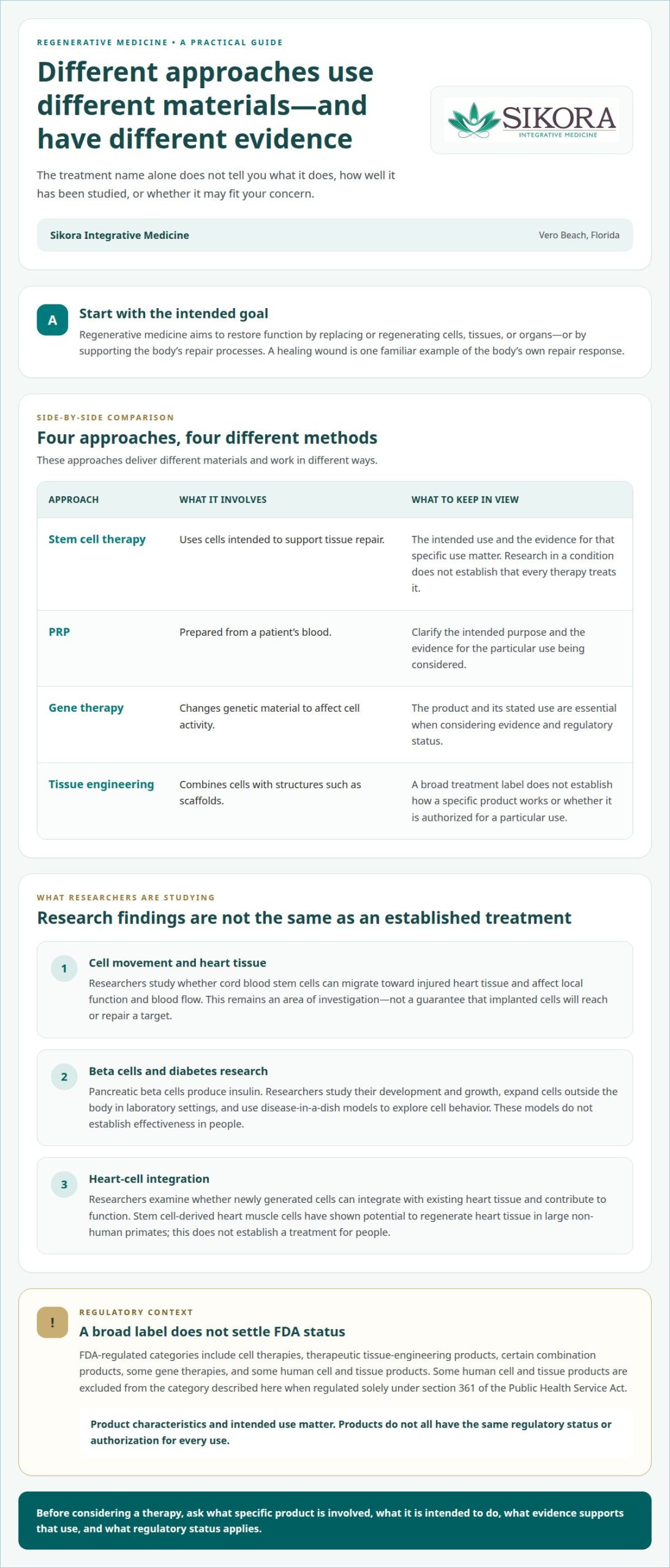
Stem cell therapy uses cells intended to support tissue repair; PRP is prepared from a patient’s blood. Gene therapy changes genetic material to affect cell activity, while tissue engineering combines cells with structures such as scaffolds. These approaches deliver different materials and work in different ways. To understand a treatment’s role, consider its intended purpose and the evidence for that specific use.
Conditions, Evidence, and Recovery
Stem-cell research includes burns, wound care, spinal cord injuries, and neurodegenerative disorders, but research in a condition does not establish that every therapy treats it. Evidence depends on the specific treatment and intended use. Treatment steps and recovery also depend on the procedure and area treated. Before deciding, ask how the proposed approach relates to your condition, what evidence supports that use, and what recovery may involve.
Cell migration after implantation
After implantation, cells may move beyond the treatment site, a process called cell migration. Their destination and behavior matter because cells reaching other areas of the body could cause harm. A cell therapy’s intended location, surrounding tissue, and the cells’ response all shape the safety questions researchers study. For example, research examines whether cord blood stem cells can migrate toward injured heart tissue and affect local function and blood flow. This remains an area of investigation, not a guarantee that implanted cells will reach or repair a specific target.
Pancreatic beta cells produce insulin, so researchers study their growth and function as possible routes toward diabetes treatments. They investigate beta-cell development and screen for factors that could promote cell growth. In vitro expansion means growing cells outside the body, such as in a laboratory, before studying their potential use. Researchers also use disease-in-a-dish models to examine how islet cells fail and whether they could be regenerated and transplanted. These models help explore cell behavior, but do not establish a therapy’s effectiveness in people.
Heart cell regeneration raises a related question: can newly generated cells integrate with existing tissue and contribute to function? UCLA researchers study whether cardiac cells grown in a Petri dish could be transplanted into the heart. Stem cell-derived heart muscle cells have also shown potential to regenerate heart tissue in large non-human primates. These findings guide research, but describe different stages of investigation, not one established treatment pathway.
For any implanted cellular product, tracking where cells go is only part of the evaluation. Researchers also consider whether cells survive, how they interact with surrounding tissue, and whether their activity remains controlled. Those questions help clarify what a therapy is designed to do and what evidence supports its use. If hormone-related concerns are also part of your health picture, explore hormone therapy care as a separate topic.
Regenerative cellular therapy regulation
In the United States, the U.S. Food and Drug Administration regulates products in several regenerative categories, including cell therapies, therapeutic tissue-engineering products, certain combination products, some gene therapies, and some human cell and tissue products. These categories describe product types; they do not mean every product has the same regulatory status or is authorized for every intended use. For any treatment under consideration, the exact product and its stated use are essential details.
Some human cell and tissue products are excluded from the FDA-regulated product category described here when regulated solely under section 361 of the Public Health Service Act. That distinction illustrates why a broad label such as “cell therapy” does not settle a product’s regulatory status. The product’s characteristics and intended use matter. An explanation should make clear which product is involved and what status applies to the proposed use, rather than treating all cellular treatments as interchangeable.
Retinal research illustrates the difference between scientific investigation and a treatment available to patients. Researchers have induced non-neuronal retinal cells to become retinal neurons, an approach that could potentially help repair damage associated with macular degeneration, glaucoma, or diabetes. This describes a research approach; it does not establish that a corresponding treatment is FDA-authorized or available for those conditions. Research findings and regulatory status answer different questions.
When evaluating treatment claims, look for the specific product name, its intended use, and a clear explanation of the evidence and regulatory status. Be cautious if early research is presented as established treatment or a product’s regulatory status is implied to apply to every condition. Ask how the proposed use relates to your health concern and what evidence supports it. Product-specific information helps distinguish a research possibility from a treatment option and supports a more informed decision.
Definition and purpose of regenerative medicine
Biology and engineering come together in this field to study ways of addressing diseases involving depleted cells, lost tissue, or damaged organs. For example, Alzheimer’s disease involves loss of brain cells, heart disease can involve loss of healthy heart muscle, and type 1 diabetes involves pancreatic cells that fail to produce insulin. Regenerative medicine aims to support repair or replace affected tissue, with the goal of restoring function. The approach depends on the condition and the tissue involved.
Some approaches study a patient’s own cells; others use stem cells or engineered tissue. Tissue engineering can pair cells with a scaffold, a structure that supports cell growth. Researchers also create organoids, small tissue models, to study disease and potential treatments. These laboratory models help investigate how regenerative medicine might work, but they are not treatments given to patients.
Studies assess more than whether cells grow. For a scaffold, researchers can examine structural integrity, cell survival and proliferation, and whether breakdown products are compatible with surrounding tissue. After implantation, they also consider whether regenerated tissue retains structural and functional integrity. Visible tissue growth alone does not show that the affected body part has regained normal function.
Animal studies and laboratory models address different questions from clinical studies involving patients. Organoids can help researchers study diseases and test potential treatments without involving animals or human subjects. Researchers can examine whether an approach produces the intended cells, how those cells behave, and whether the resulting tissue performs its intended function. Regenerative medicine describes a field of approaches, not one treatment with a shared outcome. For patients, the practical next step is to understand how a specific therapy’s purpose and evidence relate to their condition.
Using a patient’s own cells is one rationale within regenerative medicine: this approach may be intended to avoid immune responses associated with conventional medical technology. That purpose is distinct from the broader goal of repairing or replacing affected tissue. It helps explain why a particular method might use a patient’s cells, without suggesting that every approach in the field does so or has the same purpose.
Sikora Integrative Medicine: Stem Cells
Sikora Integrative Medicine offers stem cell and exosome services in Vero Beach, Florida, for people exploring options related to tissue repair. The clinical team can explain the available evidence and regulatory status, including that regenerative cell-based products are not FDA-approved for orthopedic conditions. This discussion helps clarify a treatment’s intended role and distinguish it from research findings or broader claims.
Your health history, the area of concern, and a treatment’s intended use all matter when weighing options. Sikora Integrative Medicine also offers PRP and Hormone Therapy, which address different needs and are not interchangeable. An individualized consultation can help you understand which questions apply to your situation and what the next step involves.
For information about stem cell options, contact Sikora Integrative Medicine.
Make Your Next Step an Informed One
Exploring regenerative medicine can begin with a clear conversation about your health goals, the treatment under consideration, and the evidence behind it. Sikora Integrative Medicine’s clinical team in Vero Beach can discuss whether Stem Cells, PRP, or Hormone Therapy may be relevant to your needs, including each option’s purpose and regulatory status. Consider potential benefits alongside limitations, risks, and recovery, which varies by procedure. Not every approach is suitable for every person, and some patients may still require surgical intervention. Contact the clinic to arrange a consultation and discuss your options without feeling rushed. This information is for educational purposes only, not medical advice; consult a qualified healthcare provider.
Contact Sikora Integrative Medicine to start a thoughtful conversation about your care and next steps.
Frequently Asked Questions
What is regenerative medicine and how does it work?
Regenerative medicine uses biological materials or engineering methods to support tissue repair or function. The approach depends on the treatment: PRP, for example, is prepared from a patient’s own blood, while cell-based approaches involve cells. When weighing options, focus on the specific material, target tissue, intended use, and evidence for that use. Educational information is not medical advice; consult a qualified healthcare provider.
How does FDA regulate stem cell and other regenerative medicine therapies?
The FDA regulates certain cell therapies, tissue-engineering products, combination products, gene therapies, and human cell and tissue products. Regulatory status is specific to a product and its intended use. At Sikora Integrative Medicine, PRP, exosomes, Wharton’s Jelly, and adipose-derived cell products are not FDA-approved for orthopedic conditions. FDA clearance of a preparation device does not mean FDA approval of a specific treatment use. For more on product distinctions and considerations for stem cells for pain relief in Vero Beach, see the dedicated guide.
What are the risks, side effects, and long-term safety concerns of regenerative medicine?
Risks depend on the material and procedure. Concerns can include temporary soreness, inflammation, immune responses, or cells migrating beyond the intended area. Researchers also assess whether cells behave in a controlled way over time. For orthopedic treatment, discuss the specific product, its intended use, expected recovery, and known uncertainties with a qualified healthcare provider. Some injections may cause temporary soreness, and downtime varies by procedure.
Article by
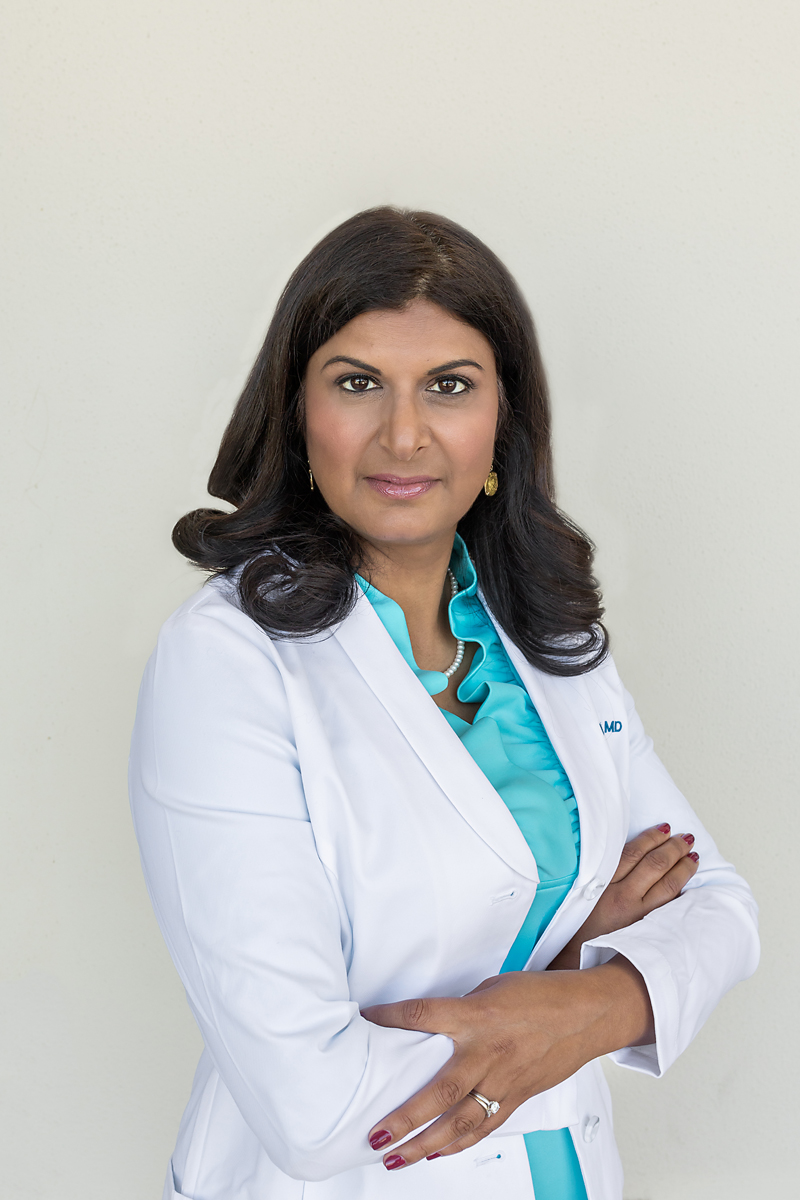
Alita G. Sikora, MD
Dr. Alita Gonsalves Sikora, MD, specializes in Physical Medicine and Rehabiltation (also known as Physiatry) and has practiced in Vero Beach since 2007. She started her own practice, Sikora Integrative Medicine, in 2017 in Vero Beach and also offers telemedicine to Florida residents.
Physical Medicine and Rehabilitation is a medical specialty focused on restoring function and treating pain in the bones, muscles, joints, and nervous system, most often without surgery. She trained at the University of Connecticut School of Medicine and did her residency training at NY Presbyterian (Columbia and Cornell) in NYC.
She offers regenerative and integrative approaches, treating chronic pain and musculoskeletal conditions with stem cells, PRP, exosomes, peptides, shockwave therapy, laser therapy, acupuncture, and prolotherapy, as well as traditional medications and injections. She also certifies qualified patients for medical marijuana in the state of Florida.
She also offers bioidenical hormone optimization including pellets, medical weight loss, peptides, IV vitamin therapy, and functional lab testing.

 1255 37th St. Suite B,