
 772-228-6882




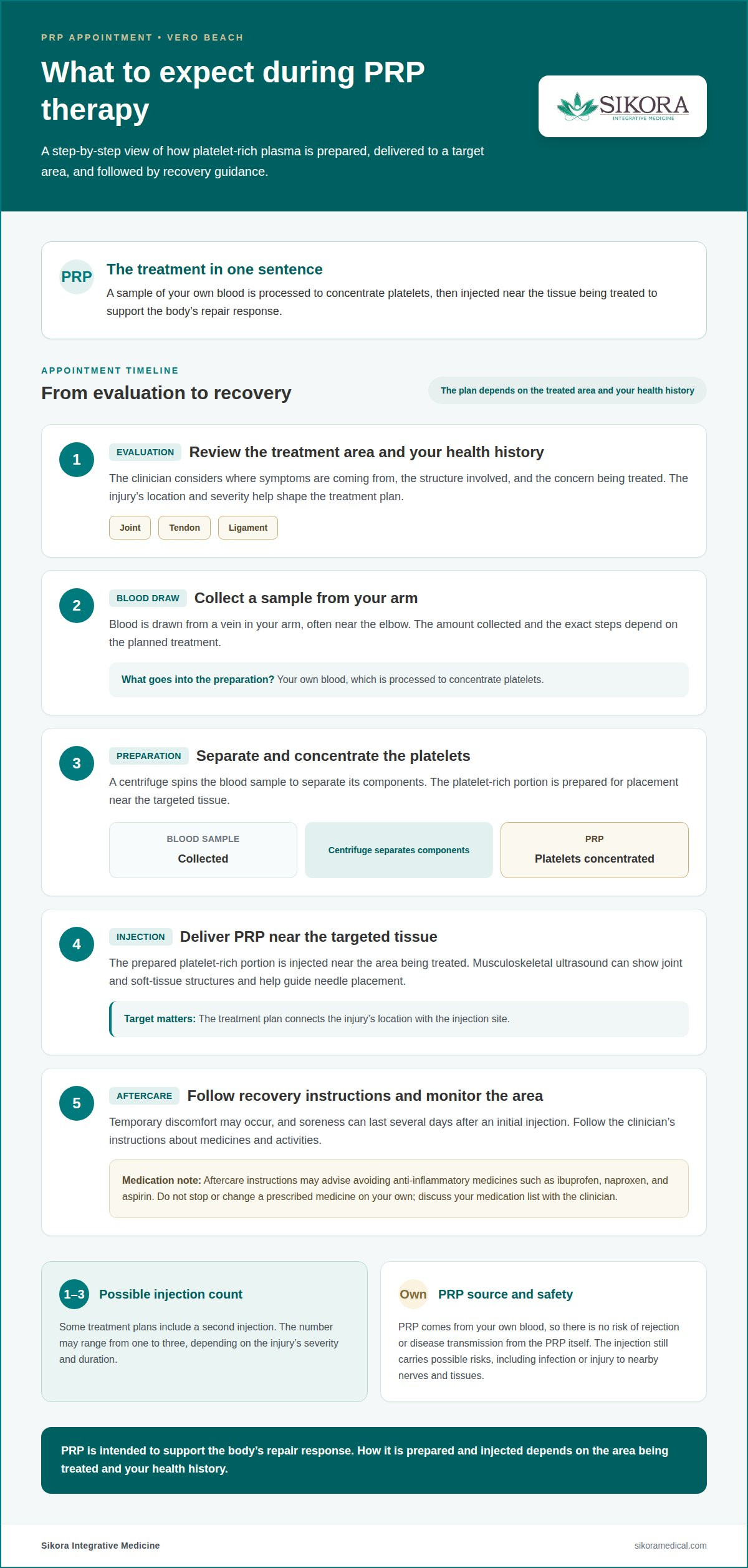
PRP is intended to support the body’s repair process, not simply mask discomfort. If you’re searching for platelet rich plasma therapy near me in Vero Beach, PRP uses a sample of your own blood, processed to concentrate platelets and then injected into a targeted area.
Platelets release growth factors that participate in tissue repair and inflammation regulation, while the preparation and injection plan depend on the area being treated and your health history.
This guide explains how PRP is prepared, what to expect during treatment, and how it may support healing in joint and soft-tissue conditions. You’ll also learn how PRP and bone marrow aspirate (BMA) differ, which concerns may be considered for treatment, and what to know about possible side effects, safety, and recovery as you weigh your next steps.
Key Takeaways
- Learn which joint, tendon, and sports-related concerns may be considered for PRP or BMA treatment.
- Understand how concentrated platelets support the body’s repair response and why results can vary by tissue and treatment plan.
- Know the potential side effects and safety considerations to discuss before an injection.
- Follow the steps of a PRP appointment, from blood draw and preparation to targeted injection and recovery guidance.
What conditions can be treated with PRP and BMA?
PRP may be considered for arthritis, tendon problems, and sports injuries affecting joints or soft tissues. Examples include knee osteoarthritis, tennis elbow, rotator cuff tendinopathy, and Achilles tendinopathy. These conditions can cause painful movement, repetitive strain, or tissue damage that limits everyday activities. Suitability depends on the affected structure and the concern being treated.
Reported outcomes offer context, not a forecast for your recovery. For knee osteoarthritis, reported improvement in pain and function ranges from 71-85%. For lateral epicondylitis, or tennis elbow, symptom resolution ranges from 82-89%. Shoulder function improved in 63-85% of patients treated for rotator cuff tendinopathy. For Achilles tendinopathy, reported symptom relief at 6-12 months ranges from 70-78%.
PRP has traditionally been used for muscle, tendon, and ligament injuries. In orthopedics and sports medicine, it may support healing in joint, tendon, and ligament conditions. Bone marrow aspirate (BMA) is another option for some musculoskeletal concerns. If you’re researching platelet rich plasma therapy near me in Vero Beach, start by identifying the joint or soft tissue causing your symptoms. A treatment plan depends on the injury’s location and severity, and whether the goal is to address a tendon, ligament, or joint.
Medication use matters after an injection. Aftercare instructions may advise avoiding anti-inflammatory medicines, including ibuprofen, naproxen, and aspirin, because they may interfere with the intended healing response. Don’t stop or change a prescribed medicine on your own. Discuss your medication list with the clinician and follow their instructions. When choosing platelet rich plasma therapy near me in Vero Beach, understand the aftercare, including how medicines and activities may affect recovery.
Are PRP and BMA injections safe?
PRP injections deliver concentrated platelets from your blood to a targeted area, with the aim of supporting tissue repair. Because the material comes from your own blood, there is no risk of rejection or disease transmission from the PRP itself. The injection still carries potential risks, including infection or injury to nearby nerves and tissues.
Some treatment plans include a second injection. The number may range from one to three, depending on the injury’s severity and duration. Soreness can last several days after an initial PRP injection. Increased pain at the injection site, scar tissue, and calcification are also possible. Discussing the procedure and recovery steps is an important part of informed care.
PRP may be considered instead of a cortisone injection for some soft-tissue conditions. A review reports PRP may be more effective for many such conditions when outcomes are measured at 6-month and 12-month intervals. Cortisone can reduce inflammation and pain, but it doesn’t heal damaged tissue; multiple, frequent cortisone injections can increase tissue damage.
Image guidance can help target an injection. Musculoskeletal ultrasound shows joint and soft-tissue structures during treatment, helping guide needle placement in areas such as the shoulder. This can support accurate delivery to the intended tissue and reduce unnecessary needle movement. The clinician also considers the injury’s location and surrounding anatomy when planning the injection.
PRP injections can cause temporary discomfort, and possible complications include infection or damage to nearby structures. BMA involves bone marrow aspiration, which can be performed as an outpatient procedure using local anesthetic and light sedation. Since the procedures differ, ask what each involves and which symptoms require follow-up.
If you’re weighing regenerative injections against other options, review how ultrasound-guided PRP care can target a joint or soft tissue.
How platelet-rich plasma supports healing
PRP starts with your own blood. A centrifuge separates its components, concentrating platelets before the preparation is placed near the targeted tissue. Platelets release growth factors, which act as signals in the body’s repair response. The aim is to support healing in an injured tendon, ligament, or joint, rather than simply mask discomfort.
Concentration matters to the proposed mechanism. A platelet concentration of 4 to 5 times the baseline is described as the minimum necessary to stimulate healing. PRP growth factors are also described as reaching 5 to 10 times the concentration found in normal blood. These factors may activate cellular repair, regulate inflammation, and promote tissue healing over time.
The process is gradual. PRP is used to support tissue repair in chronic joint and soft-tissue pain, not just cover symptoms. As the area responds, mobility may increase and pain may diminish over a month or two. Your response depends on the tissue involved and the injury being treated. A strained tendon and an irritated joint place different demands on the body’s repair process.
Sports medicine uses PRP for joint, tendon, and ligament conditions. For example, a clinician may consider it for a tendon injury that affects movement or a ligament problem around a joint. The target matters: growth factors need to be delivered near the tissue needing support. That is why the treatment plan connects the injury’s location to the injection site.
The key point is that PRP provides concentrated signals, not replacement tissue. Its purpose is to encourage the body’s own repair activity. A centrifuge prepares the platelet-rich portion, and the growth factors help guide responses such as cellular repair and inflammation regulation. This helps explain why healing can take time rather than providing an instant mechanical fix.
What should I expect during a PRP therapy appointment?
Your visit begins with a review of the treatment area and your health history. To prepare PRP, blood is drawn from a vein in your arm, often near the elbow. The sample is processed to separate the platelets from other blood components. The amount drawn and exact steps depend on the planned treatment.
Preparation includes a centrifuge, which spins the blood to separate its components. One described process takes about 10 to 15 minutes of centrifuging. In Vero Beach, PRP is prepared on-site using the EmCyte PurePRP system. Once prepared, the platelet-rich portion is ready for the targeted treatment.
For a joint or soft-tissue injection, the clinician identifies the intended area before placing the PRP. Musculoskeletal ultrasound can help assess the target and guide needle placement. This is called an ultrasound-guided treatment. The image lets the clinician see the joint or soft tissue while directing the injection, such as toward a tendon or knee joint.
The procedure may include local anesthetic around the injured area before the injection. You may have soreness at the treatment site for several days afterward. Follow the specific aftercare instructions for your procedure, including guidance on activity and medicines. Don’t change prescribed medication without discussing it with the clinician managing your care.
Appointment details vary by treatment site. A scalp PRP procedure for hair loss follows a different sequence: blood is drawn, processed in a centrifuge, and injected into selected scalp areas. That differs from an injection for a joint or tendon—and in wellness and day spa settings that provide aesthetic services, facilities often streamline booking and client tracking using specialized systems such as milanosoftware.com. Clarifying the target and planned steps helps you understand what the visit involves.
If you’re considering PRP for a joint or soft-tissue concern, schedule a PRP treatment consultation to discuss the preparation and injection plan.
Sikora Integrative Medicine: Stem Cells
Sikora Integrative Medicine offers PRP and stem cell therapies for people exploring regenerative medicine options for musculoskeletal concerns. If you’re weighing next steps after learning about PRP, a clinical discussion can connect your symptoms and treatment goals with available approaches. The practice also offers exosome and hormone therapy, which address different care needs.
Before deciding, review the evidence and regulatory status of regenerative options with the physician. This can clarify how a proposed treatment relates to your specific concern and what it is intended to do. Not every approach suits every person, so understanding the reasoning behind a plan matters.
If you’re ready to discuss whether PRP or stem cell therapy fits your needs, contact Sikora Integrative Medicine or visit sikoramedical.com.
Choose Your Next Step With Confidence
If you’re considering platelet rich plasma therapy near me in Vero Beach, focus your next conversation on the outcome that matters most, such as moving comfortably or returning to a valued activity. Describe when the problem began, what makes it worse, and how it affects your daily routine. This context can help shape a useful discussion about treatment goals and options.
Sikora Integrative Medicine offers PRP and stem cell therapy, along with hormone therapy. A physician-led discussion can help you understand how a proposed option relates to your concerns and what questions to consider before deciding. Whether PRP fits depends on your health needs and the area being treated.
Take the next step at your pace. Contact Sikora Integrative Medicine to discuss your concerns and explore an appropriate path forward.
Frequently Asked Questions
What is PRP Therapy?
PRP therapy applies platelet-rich plasma to a selected treatment area. Start by identifying the specific problem you want addressed rather than choosing a treatment by name alone. Before your visit, note which activities are limited and what you hope to do more comfortably. These details can help clarify whether the proposed approach matches your goals.
How long does it take to recover from platelet rich plasma?
Recovery planning depends partly on your usual responsibilities and the treated area. Arrange help with tasks that place strain on that area, and keep a brief record of how daily activities feel. A follow-up after initial PRP or BMA treatment occurs 3-4 weeks later. Bring your activity notes and questions to that visit so you can discuss your progress and next steps.
What Results Can You Expect?
Set a clear, personal goal before treatment, such as completing a work task or returning to a specific recreational activity. Use that same goal when discussing progress at follow-up. This makes the conversation more concrete than relying on a general impression. Your care team can consider whether the change aligns with the treatment target and whether the plan needs adjustment.
What Is PRP?
PRP stands for platelet-rich plasma. The distinction between PRP and PRP therapy is useful: PRP names the biologic material, while therapy describes its use in a treatment plan. If a clinician recommends it, ask which tissue or structure is being targeted and how that relates to your symptoms. This can help you understand the purpose of the planned procedure.
What Is Regenerative Medicine?
Regenerative medicine is a field that uses biologic materials to support the body’s healing response. It includes different approaches, so the field’s name alone doesn’t tell you which material or procedure is proposed. Before deciding, ask what the specific option is intended to address, what evidence and regulatory status apply, and how it fits your health priorities.
What is platelet-rich plasma (PRP) therapy and what conditions does it treat?
PRP therapy is an injection-based approach considered for selected orthopedic concerns. Whether it fits depends on the diagnosis, the structure involved, and the treatment goal. PRP and BMA are distinct options, so ask why one is being considered for your concern. A useful discussion connects the proposed treatment to your evaluation rather than relying only on a broad condition label.
Article by
Alita G. Sikora, MD
Dr. Alita Gonsalves Sikora, MD, specializes in Physical Medicine and Rehabiltation (also known as Physiatry) and has practiced in Vero Beach since 2007. She started her own practice, Sikora Integrative Medicine, in 2017 in Vero Beach and also offers telemedicine to Florida residents.
Physical Medicine and Rehabilitation is a medical specialty focused on restoring function and treating pain in the bones, muscles, joints, and nervous system, most often without surgery. She trained at the University of Connecticut School of Medicine and did her residency training at NY Presbyterian (Columbia and Cornell) in NYC.
She offers regenerative and integrative approaches, treating chronic pain and musculoskeletal conditions with stem cells, PRP, exosomes, peptides, shockwave therapy, laser therapy, acupuncture, and prolotherapy, as well as traditional medications and injections. She also certifies qualified patients for medical marijuana in the state of Florida.
She also offers bioidenical hormone optimization including pellets, medical weight loss, peptides, IV vitamin therapy, and functional lab testing.

 1255 37th St. Suite B,