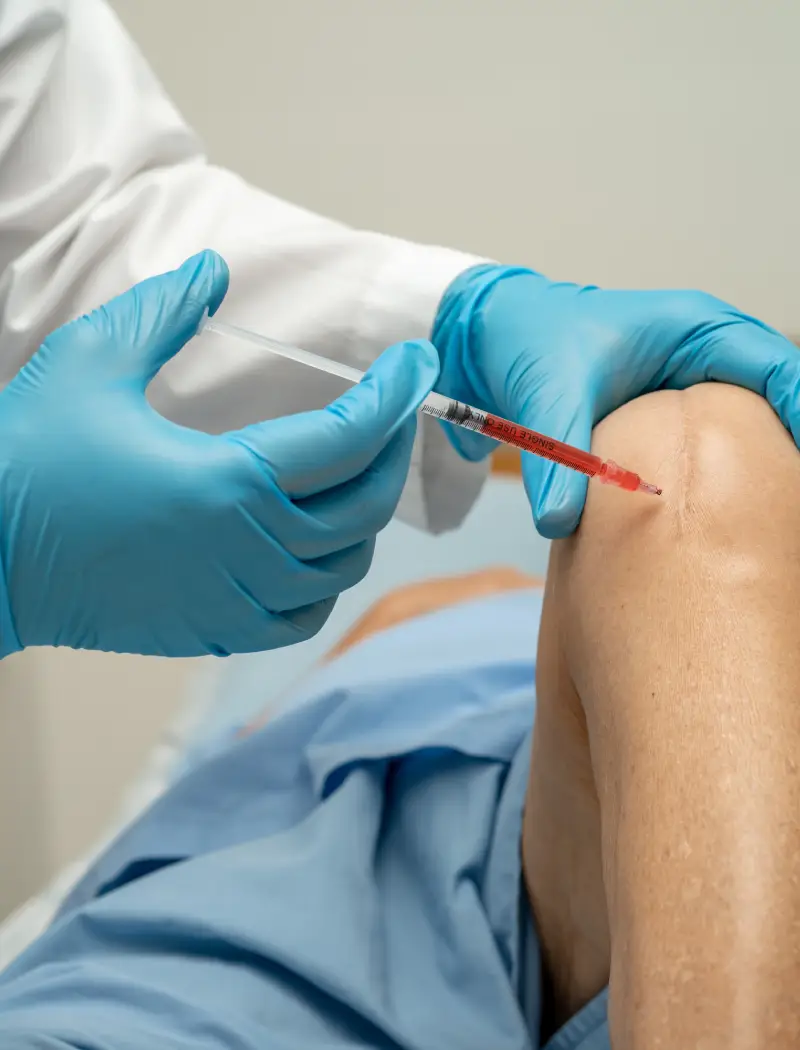
Joint pain can make walking, reaching, exercising, and everyday tasks more difficult. Joint injections place medication or another preparation into a selected joint. Related procedures may target nearby structures, such as a bursa or tendon sheath.
At Sikora Integrative Medicine, recommendations begin with your symptoms, examination, medical history, and relevant imaging. Depending on the diagnosis, an injection may provide temporary symptom relief or help you participate more comfortably in rehabilitation.
Ultrasound guidance may be used to visualize the anatomy and guide needle placement. Your provider will explain the proposed preparation, expected benefits, risks, and alternatives before treatment.
Depending on the diagnosis and preparation, an injection may:
Benefits vary by product and condition. An injection does not necessarily correct the underlying cause of pain or prevent further joint changes.
Treatment depends on the diagnosis and the structure involved.
Certain injections may help manage symptoms for selected patients. They do not reverse arthritis or guarantee cartilage repair.
Corticosteroids are anti-inflammatory injections that may provide short-term relief when joint inflammation contributes to symptoms.
Treatment may target an inflamed bursa near a joint. This differs from placing medication inside the joint itself.
Selected procedures may be considered around an affected tendon sheath. Injection location and preparation matter because corticosteroids can weaken tendons.
An injection may be discussed when initial care has not provided sufficient relief. Patients asking about small joint injections need the same diagnosis-specific assessment as those with knee, hip, or shoulder concerns.
The injured structure, imaging findings, and stage of recovery determine whether an injection is appropriate.
Not every painful joint needs an injection. Your evaluation may point toward rehabilitation, medication, further testing, or specialist care.
The effect depends on the preparation and where it is placed:
Musculoskeletal ultrasound may help guide a procedure. Imaging supports clinical assessment but does not always identify a single definitive source of pain.
Discuss the risks relevant to your proposed injection before proceeding.
The procedure portion is often brief, but your appointment also includes assessment, preparation, and aftercare guidance.
Your provider reviews the target area, confirms the proposed treatment, and prepares the skin. Ultrasound may be used when appropriate.
The prescribed preparation is delivered into the selected joint or nearby structure using the planned technique.
You may feel a pinch, pressure, or discomfort. Local anesthetic may be used depending on the procedure.
Follow your individual activity and wound-care instructions. Some procedures require temporary limits on strenuous or weight-bearing activity.
Further injections depend on the diagnosis, product, response, and risks. Some preparations use a defined series; others require reassessment before repeat treatment.
Timing differs between preparations and patients. Local anesthetic may provide brief numbing, while a corticosteroid may take several days to have an effect.
Follow-up considers:
There is no universal point at which patients should expect a “full benefit.” Limited or absent relief calls for reassessment rather than automatic repeat injections.
Other options may be discussed according to your diagnosis:
An evaluation may be useful if you have:
These concerns do not establish eligibility on their own. Your provider will review previous treatment, examination findings, medical history, and imaging when relevant.
Our approach to joint care emphasizes individual assessment and clear treatment decisions.
A pinch, pressure, or discomfort may occur. Local anesthetic may be used for some procedures. Ask what to expect for your specific injection.
Duration varies by preparation, diagnosis, and response. Corticosteroid injections generally provide temporary relief. Other products have different evidence and expected effects; longer-lasting benefit is not guaranteed.
Some patients receive one injection, while certain products use a defined course. Repeat treatment should account for response, product guidance, and cumulative risks rather than follow a routine schedule for everyone.
Follow the instructions provided for your procedure. You may need to temporarily limit strenuous activity or loading of the treated joint before gradually returning to exercise.
Your provider will reassess the diagnosis, target, preparation, and other possible contributors to pain. A limited response does not conclusively identify the source or mean another injection is necessary.
No. Anti-inflammatory injections, such as corticosteroids, are one category. Other preparations include certain hyaluronic acid products and PRP, each with different purposes, evidence, and limitations.
Coverage depends on the diagnosis, preparation, procedure, and plan requirements. Confirm benefits and expected costs with your insurer and our office before proceeding. Financing may be available for eligible services.
Considering joint injections in Vero Beach? Our team can evaluate your concerns and explain whether an injection or another approach may fit your needs.
Treatment is provided at our Vero Beach office. If you are traveling from another Florida community, contact us about consultation requirements before arranging your visit.
Address:
1255 37th St., Suite B, Vero Beach, FL 32960
Phone: (772) 228-6882
Financing through M Lend Financial may be available, subject to terms and approval.
Disclaimer: This information is for educational purposes and does not replace individualized medical advice. Treatment requires medical evaluation. Benefits, risks, and responses vary; no outcome is guaranteed. Services are available exclusively to Florida residents.
© 2026 Sikora Integrative Medicine. All Rights Reserved.
© 2026 Sikora Integrative Medicine.
All Rights Reserved.