
 772-228-6882




Symptoms alone can’t show whether testosterone replacement therapy in Vero Beach, FL, is appropriate. A medical evaluation and hormone testing can help determine whether low testosterone may be contributing to your concerns. Changes in energy, mood, sexual health, or physical well-being can have many causes, so it’s better to seek an assessment than assume testosterone is the issue.
If you’ve noticed changes that concern you, you deserve a clear explanation of what testing can and cannot show. A qualified clinician can review your symptoms, test results, health history, and goals with you before discussing treatment.
This guide explains symptoms that may prompt an evaluation, what to expect from testosterone testing, and how clinicians consider treatment options, helping you take an informed next step toward care in Vero Beach.
Key Takeaways
- Symptoms can prompt an evaluation, but they don’t establish low testosterone on their own.
- Learn how hormone testing can help inform a discussion about whether treatment may be appropriate.
- Compare treatment approaches and consider how your health history and goals shape the decision.
- Explore when Hormone Therapy at Sikora Integrative Medicine may be a next step in seeking care.
Low Testosterone Treatment in Vero Beach & Indian River
In Vero Beach, an evaluation should connect your symptoms with hormone testing rather than rely on symptoms alone. Bloodwork, a clinical review, and a discussion of options can help guide the next step at Sikora Integrative Medicine.
Blood Testing and Lab Turnaround
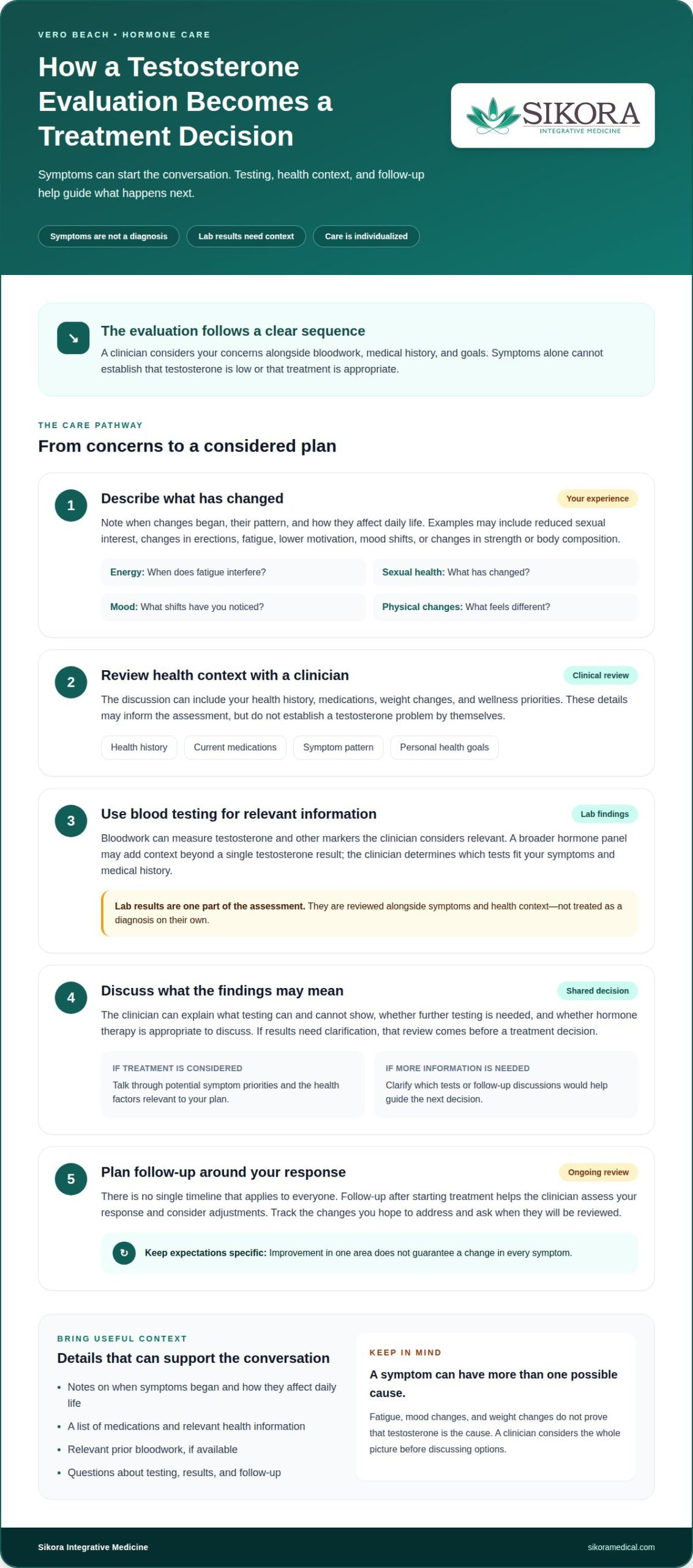
Blood testing can measure testosterone and other markers a clinician considers relevant to your health history. If blood draws are available on-site, they may make sample collection more convenient, but turnaround depends on the tests ordered and laboratory processing. A clear care process explains where samples are collected, how results are delivered, and when they will be reviewed.
At a Vero Beach appointment, ask how the clinician handles results that call for follow-up testing. A broader hormone panel may provide context beyond a single testosterone result, but the clinician determines which tests fit your symptoms and medical history.
Bloodwork and Symptom Review
Lab results are one part of an assessment, not a diagnosis on their own. A clinician can review them alongside changes in energy, sexual function, mood, and other concerns. For example, fatigue can have causes beyond a hormone imbalance, so the timing and pattern of symptoms are useful context.
Bring a clear account of what has changed, along with relevant medication and health information. The clinician can consider these details and your bloodwork, then explain whether hormone therapy is appropriate to discuss. Treatment goals should relate to your symptoms and health priorities, not a promise to restore a particular feeling.
Clinic Services and Provider Credentials
When comparing clinics in Vero Beach, consider the evaluation and follow-up offered, the prescribing clinician’s credentials, and how patient reviews describe communication. Reviews may help you understand people’s experiences with scheduling and explanations, but they can’t determine whether treatment is right for you.
Testosterone therapy requires a prescription; it is not an over-the-counter treatment. Prescribing in Florida must follow applicable requirements, and a clinician’s assessment at Sikora Integrative Medicine should guide whether treatment is suitable. Ask how the clinic reviews bloodwork, discusses options, and plans follow-up.
Testosterone testing and treatment options
Testing and treatment planning bring together your symptoms, lab findings, health history, and wellness priorities. A consultation can help determine whether hormone therapy is suitable and what questions need attention first.
Treatment Timing After Consultation
Treatment timing depends on completing the assessment, reviewing relevant tests, and discussing your health history. If results need clarification, that review comes before a treatment decision. During your consultation, discuss how lab results are communicated, how options are explained, and how follow-up is arranged. This clarifies the steps between evaluation and a possible prescription.
Weight changes, fatigue, medications, and other health factors can inform the discussion. They don’t establish a testosterone problem on their own, but they help the clinician assess the full picture.
Expected Treatment Benefits
When testosterone is low and treatment is appropriate, hormone therapy may aim to address symptoms associated with that finding. You can discuss energy, sexual health, mood, or physical function as priorities. Be specific about the changes you hope to address: “more energy” can mean different things at home, at work, or during exercise.
A treatment plan should spell out what you and your clinician will monitor. Improvement in one area doesn’t guarantee a change in every symptom, so follow-up should consider your experience alongside clinical findings.
Treatment Timelines
There’s no timeline that applies to everyone. The assessment, testing, lab review, and treatment decision all affect when care can proceed. Follow-up after starting treatment helps the clinician assess your response and consider adjustments. Ask which changes to track and when they’ll be reviewed instead of relying on a general timeline.
For eligible patients, TeleMed Services can support hormone care remotely. The process still centers on consultation, review of relevant information, and follow-up planning. Explore TeleMed hormone care as one way to discuss care options from home.
Low testosterone symptoms
Symptoms that may prompt a hormone discussion include reduced sexual interest, changes in erections, fatigue, lower motivation, or shifts in mood. Some people also notice changes in strength or body composition. These experiences have many possible causes, so a symptom alone can’t establish that testosterone is low.
Consider how each change affects your daily life. For example, note whether fatigue interferes with work, exercise, or sleep, and whether changes in sexual health began around the same time. A specific pattern gives the clinician more useful context than a general concern such as “I feel off.”
During a consultation, the clinician can review your symptoms, health history, medications, and available lab results. Be direct about personal concerns, including sexual function or mood. Mention weight changes, too, without assuming they explain every symptom. Medical weight loss and hormone optimization address different health questions.
To book a hormone therapy consultation in Vero Beach, follow Sikora Integrative Medicine’s appointment instructions. Bring a medication list, relevant prior bloodwork, and notes on when your symptoms began and how they affect you.
To guide the conversation, organize your notes by concern: energy, sleep, sexual health, mood, and physical changes. Include examples, such as feeling unusually tired during a familiar activity or noticing a change in interest. This helps the clinician understand your priorities without treating symptoms as proof of a particular cause.
Across Indian River County, an evaluation can be helpful when persistent changes concern you or disrupt daily life. The aim is to clarify what needs attention and whether hormone testing belongs in that discussion.
Testosterone replacement therapy options
Testosterone replacement therapy isn’t a preset plan. For patients in Vero Beach, the decision should take documented hormone levels, symptoms, medical history, and treatment goals into account. A useful appointment explains what the evaluation indicates, which options are under consideration, and how follow-up will guide care.
Ask the clinician to explain the proposed prescription in plain language, including how it fits your routine and what monitoring it involves. Discuss practical details such as administration, follow-up, and what to do if the plan becomes difficult to maintain. Make a choice you understand, not simply the option that sounds quickest.
Set clear goals before deciding. If reduced libido concerns you, describe how it affects your relationships or quality of life. If fatigue or changes in physical function matter more, explain when they occur and which activities feel different. These details help focus the discussion on the symptoms treatment is intended to address.
Hormone levels are one part of the decision. Your medical history, current medications, and response over time also matter. Ask how the clinician will review follow-up findings and what might lead to a change in the plan. Treat hormone therapy as ongoing care, not a one-time appointment with an assumed result.
Sleep, activity, and nutrition can also be discussed as part of broader wellness, but they don’t replace an evaluation of a suspected hormone concern. A peptide discussion should likewise remain separate from a decision about testosterone replacement. Ask what each proposed approach is intended to address and how its role differs.
The key takeaway: don’t choose treatment based on a promise to restore energy or libido. Decide only after the clinician explains the rationale, practical demands, and follow-up plan for your situation. That conversation gives you a sound basis for deciding whether hormone treatment fits your priorities.
Sikora Integrative Medicine: Hormone Therapy
Sikora Integrative Medicine provides Hormone Therapy for people seeking medical evaluation of hormone-related symptoms and a discussion of treatment options. If fatigue, changes in libido, or other concerns affect your daily life, a clinician can review your health information and discuss whether hormone care suits your needs.
Dr. Alita Sikora continues medical education in bioidentical hormone therapy, supporting informed discussions about care. Before deciding, discuss the evidence, potential approaches, and questions that matter to you. Not everyone is a candidate, and treatment decisions should reflect individual health factors.
If you’re ready to discuss hormone concerns, contact Sikora Integrative Medicine.
Take the Next Step Toward Informed Care
If you’re considering testosterone replacement therapy in Vero Beach, FL, make your next step a conversation focused on your health priorities. Ask how a treatment plan would be reviewed over time and what alternatives may fit your needs. Understand the reasoning behind any recommendation before deciding whether to proceed.
Sikora Integrative Medicine provides Hormone Therapy, as well as stem cell and PRP treatments. Its care team includes a board-certified family nurse practitioner, certified physician assistants, and registered nurses. The team can discuss your concerns and explain relevant care options before you decide.
When you’re ready to discuss your options, contact Sikora Integrative Medicine. Take the next step with your questions in hand and a focus on care that reflects your goals.
Frequently Asked Questions
How do I know if I need it?
A medical evaluation is needed to determine whether testosterone treatment may be appropriate. For example, a persistent change in sexual interest or stamina is worth discussing, especially if it affects your relationships or routine. Similar symptoms can have other causes, so don’t treat a symptom as proof. A clinician can assess your concerns and determine whether further evaluation is appropriate.
How fast can I start?
There’s no standard start date after an initial appointment. The next steps depend on whether the clinician has enough information to make a treatment decision or needs to evaluate further. For testosterone replacement therapy in Vero Beach, FL, ask what needs to happen between your first discussion and a possible prescription. This explains the process without assuming treatment will begin immediately.
How long until I feel a difference?
There’s no reliable timetable that applies to everyone or every symptom. Your response may depend on the reason for treatment, the plan, and your individual health. Instead of judging by one good or difficult day, track specific changes, such as interest in activities or daily stamina. Share the pattern at follow-up so your clinician can discuss it in context.
Is insurance required?
Insurance isn’t a prerequisite for discussing hormone care. Sikora Integrative Medicine lists hormone therapy as self-pay, while coverage for other services depends on the service and plan. Before deciding, clarify what your visit and recommended care involve. Coverage for qualifying pain-management services or certain tests doesn’t mean hormone therapy is covered.
Is it safe?
Testosterone therapy isn’t appropriate for everyone, and no treatment is risk-free. Before recommending care, a clinician should consider your health history, medications, and goals, then explain potential risks and follow-up. Share relevant conditions and all medications or supplements you take to support an individualized discussion. This content is for educational purposes only and doesn’t constitute medical advice.
What Is Men’s Hormone Therapy (TRT)?
Men’s hormone therapy, often called testosterone replacement therapy or TRT, is clinician-directed treatment intended for men with low testosterone when evaluation supports treatment. It involves more than responding to fatigue or another symptom; the care plan considers medical findings and personal health factors. At Sikora Integrative Medicine, Hormone Therapy is an option to discuss with a clinician as part of an individualized evaluation.

Article by
Alita G. Sikora, MD
Dr. Alita Gonsalves Sikora, MD, specializes in Physical Medicine and Rehabiltation (also known as Physiatry) and has practiced in Vero Beach since 2007. She started her own practice, Sikora Integrative Medicine, in 2017 in Vero Beach and also offers telemedicine to Florida residents.
Physical Medicine and Rehabilitation is a medical specialty focused on restoring function and treating pain in the bones, muscles, joints, and nervous system, most often without surgery. She trained at the University of Connecticut School of Medicine and did her residency training at NY Presbyterian (Columbia and Cornell) in NYC.
She offers regenerative and integrative approaches, treating chronic pain and musculoskeletal conditions with stem cells, PRP, exosomes, peptides, shockwave therapy, laser therapy, acupuncture, and prolotherapy, as well as traditional medications and injections. She also certifies qualified patients for medical marijuana in the state of Florida.
She also offers bioidenical hormone optimization including pellets, medical weight loss, peptides, IV vitamin therapy, and functional lab testing.

 1255 37th St. Suite B,