
 772-228-6882




B vitamins for neuropathy may support nerve health and ease symptoms when a vitamin deficiency is contributing, but supplements aren’t a reliable fix for every cause of nerve pain. Vitamin B12 helps maintain nerve cells and the protective myelin sheath, so treating a confirmed deficiency can help prevent further damage, though it may not reverse nerve changes that have already occurred.
The right approach depends on what’s behind your symptoms: low B12, for example, can be associated with numbness and balance problems, while too much vitamin B6 can also harm nerves. Alpha-lipoic acid has been studied for diabetic neuropathy, but results are mixed, and people with thiamin deficiency may face dangerous side effects from high doses.
This article explains what the evidence suggests about B vitamins for nerve symptoms, when testing and deficiency treatment matter, and what to consider before combining B12 with alpha-lipoic acid. You’ll also learn why dose, medication use, and the underlying cause of neuropathy all matter when weighing potential benefits against safety.
Key Takeaways
- Consider whether a vitamin deficiency could be contributing to nerve symptoms; treating a confirmed deficiency may help protect nerve health.
- Review supplement doses carefully, since excessive vitamin B6 can harm nerves, and medications may affect vitamin B12 levels.
- Discuss supplements with a healthcare professional before adding them, especially if you take medication or have a health condition.
- Combination therapy with vitamin B12 and alpha-lipoic acid has been studied, but results are mixed and thiamin deficiency can affect safety.
Can Supplements Be Helpful for Nerve Health?
B vitamins for neuropathy may support nerve health when a deficiency is contributing to symptoms, but supplements do not address every cause. Consider your symptoms, diet, and medication history before using vitamins for nerve pain.
B Vitamins in Nerve Health
Vitamins B1, B6, and B12 support distinct processes in the nervous system. Thiamin, or B1, deficiency can contribute to neuropathy, including when alcohol misuse is involved. B6 supports normal body functions, but excessive intake can harm nerves. B12 helps maintain nerve cells and myelin, their protective coating. For that reason, B vitamins for neuropathy make most sense when the suspected deficiency and dose are considered together.
Forms Used in Nerve-Support Supplements
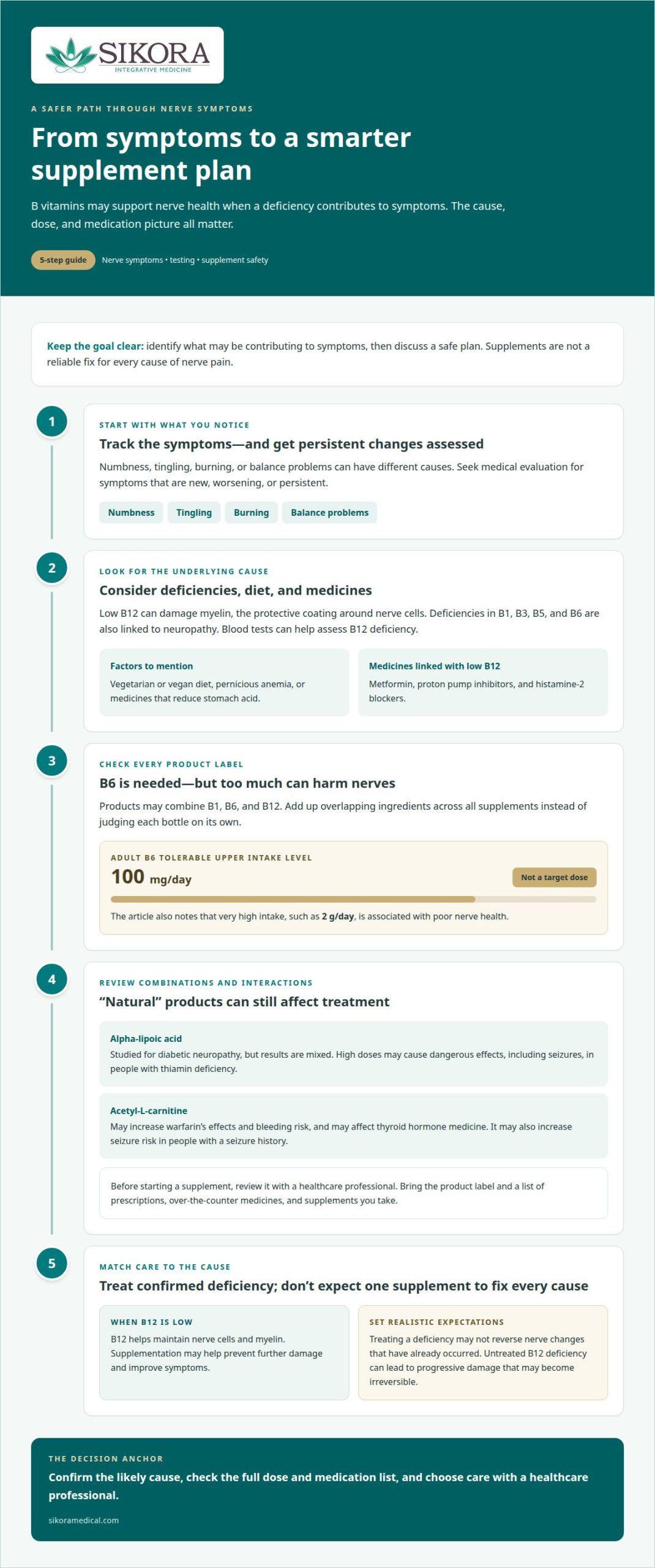
Products may combine B1, B6, and B12; benfotiamine is a form of B1, while pyridoxine is a form of B6. According to the National Institutes of Health Office of Dietary Supplements, based on limitations in data about long-term harms, the FNB halved doses used in studies to establish a UL of 100 mg/day for adults. The National Institutes of Health Office of Dietary Supplements also says pyridoxine at 100 mg/day is below the 100 mg tolerable upper intake level. These limits aren’t recommended targets, and low or excessive B6 intake can cause nerve problems.
Other Nutrients and Nerve Protection
Acetyl-L-carnitine has been studied for painful peripheral neuropathy; a review considered four randomized clinical trials. A typical supplement dosage is 500 mg twice per day, but it may increase seizure risk in people with a seizure history. Magnesium contributes to normal nerve and muscle signaling, but that role alone doesn’t establish it as a neuropathy treatment. The likely cause of symptoms remains central to choosing supplements.
B12 Deficiency and Nerve Damage
B12 deficiency can damage myelin and cause numbness, cognitive changes, balance problems, or peripheral neuropathy. Untreated deficiency can lead to progressive nerve damage that may become irreversible. B12 occurs naturally in animal products, so dietary intake can matter when assessing risk. Blood tests can help assess deficiency. Supplementation may help prevent further damage and improve symptoms, though it may not reverse existing nerve degeneration.
Supplement safety and medication interactions
Supplements can interact with medicines or affect health conditions, so review them with a healthcare professional before starting. Bring the product label and a list of prescriptions, over-the-counter medicines, and supplements you already take. This helps identify overlapping ingredients, total doses, and possible effects on diabetes medicines or kidney health. Even products marketed for nerve support can pose risks when combined with treatment for another condition.
Some medicines may contribute to low vitamin B12. Metformin, used for type 2 diabetes, is one example; proton pump inhibitors and histamine-2 blockers, which reduce stomach acid, are others. If you take one of these medicines and develop symptoms such as numbness or tingling, discuss medical assessment rather than assuming a supplement alone will address the cause. A clinician can consider your medication history and whether blood testing is appropriate.
Excessive vitamin B6 can harm nerves, and very high intake, such as 2 g/day, is associated with poor nerve health. Don’t assume that combining several products is safe because each label lists a familiar vitamin. Alpha-lipoic acid is an antioxidant studied for diabetic neuropathy, but high doses may cause dangerous effects, including seizures, in people with thiamin deficiency. Acetyl-L-carnitine can increase warfarin’s effects and bleeding risk, and may affect thyroid hormone medicine.
Prescription medicines may also be used to manage neuropathic pain. For chronic trigeminal neuropathy, options can include antidepressants such as SSRIs, SNRIs, or TCAs, and anticonvulsants such as gabapentin or carbamazepine. These medicines address pain symptoms; they do not establish whether a vitamin deficiency is present. Do not stop or change prescribed treatment without medical guidance.
Seek medical evaluation for new, worsening, or persistent numbness, tingling, burning, or balance problems. These symptoms can have different causes, and prompt assessment helps identify possible nerve damage and guide care. Tell the clinician about every supplement and medication you take, including products described as natural. That detail can reveal interactions and help separate side effects from symptoms of the underlying condition.
Treatment options for vitamin-deficiency neuropathy
Treatment begins by addressing any deficiency and considering other causes of peripheral symptoms. Depending on the cause, care may involve nutrition, supplements, or additional clinical support.
Other B-Vitamin Deficiencies and Neuropathy
Deficiencies in vitamins B1, B3, B5, and B6 are linked to neuropathy, so B12 isn’t the only nutrient to consider. Alcohol misuse can cause thiamin, or B1, deficiency and contribute to nerve symptoms. The suspected cause guides treatment: replacing a nutrient may address a deficiency, while persistent symptoms can call for other care. A combination of approaches may be considered when more than one factor affects nerve health.
B12 Deficiency and Peripheral Neuropathy
B12 deficiency can contribute to peripheral neuropathy, including tingling and other sensory symptoms. People following vegetarian or vegan diets, taking stomach-acid-reducing medicines, or living with pernicious anemia have risk factors for inadequate B12 intake or absorption. Blood tests can help assess deficiency. Identifying the cause matters because dietary intake alone may not resolve an absorption problem.
B12 Absorption and Supplementation
Vitamin B12 is found naturally in animal foods, including fish and lean red meat, and in fortified breakfast cereals. If intake is low, dietary changes or supplements may be considered; if absorption is impaired, treatment needs to account for that cause. One study reported injectable B12 was more effective than oral nortriptyline for neuropathic symptoms such as tingling. That finding doesn’t establish one approach for every patient.
Take B-vitamin supplements with a meal, and split doses if mild stomach upset occurs. How long does B12 treatment take to improve neuropathy symptoms? There’s no single timeline; improvement depends on the deficiency and nerve symptoms, and supplementation may not reverse established nerve degeneration.
Vitamin replacement is one part of care. Depending on the cause and symptoms, treatment may also include medication, physical therapy, splints, injections, topical creams, or surgery. Clinical evaluation helps match options to the condition being treated.
Vitamin B12 and alpha-lipoic acid combination therapy
Alpha-lipoic acid has been studied alone and alongside vitamin B12 for diabetic neuropathy. The combination aims to address different aspects of nerve health, but findings don’t establish it as a treatment for every cause of pain, numbness, or tingling. Diabetes management and assessment for B12 deficiency remain relevant when choosing an approach.
Alpha-lipoic acid is an antioxidant that may help counter oxidative stress, which can affect nerve function. Clinical research suggests it may improve pain, numbness, and tingling in diabetic neuropathy, but results are mixed and larger studies are needed. A meta-analysis of randomized controlled trials included 523 patients. That evidence helps explain why alpha-lipoic acid is considered, but it doesn’t establish that every patient will benefit or that it replaces care for diabetes.
Oral alpha-lipoic acid supplement doses described for this use range from 600 to 1,200 mg per day. That range isn’t an individualized recommendation. Dose decisions should account for health conditions, other supplements, and medicines. People with thiamin deficiency may face dangerous side effects, including seizures, when taking high doses of alpha-lipoic acid. Identifying deficiency risks matters before starting supplementation.
Combination research has examined vitamin B12 with alpha-lipoic acid and other ingredients. One diabetic neuropathy study involving approximately 80 patients assessed a B-vitamin combination over 3 months. Another study evaluated superoxide dismutase, alpha-lipoic acid, vitamin B12, and carnitine over 12 months. These study designs don’t prove that the combination works for all patients or identify which ingredient drives any change.
For you, the key distinction is whether symptoms may relate to diabetes, B12 deficiency, or another cause. Alpha-lipoic acid doesn’t correct B12 deficiency, and adding B12 doesn’t automatically address oxidative stress or other contributors. A clinician can review symptoms, medications, and test results before considering a combination. Discuss new supplements with a healthcare professional, especially if you take diabetes medicine or have a known deficiency.
Sikora Integrative Medicine: IV Vitamin Drip Lounge
Sikora Integrative Medicine in Vero Beach offers an IV Vitamin Drip Lounge for patients considering vitamin support as part of broader wellness care. If nerve symptoms have you considering supplements, distinguish general wellness support from treatment for a diagnosed deficiency: IV therapy should not replace evaluation or a neuropathy care plan. IV treatments are coordinated by Amber, RN, within physician-led care from Dr. Alita Sikora, MD. This provides a setting to discuss whether IV vitamin therapy fits your health needs and how it relates to other care. If you have persistent numbness, tingling, or pain, discuss your symptoms and current medications with the care team. Contact Sikora Integrative Medicine to talk about your wellness needs.
Choose a Thoughtful Next Step for Your Nerve Health
If you are considering B vitamins for neuropathy, start with a conversation about your health goals, symptoms, and current care. Supplement decisions are more useful when they reflect your individual needs rather than a one-size-fits-all formula. Focus on understanding what may be contributing to your symptoms and which options may suit you.
Sikora Integrative Medicine offers care in several areas, including Hormone Therapy, PRP, and Stem Cells. These services address different health concerns and are not interchangeable with care for a vitamin deficiency or neuropathy. The team can help you understand which care is relevant to your needs, so you can make an informed decision without assuming every option is right for every person.
When you’re ready to discuss your health goals and possible next steps, contact Sikora Integrative Medicine. A clear, individualized conversation can help you move forward with greater confidence.
Frequently Asked Questions
Diabetic neuropathy: Can dietary supplements help?
Some supplements may help, particularly when a deficiency contributes to symptoms, but they do not replace diabetes care. Evidence for alpha-lipoic acid is mixed, so it is not a dependable solution for everyone. If you have diabetes and are considering supplements, discuss them alongside your current treatment plan. A clinician can consider your medicines, health conditions, and possible deficiencies before you add a supplement.
What are the possible causes?
Neuropathy can have several causes, including diabetes, vitamin deficiencies, and alcohol misuse. B12 deficiency may relate to low dietary intake or difficulty absorbing the vitamin. Some medicines, including metformin and acid-reducing drugs, may also contribute to low B12. Nerve symptoms can have other explanations, too, so details such as medication use, diet, and symptom onset help guide assessment.
Why does neuropathy develop?
Neuropathy occurs when peripheral nerves are affected or damaged, disrupting how they carry sensory or other signals. Causes vary and may include diabetes, nutrient deficiencies, and alcohol-related thiamin deficiency. Depending on the cause, symptoms may include altered sensation, pain, or balance problems. Identifying what is affecting the nerves helps determine whether nutrient replacement or another form of care is appropriate.
Can B vitamins help treat peripheral neuropathy?
They may help when a B-vitamin deficiency contributes to peripheral neuropathy, but they don’t treat every cause. For instance, replacing a deficient vitamin addresses a different issue than managing nerve symptoms related to diabetes. Supplement choice and dose should fit your health situation and other medicines. If symptoms persist or change, an assessment can help clarify whether a deficiency is involved or another cause needs attention.
Which B vitamins are important for nerve health and neuropathy?
B1, B6, and B12 are relevant to nerve health, and deficiencies in B1, B3, B5, and B6 have also been linked to neuropathy. That doesn’t mean taking every B vitamin is beneficial. B6 intake is a particular consideration because excessive amounts can harm nerves. Check for overlapping ingredients in a multivitamin and a separate nerve-support product before combining them.
What B12 dose is used for neuropathy, and which forms are available?
There isn’t one B12 dose for every person with neuropathy. A described nerve-support regimen contains 500 µg of B12, but that figure isn’t a universal treatment recommendation. B12 supplements are available orally, and injectable B12 is also used. The appropriate form and amount depend on the suspected deficiency and its cause, including whether low intake or absorption problems are involved.
This content is for educational purposes only and does not constitute medical advice.

Article by
Alita G. Sikora, MD
Dr. Alita Gonsalves Sikora, MD, specializes in Physical Medicine and Rehabiltation (also known as Physiatry) and has practiced in Vero Beach since 2007. She started her own practice, Sikora Integrative Medicine, in 2017 in Vero Beach and also offers telemedicine to Florida residents.
Physical Medicine and Rehabilitation is a medical specialty focused on restoring function and treating pain in the bones, muscles, joints, and nervous system, most often without surgery. She trained at the University of Connecticut School of Medicine and did her residency training at NY Presbyterian (Columbia and Cornell) in NYC.
She offers regenerative and integrative approaches, treating chronic pain and musculoskeletal conditions with stem cells, PRP, exosomes, peptides, shockwave therapy, laser therapy, acupuncture, and prolotherapy, as well as traditional medications and injections. She also certifies qualified patients for medical marijuana in the state of Florida.
She also offers bioidenical hormone optimization including pellets, medical weight loss, peptides, IV vitamin therapy, and functional lab testing.

 1255 37th St. Suite B,