
 772-228-6882




A longevity physician in Vero Beach can support healthy aging by assessing cardiovascular, metabolic, and hormone health, then matching recommendations to your risks and goals; aging itself cannot be stopped, but personalized care may help address its effects. It makes sense to ask whether supplements or hormone therapy belong in a longevity plan: these options may be considered when clinically appropriate and supported by lab results, while treatments with little evidence call for careful scrutiny. This article explains what evidence-based longevity care can and cannot promise, how physicians assess cardiovascular and metabolic risks alongside hormone changes, and how lab findings, symptoms, medical history, and individual goals shape a plan; you’ll also learn which approaches have stronger support, where uncertainty remains, and what to expect when discussing options without treating age as a diagnosis.
Key Takeaways
- Understand why longevity care focuses on supporting health over time rather than stopping aging.
- Learn how to distinguish treatments with clinical rationale from options whose benefits remain uncertain.
- See how symptoms and lab findings can inform a discussion about hormone therapy and supplements.
- Explore the types of longevity and regenerative care available in Vero Beach and what may shape a personalized plan.
Potential for longevity medicine to slow aging
Aging itself cannot be stopped, but longevity medicine may address some health concerns through prevention and individualized care. Rather than waiting for disease to develop, a physician can review your health risks, symptoms, and daily habits, then discuss a plan tailored to your needs. The goal is to support health and function over time, not promise a longer life or reverse aging. A longevity physician in Vero Beach can revisit your plan as your health needs or goals change.
A personalized program can bring several health questions into one medical discussion. A physician may review cardiovascular and metabolic health, hormone concerns, exercise, sleep, and medical history. Genetic testing may be considered when it can help address a specific clinical question, but a test result alone cannot determine your future health. Each test or recommendation should have a clear purpose and inform a decision.
Credentials deserve attention, too. The United States has no board certification or official guidelines specifically for practicing longevity medicine, so the title alone does not establish a physician’s training. Dr. Alita Sikora completed residency at NewYork-Presbyterian. Ask how a physician’s medical training and experience relate to the care being considered, and how the team reviews findings and follows progress.
Evidence should guide decisions about supplements, testing, and other interventions. Some longevity treatments have limited evidence, so a useful discussion distinguishes established care from emerging approaches. A physician should explain a recommendation’s purpose and known limits, and how the results could affect your plan. If a finding would not change care, the test may have limited value. This approach keeps testing and treatment connected to your health needs.
For residents looking across the region, nearby cities to consider include Sebastian, Fort Pierce, and Melbourne. A city’s proximity does not establish a physician’s specialty or services, so focus on relevant training and a clear medical rationale. Educational programs are not emergency care: participants experiencing a medical emergency are advised to call 911 or seek emergency medical care.
Distinguishing evidence-based care from unproven longevity treatments
Longevity care aims to support health and function over time, not promise to reverse aging. A physician-led program can connect prevention with your broader care by reviewing existing conditions, family history, nutrition, exercise, sleep, and symptoms. The aim is to identify issues that merit attention and choose evidence-informed care, rather than add tests or supplements without a clear purpose. For example, nutrition guidance should reflect your health needs and medical history.
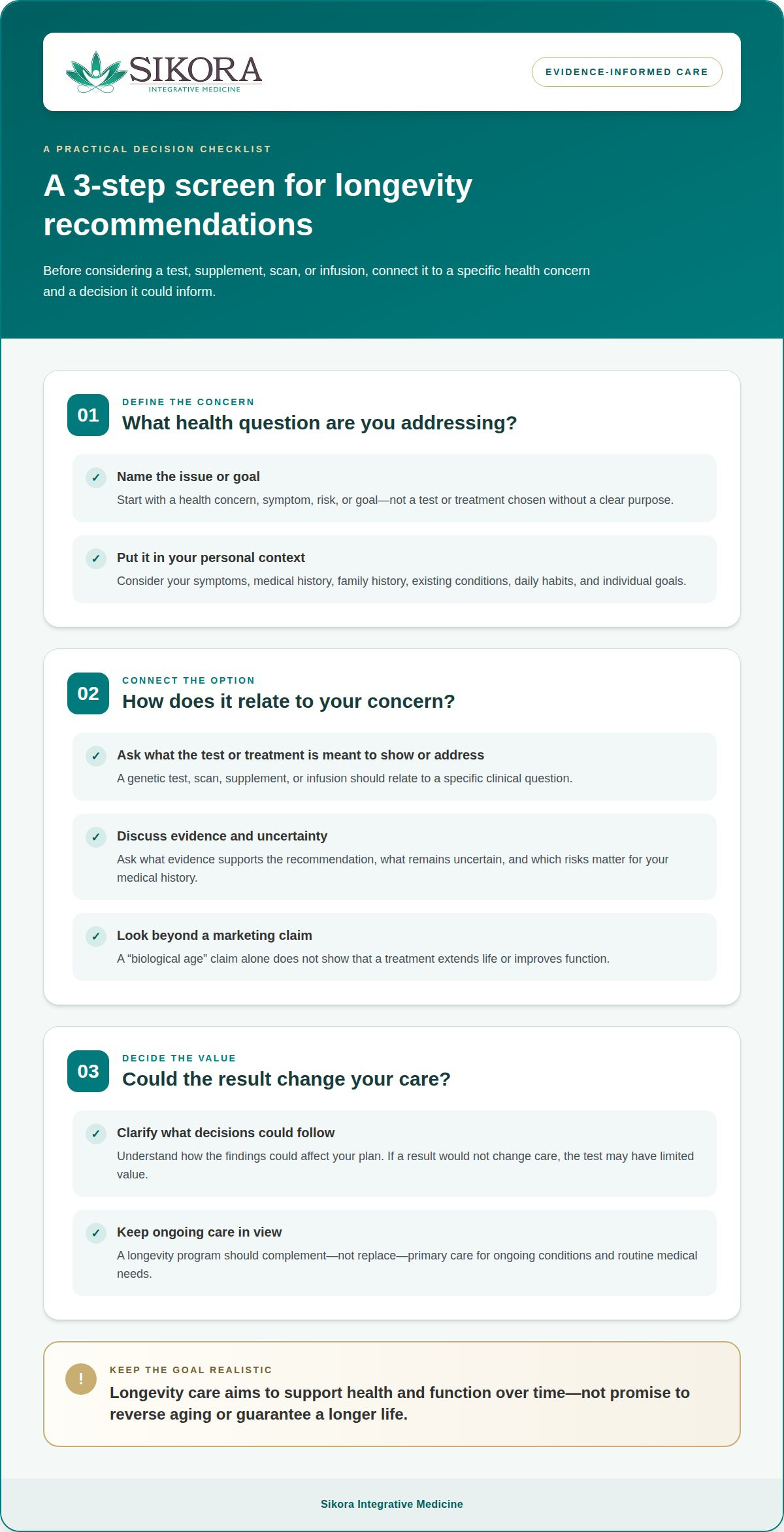
To assess a proposed intervention, take three steps: identify the health concern, understand how the test or treatment relates to it, and determine how the results could change care. A genetic test, scan, supplement, or infusion should address a specific clinical question. A marketing claim about “biological age” alone does not show that a treatment extends life or improves function. Ask the physician what evidence supports the recommendation, what remains uncertain, and which risks are relevant to your medical history.
Adults may explore proactive longevity care in their 30s, 40s, or 50s. A longevity program may be relevant if you want to address health risks before they disrupt daily function, or if existing concerns call for a coordinated review. Your medical history, current symptoms, family patterns, and goals help determine which evaluations are useful. The program should complement, not replace, primary care for ongoing conditions and routine medical needs.
Perimenopause and menopause can bring symptoms that raise questions about hormone health. Physician-led care starts with discussing those symptoms, your medical history, and relevant lab results. Hormone therapy may be considered when clinically appropriate and supported by the evaluation; it is not right for every patient. A physician should explain the reason for treatment, how progress will be assessed, and what alternatives may address your concern. This keeps decisions grounded in your health rather than a one-size-fits-all longevity plan.
Hormone evaluation and therapy
A hormone evaluation should begin with the concern you want to address, such as changes affecting sleep, energy, or daily activities. The clinician can review when symptoms began, how they have changed, and their impact on your quality of life. This gives a clearer clinical picture than focusing on one symptom or a single number alone.
Your medical history provides important context. The clinician may consider current medications, previous treatments, and health conditions when discussing options. If you have tried hormone treatment before, describe what you used and how you responded. These details help shape a discussion of potential benefits, risks, alternatives, and what matters most to you.
Hormone Therapy can take different forms, including pellets, creams, troches, or injections. These options differ in how they are given, so the choice should reflect your clinical needs and preferences. A physician can explain the options and what to expect, rather than assume one format suits everyone.
Before starting a plan, clarify its goal and how follow-up will work. If treatment is intended to address a particular symptom, ask how the change will be assessed and when the plan may be reviewed. Share any new or unwanted effects during follow-up. This keeps the discussion focused on your experience and the treatment’s role in your care.
Bioidentical hormone therapy is one area in which Dr. Alita Sikora pursues continuing medical education. That training informs the clinical discussion, but it does not make a particular therapy right for every patient. A useful appointment leaves you understanding the proposed option, its purpose, and the next step in monitoring your care. You should feel comfortable raising questions before deciding.
Which longevity services and treatments do Vero Beach physicians offer?
Longevity care may combine a health review, targeted testing, and follow-up rather than rely on one stand-alone treatment. In Vero Beach, a physician may assess cardiovascular and metabolic health, hormones, inflammation, and gut health. Genetic testing or microbiome analysis may be considered when relevant to a clinical question. Full-body imaging may also be considered when indicated, rather than treated as an automatic step for every patient.
Start by matching each service to a health concern. For example, a physician reviewing metabolic health may consider bloodwork or glucose patterns, while a hormone assessment may relate symptoms to lab findings. Nutrition, exercise, sleep, and medical history help put results in context. Testing is most useful when the findings can guide a care decision or follow-up, rather than simply add data.
Some programs also include nutrition support, ongoing progress reviews, or tools to track health changes. A program described in the market includes two registered dietitian visits, while another offers 30 days of continuous glucose monitoring. These examples show how services can differ; they are not a standard package for every Vero Beach patient. The purpose and value of each service depend on the question being assessed.
TeleMed may be available for eligible longevity-related care, depending on the service and clinical needs. In-person evaluation can be useful when a physical examination or additional assessment is needed. A physician-led plan should explain which services fit your goals, what each test can show, and how results affect the next decision. It should also clarify which options are established and which remain less certain.
If you’re considering a personalized plan, explore longevity care and the clinical factors that may shape your evaluation.
Sikora Integrative Medicine: Longevity
Sikora Integrative Medicine offers longevity care for adults seeking a physician-guided review of health goals, symptoms, and relevant findings. If hormone-related changes are part of your concerns, the team can discuss whether Hormone Therapy fits your evaluation. The practice also offers PRP and Stem Cells for selected needs, with evidence and regulatory status explained before you decide.
A visit can connect your questions with appropriate next steps, keeping recommendations tied to your health history and clinical needs. Not every treatment suits every person, and longevity care cannot stop aging or guarantee results. To discuss your goals with the medical team, contact Sikora Integrative Medicine in Vero Beach.
Choose a next step that fits your health goals
Choose one health goal to discuss and bring it to a physician-led conversation. A longevity physician in Vero Beach can help connect your priorities with an individualized discussion, rather than treating every available service as necessary. Sikora Integrative Medicine’s clinical team includes Dr. Alita Sikora, a board-certified physician in Physical Medicine and Rehabilitation.
The next step is to understand what a proposed service is intended to address and how it fits your needs. The team can discuss available options and their relevance to your situation, helping you make an informed decision without pressure or promises about outcomes.
If you’re ready to discuss your goals and possible next steps, contact Sikora Integrative Medicine. A thoughtful conversation can help you move forward with greater clarity and confidence.
Frequently Asked Questions
Are supplements or hormone therapies part of a longevity plan?
Supplements and other treatments can be discussed as possible parts of care. Start by keeping a clear record of what you already take. Bring a list of supplements, prescriptions, and previous hormone treatments, along with the symptoms or goals you want to address. This helps the clinician review your current routine and discuss how a proposed change might fit alongside it.
How can I sign up?
Contact Sikora Integrative Medicine to arrange a longevity appointment in Vero Beach. When scheduling, share the main concern you want to discuss, such as a change in energy, a preventive health goal, or questions about ongoing wellness care. Bring relevant medical records and a current medication list, if available. The clinician can use that context to guide your appointment.
What should I bring to a longevity appointment?
Bring relevant medical records, a current medication list, and a list of supplements or previous hormone treatments, if available. You can also note changes in energy, preventive health goals, or other concerns you want to discuss. This information can help the clinician understand your health history and guide the appointment.
Which physicians in Vero Beach specialize in longevity or preventive medicine?
Dr. Alita Sikora provides physician-led longevity care at Sikora Integrative Medicine in Vero Beach. If you are considering preventive care, describe the specific health issue or goal you want to address. The practice can explain how its services relate to that concern and what kind of evaluation may be relevant to your situation.
What are the credentials and specialties of longevity physicians in Vero Beach?
The clinical team includes a board-certified family nurse practitioner, certified physician assistants, and registered nurses. Dr. Alita Sikora is board-certified in Physical Medicine and Rehabilitation. The team’s clinicians bring different training to patient care. At your appointment, ask which clinician will lead your evaluation and how their specialty relates to the health concern you want to discuss.
What may be included in a longevity evaluation?
The scope of an evaluation depends on which services are relevant to your care. Ask the clinician to explain the proposed components and any follow-up involved. This gives you a clearer picture of the plan and helps you decide what to consider. This content is for educational purposes only and does not constitute medical advice.
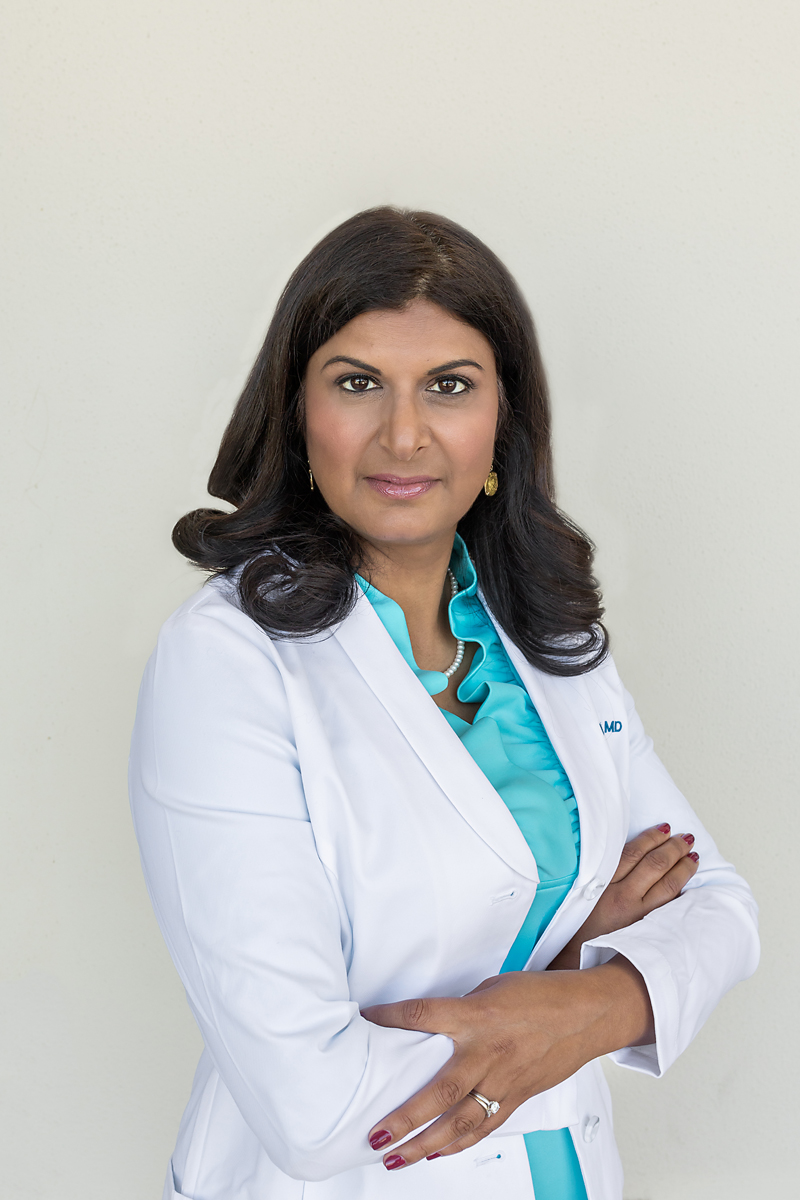
Article by
Alita G. Sikora, MD
Dr. Alita Gonsalves Sikora, MD, specializes in Physical Medicine and Rehabiltation (also known as Physiatry) and has practiced in Vero Beach since 2007. She started her own practice, Sikora Integrative Medicine, in 2017 in Vero Beach and also offers telemedicine to Florida residents.
Physical Medicine and Rehabilitation is a medical specialty focused on restoring function and treating pain in the bones, muscles, joints, and nervous system, most often without surgery. She trained at the University of Connecticut School of Medicine and did her residency training at NY Presbyterian (Columbia and Cornell) in NYC.
She offers regenerative and integrative approaches, treating chronic pain and musculoskeletal conditions with stem cells, PRP, exosomes, peptides, shockwave therapy, laser therapy, acupuncture, and prolotherapy, as well as traditional medications and injections. She also certifies qualified patients for medical marijuana in the state of Florida.
She also offers bioidenical hormone optimization including pellets, medical weight loss, peptides, IV vitamin therapy, and functional lab testing.

 1255 37th St. Suite B,