
 772-228-6882




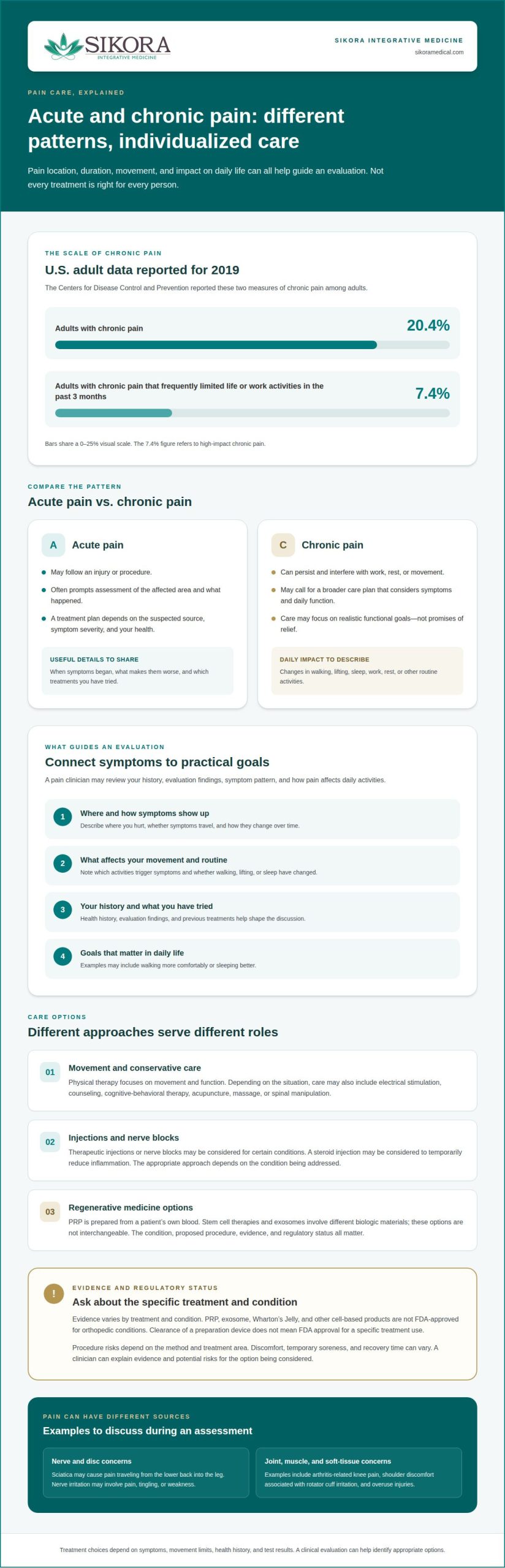
According to the Centers for Disease Control and Prevention, in 2019, 20.4% of adults had chronic pain, and 7.4% had chronic pain that frequently limited life or work activities in the past 3 months. Care may address acute injuries and persistent pain through options such as therapeutic injections, nerve blocks, physical therapy, or behavioral support.
If pain is disrupting your movement or daily routine, look for care that considers more than the painful area alone. A holistic pain management doctor in Vero Beach can assess your symptoms and health history and discuss options suited to your needs. Not every treatment is right for every person.
This guide explains which acute and chronic pain concerns may be treated, how options such as PRP, exosomes, stem cell therapies, and other pain-management approaches may fit into care, and what to understand about insurance and provider information when considering a holistic pain management doctor in Vero Beach.
Key Takeaways
- Learn how clinicians assess pain conditions and consider your history, symptoms, and test results when planning care.
- Understand how acute pain differs from chronic pain and why persistent symptoms may call for a broader care plan.
- Explore how options such as PRP and stem cell therapies may fit into pain management, without assuming one approach suits everyone.
- Use insurance details and provider information to understand potential coverage and make more informed care decisions.
Conditions treated
Pain care may address new injuries, persistent symptoms, and age-related joint or spinal concerns. In Vero Beach, your options can include medical evaluation alongside complementary approaches.
Conservative Pain Care
A conservative plan considers less invasive approaches before surgery, especially for chronic pain. For spinal stenosis, a clinician may discuss non-surgical care and, when appropriate, minimally invasive procedures such as targeted injections. The choice depends on symptoms, movement limits, health history, and test results. The U.S. Government Publishing Office reports evidence for acupuncture, massage, and spinal manipulation as components of chronic pain care.
Yes, Vero Beach patients can consider acupuncture, chiropractic care, and integrative pain therapy as complementary options. These approaches may be considered alongside medical care, depending on your symptoms and treatment goals.
Pain Doctor Evaluation and Treatment
A pain clinician may review your medical history, evaluation findings, symptom pattern, and how pain affects daily activities. At an initial appointment, expect questions about where you hurt, when symptoms began, what makes them worse, and which treatments you have tried. Clear answers help connect the evaluation to practical goals, such as walking more comfortably or sleeping better.
Treatment may include physical therapy, electrical stimulation, cognitive-behavioral therapy, counseling, therapeutic injections, or nerve blocks, depending on the condition. Age-related concerns can include arthritis, recurring back pain, and reduced mobility linked to joint or spinal changes. A clinician weighs the likely source and severity of pain, your overall health, and the benefits and limits of each option. Focus on realistic functional goals, not promises of relief.
Acute pain may follow an injury or procedure, while chronic pain can persist and interfere with work, rest, or movement. If pain limits routine activities, a structured evaluation can help identify appropriate next steps. Florida patients can discuss both immediate symptoms and longer-term conditions affecting daily life.
Acute and chronic pain conditions
Pain may begin suddenly after an injury or continue as a chronic condition that affects movement, work, or rest. The location, duration, and pattern of symptoms help guide evaluation.
According to the Centers for Disease Control and Prevention, in 2019, 20.4% of adults had chronic pain. In the past 3 months, 7.4% of adults had chronic pain that frequently limited life or work activities, referred to as high impact chronic pain.
Nerve and Disc Conditions
Sciatica can cause pain that travels from the lower back into the leg. Nerve irritation may cause pain, tingling, or weakness, while a disc condition can affect nearby nerves and spinal movement. At an appointment, describe where symptoms travel, which activities trigger them, and how they change over time. These details help a clinician assess nerve-related pain and other spinal concerns, including spinal stenosis.
A treatment plan may consider the suspected source of pain, symptom severity, and effects on daily activities. Depending on those factors, care may include physical therapy or injections. A steroid injection may be considered to temporarily reduce inflammation. The appropriate approach depends on the condition being addressed.
Musculoskeletal Conditions and Injuries
Musculoskeletal pain can involve joints, muscles, tendons, or other soft tissues. Examples include arthritis-related knee pain, shoulder discomfort associated with rotator cuff irritation, and overuse injuries from repetitive strain. An evaluation considers the affected area, how movement changes symptoms, and whether an injury or ongoing condition may be contributing.
Acute pain after a strain differs from chronic pain that persists or repeatedly limits activity. That distinction can affect which treatments are considered and whether care focuses on a recent injury, an ongoing condition, or both. In addition to pain intensity, clinicians may consider how walking, lifting, or sleep have changed. If you want to explore an assessment, review pain management care options.
Chiropractors have been helping people deal with neck pain for hundreds of years. Neck pain is another concern people may discuss when considering care for pain.
Regenerative therapies and pain-management technologies
Pain care in Vero Beach can combine movement-based, mind-body, and procedure-based approaches. The right mix depends on your symptoms, goals, and clinical assessment.
Available Holistic Pain Treatments
Local options to discuss include acupuncture, physical therapy, and mind-body therapies. Physical therapy focuses on movement and function, while acupuncture and mind-body approaches use different methods to address pain. A clinician can connect each option to a specific goal, such as improving mobility or managing symptoms during daily activities.
Regenerative medicine options include platelet-rich plasma (PRP), stem cell therapies, and exosomes. PRP is prepared from a patient’s own blood, while stem cell and exosome therapies involve different biologic materials. These treatments are not interchangeable. The condition, proposed procedure, evidence, and regulatory status all matter when considering whether an option belongs in a care plan.
Treatment Risks and Evidence
Evidence varies by treatment and condition. Acupuncture, physical therapy, mind-body care, PRP, stem cell therapies, and exosomes have different purposes and research backgrounds. PRP, exosome, Wharton’s Jelly, and other cell-based products are not FDA-approved for orthopedic conditions. Clearance of a preparation device does not mean FDA approval for a specific treatment use.
Procedures have potential risks that depend on the method and treatment area. Discomfort, temporary soreness, and recovery time can vary. Consider evidence for the specific condition rather than broad claims about a therapy. Ask how the clinician evaluates your health history, explains potential benefits and limitations, and monitors your response.
Technology also shapes some pain procedures. Radiofrequency ablation uses alternating current in the range of 350-500 kHz. It differs from regenerative treatments such as PRP or exosome therapy. A clinician can explain the procedure’s purpose, how it relates to your symptoms, and which alternatives fit your treatment goals.
Insurance and provider information
Insurance details and provider credentials can clarify the care pathway before a procedure. Review the proposed service, clinician’s qualifications, and your plan’s coverage terms.
Coverage differs across insurance plans and services. Review benefits for the specific care under consideration, such as a pain evaluation, physical therapy, injections, or nerve blocks. Relevant details can include network status, referral requirements, prior authorization, and coverage limits. A procedure for arthritis-related joint pain, for example, may be handled differently from a routine office visit. Keep the plan’s written benefit information beside the proposed treatment details when reviewing coverage.
A Vero Beach pain clinician can explain the purpose of each option, who performs it, and what follow-up involves. Patient reviews may offer context about communication and appointment flow, but they describe individual experiences, not guaranteed pain relief. For wellness goals, focus on how treatment choices relate to your symptoms and daily activities.
Ask a Florida clinician to explain their professional license, specialty, relevant training, and experience with the proposed procedure. If nerve blocks are discussed, ask how the procedure fits the evaluation and which clinician performs it. Clear information about credentials helps you understand the provider’s role and the care being offered, beyond a broad “holistic” label.
In Vero Beach, look for physicians whose practice focuses on pain medicine or integrative pain care. At an appointment, you can discuss whether the approach combines conventional evaluation with complementary options. To arrange an appointment or referral, share your symptoms, prior treatment, and relevant records with the office. Referral steps depend on your insurance plan and the care requested.
If you’re ready to discuss pain care options, schedule a pain management appointment.
Compare clinics by the services they offer, how clinicians explain each option and follow-up, and whether the proposed treatment relates to your symptoms and daily activities. Review the provider’s license, specialty, training, and experience with the procedure. Patient reviews can provide context about communication and appointment flow, but reported functional changes are individual experiences, not a guarantee of relief.
Sikora Integrative Medicine: Pain Management
Sikora Integrative Medicine provides pain management for people seeking clinician-guided options for ongoing or activity-limiting pain. Care may include an evaluation and a discussion of whether PRP or stem cell therapy is suitable. Musculoskeletal ultrasound can support joint and soft-tissue evaluation and guide injections.
PRP is prepared from your own blood using the EmCyte PurePRP system. Hormone therapy may also be relevant if you are exploring care for hormone-related concerns alongside pain management. The team explains evidence and regulatory status to support informed decisions. Not every option is appropriate for every patient; the plan depends on your health needs and goals.
To discuss pain management options in Vero Beach, contact Sikora Integrative Medicine.
Take the Next Step Toward Personalized Pain Care
Start by identifying a clear personal goal. You may want to manage discomfort during a daily task, move more confidently through your routine, or understand the trade-offs between available approaches. Naming what matters most gives the conversation a practical focus beyond describing where you hurt.
As you consider a plan, think about what a useful change would look like in your life and how you would recognize it. Discuss how progress will be reviewed and what adjustments may make sense if your needs change. The clinical team can consider these priorities with you, drawing on its experience explaining pain-care options and keeping decisions connected to your circumstances rather than a general promise of relief.
If you’re ready to explore a next step that reflects your priorities, begin a conversation with Sikora Integrative Medicine.
Frequently Asked Questions
What pain conditions do holistic pain doctors in Vero Beach treat?
A pain clinician may evaluate concerns such as sciatica, arthritis, spinal stenosis, muscle strains, and pain that persists after an injury. Appropriate care depends on your symptoms, health history, and how pain affects activities such as walking or sleeping. Share any changes or worsening symptoms during your evaluation. This information is for educational purposes only, not medical advice; consult a qualified healthcare provider.
Do holistic pain management doctors in Vero Beach accept insurance, Medicare, or Medicaid?
Coverage varies by service and insurance plan. Sikora Integrative Medicine is in-network with Medicare, Cigna, and BlueCross BlueShield for certain pain-management services; qualifying services may be covered by Medicare or BlueCross BlueShield. Other services are self-pay. Before treatment, review your plan’s benefits for the specific service and ask about referral or authorization requirements. Insurance participation does not guarantee coverage for every procedure.
How do Vero Beach pain clinics compare in services, credentials, and patient reviews?
Services may include evaluations, physical therapy, injections, nerve blocks, and complementary approaches; compare the proposed care and who performs it. Ask about the clinician’s license, specialty, training, and experience with the procedure. Patient reviews can offer context about communication, appointment flow, and reported functional changes, but individual experiences don’t guarantee results.

Article by
Alita G. Sikora, MD
Dr. Alita Gonsalves Sikora, MD, specializes in Physical Medicine and Rehabiltation (also known as Physiatry) and has practiced in Vero Beach since 2007. She started her own practice, Sikora Integrative Medicine, in 2017 in Vero Beach and also offers telemedicine to Florida residents.
Physical Medicine and Rehabilitation is a medical specialty focused on restoring function and treating pain in the bones, muscles, joints, and nervous system, most often without surgery. She trained at the University of Connecticut School of Medicine and did her residency training at NY Presbyterian (Columbia and Cornell) in NYC.
She offers regenerative and integrative approaches, treating chronic pain and musculoskeletal conditions with stem cells, PRP, exosomes, peptides, shockwave therapy, laser therapy, acupuncture, and prolotherapy, as well as traditional medications and injections. She also certifies qualified patients for medical marijuana in the state of Florida.
She also offers bioidenical hormone optimization including pellets, medical weight loss, peptides, IV vitamin therapy, and functional lab testing.

 1255 37th St. Suite B,