
 772-228-6882




Bioidentical hormone replacement therapy in Vero Beach may be considered when symptoms and a clinical evaluation suggest hormone changes could be contributing. Symptoms alone cannot identify the cause.
Bioidentical hormones are designed to match hormones made by the body; according to the Society of General Internal Medicine, examples include estriol, estrone, estradiol, progesterone, testosterone, DHEA, thyroxine, and cortisol, and lab testing may help inform whether therapy is appropriate.
If you’re exploring this option, you deserve a clear explanation of what treatment involves and how decisions are made; not everyone is a candidate, and similar symptoms can have other medical causes, so assessment matters, and this guide explains how lab testing may inform care, what clinicians consider when tailoring hormone therapy to your symptoms and health history, and what hormone services are available in Vero Beach before you discuss next steps with a medical professional.
Key Takeaways
- Recognize symptoms that may be associated with hormone changes, while keeping in mind that other health conditions can cause similar concerns.
- Understand how bioidentical hormones are defined and what to consider when learning about subcutaneous pellet therapy.
- Learn how lab testing and a medical evaluation can help guide decisions about treatment and timing.
- Explore the hormone therapy services available in Vero Beach and the factors that may shape an individualized care plan.
Indications of Possible Hormone Imbalance?
Hormone-related symptoms can affect daily life, but they don’t identify a cause on their own. Examples include changes in sleep, mood, sexual function, or weight.
Possible Hormone Imbalance Symptoms
Note which symptoms have changed and how they affect your routine, rather than treating one concern as proof of a hormone imbalance. Fatigue, sleep disruption, mood changes, and weight gain can have several possible causes. A pattern involving multiple areas may be useful to discuss during a medical evaluation, but symptoms alone cannot establish a hormone imbalance.
For men, changes in sexual function, energy, or mood may prompt questions about testosterone. Levels may begin to decline gradually as early as age 30; by age 70, men’s levels average about one-third of their functional levels. These figures describe a general trend, not an individual diagnosis.
Symptoms in Women
For women, changes in menstrual patterns, sleep, mood, sexual function, or temperature comfort are useful to describe during an evaluation. The timing of symptoms, including whether they coincide with a menstrual cycle or a life-stage transition, gives a clinician important context. Weight gain may also be a concern, but it doesn’t prove hormones are responsible.
Avoid drawing conclusions before considering symptoms alongside your health history and other possible explanations. A clear timeline can help connect reported effects with daily function.
Hormone Imbalances and Deficiencies
A hormone imbalance describes a possible disruption in hormone levels or activity; a deficiency refers to a hormone that may be too low. Neither can be confirmed from a symptom list alone. For example, low energy or sleep changes can occur with conditions unrelated to hormones.
Because similar symptoms can have other medical causes, an examination and lab evaluation can help assess what is happening. This can help distinguish a suspected hormone-related concern from another explanation before treatment options are considered.
What is Bioidentical Hormone Replacement Therapy?
Bioidentical hormones have structures identical to hormones made by the body. BHRT may involve FDA-approved products or compounded preparations; the formulation and delivery method depend on the clinical need.
Available BHRT Types
According to the Society of General Internal Medicine, bioidentical hormones include estriol, estrone, estradiol, progesterone, testosterone, DHEA, thyroxine, and cortisol. Options include FDA-approved hormone products and custom-compounded formulations. The Mayo Foundation for Medical Education and Research says custom-compounded formulations may be prescribed for women who cannot tolerate FDA-approved products or their nonhormonal ingredients. The hormone, form, and reason for selecting it are key considerations.
Rules for Compounded Bioidentical Hormones
FDA approval applies to specific products; a compounded hormone should not be described as FDA-approved simply because it contains a bioidentical hormone. According to the Mayo Foundation for Medical Education and Research, custom compounding may be considered for women who cannot tolerate an approved product or its nonhormonal ingredients. That distinction helps clarify what is prescribed and why. A discussion of hormone therapy care can help relate these options to your needs.
Subcutaneous pellet therapy delivers hormones from pellets placed beneath the skin. The pellets are slowly absorbed over three to six months before they must be replaced. This longer-acting format differs from products taken or applied on a repeated schedule. For menopause-related concerns or other hormone changes, the intended hormone and follow-up plan matter more than the word “natural.” Pellet therapy still needs to be considered in light of your health history and goals.
Before insertion, the clinician reviews the treatment plan and identifies the insertion site. During the procedure, pellets are placed under the skin. Afterward, follow the care instructions provided for that site. Instructions should reflect the procedure and your situation, rather than assume one set of restrictions fits everyone. Contact the care team about concerns at the insertion area.
Lab testing and treatment timing
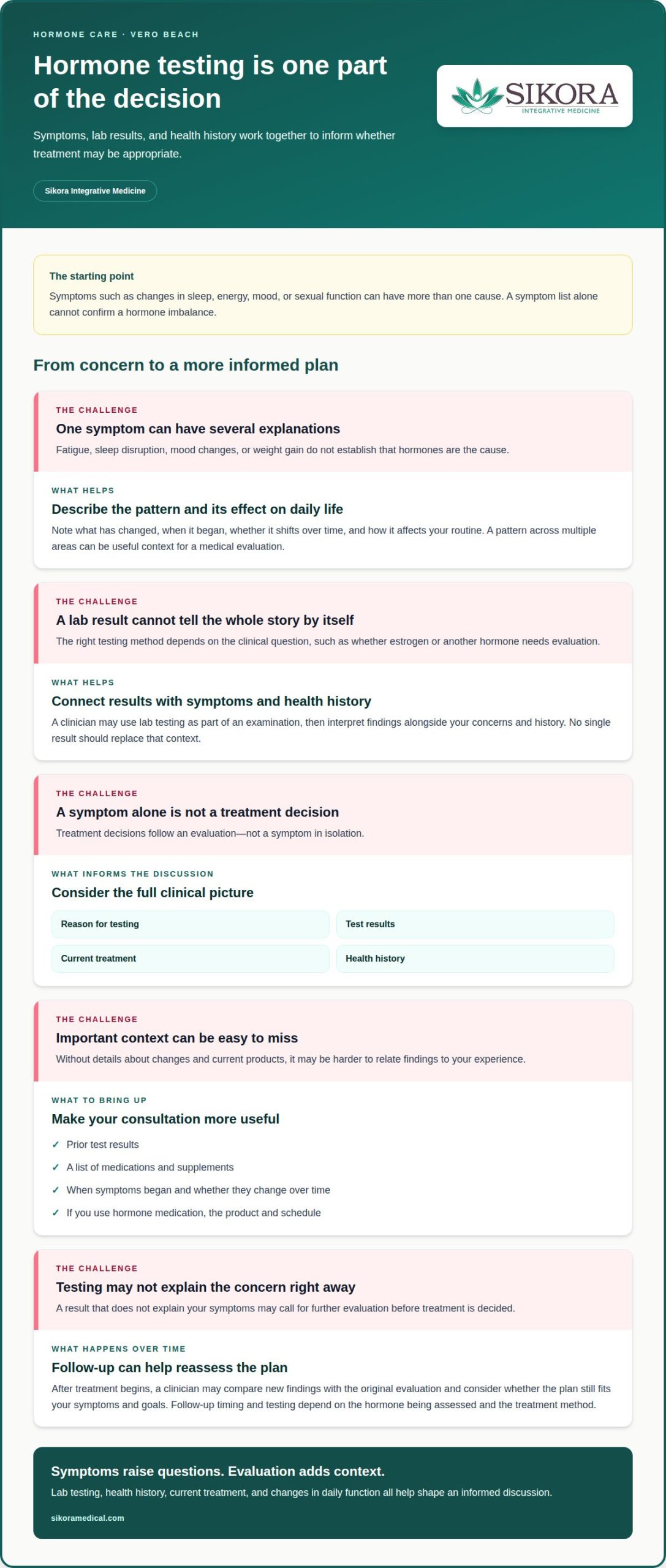
Lab testing can add clinical context when symptoms raise questions about hormone levels. A consultation connects test results with your health history and concerns.
Hormone Testing Methods
The testing method depends on the clinical question, such as whether estrogen or another hormone needs evaluation. A clinician may use lab testing as part of an examination, then interpret results alongside your symptoms and health history. No single result should replace that context. Bring prior test results, a list of medications and supplements, and a clear account of changes you’ve noticed.
Treatment Timing
Treatment decisions follow an evaluation, not a symptom alone. The clinician considers the reason for testing, your results, current treatment, and health history before discussing options. If results do not explain the concern, further evaluation may be appropriate before deciding on treatment. This process connects a possible hormone issue with a plan that reflects your clinical picture.
For a useful consultation, describe when symptoms began and whether they change over time. For example, note whether sleep, energy, or sexual function shifts alongside another concern. If you use hormone medication, include the product and schedule in your history. These details help place lab findings in the context of your daily function and lifestyle.
Testing may also support follow-up after treatment begins. A clinician can compare new findings with the original evaluation and consider whether the plan still fits your symptoms and goals. The timing and type of follow-up depend on the hormone being assessed and the treatment method. Track changes between visits so your observations can inform the discussion.
Lab results are one part of clinical decision-making, not a substitute for an examination. In Vero Beach, discuss what a proposed test is meant to assess, how its result may inform treatment, and what other factors could explain your symptoms. That conversation can help you understand the next step before making a care decision.
BHRT services in Vero Beach, Florida
For bioidentical hormone replacement therapy in Vero Beach, a useful consultation connects your symptoms, health history, and treatment goals before options are discussed. Changes involving menopause, sexual function, sleep, or energy may prompt questions about hormone levels. Treatment should address your clinical picture, without promising to restore wellness or resolve every symptom.
Hormone options can include FDA-approved products and compounded formulations. According to the Mayo Foundation for Medical Education and Research, custom-compounded bioidentical hormones may be prescribed for women who cannot tolerate FDA-approved products or their nonhormonal ingredients. This is a specific consideration, not a reason to assume compounded treatment is preferable. Your clinician can explain the product and the rationale for discussing it.
Testosterone and progesterone have different roles, so choosing between them depends on the concern being evaluated. A discussion can cover which hormone is relevant, how it may be delivered, and what follow-up involves. Bring examples of symptoms and their effects on your daily routine. Those details help focus the conversation on your needs and treatment goals.
Before starting, clarify how testing, your health history, and current medications inform the plan. Ask what the proposed treatment is intended to address and how progress will be reviewed. A thoughtful approach means explaining the options and evidence clearly, not simply adding more hormones. If a compounded product is discussed, ask how it differs from an FDA-approved product and why it fits your situation.
If you’re considering bioidentical hormone replacement therapy in Vero Beach, explore hormone therapy options and prepare questions about formulation, timing, and follow-up. A clear conversation can help you understand the decision before moving forward and consider whether the proposed care aligns with your priorities and health history.
Sikora Integrative Medicine: Hormone Therapy
Sikora Integrative Medicine offers Hormone Therapy for adults seeking medical guidance about hormone-related symptoms and treatment options. If you’re weighing bioidentical hormone therapy, the care team can help connect your concerns with an individualized clinical discussion. Dr. Alita Sikora continues medical education in bioidentical hormone therapy, and the practice explains evidence and regulatory status before you decide.
Bring your questions about formulation, testing, or follow-up to your consultation. TeleMed is available for eligible hormone services when remote care is appropriate; some care may require an in-office visit. Stem cell, PRP, and exosome services address different concerns and are not substitutes for hormone evaluation.
Contact Sikora Integrative Medicine to discuss whether Hormone Therapy is a suitable next step for you.
Take the Next Step With a Clear Care Goal
Before choosing a path, consider what you want help addressing in daily life, such as sleep, energy, or another change affecting your well-being. For bioidentical hormone replacement therapy in Vero Beach, a focused conversation can help you understand how your symptoms, health history, and priorities inform a care decision. Bring your key questions, including what treatment is intended to address and how progress may be reviewed.
Sikora Integrative Medicine offers Hormone Therapy, along with Stem Cells and PRP for different health concerns. Dr. Alita Sikora completed residency at NewYork-Presbyterian, bringing a strong medical foundation to the practice’s physician-led care. Each option has its own purpose; regenerative services aren’t substitutes for hormone evaluation.
You can take the next step at your own pace. Contact Sikora Integrative Medicine to discuss your questions and care goals. A thoughtful discussion can help you move forward feeling informed and prepared.
Frequently Asked Questions
Are there risks and side effects?
Yes, hormone treatment can involve risks, and possible effects depend on the product, delivery method, and your health history. Some injections may cause temporary soreness, and recovery varies by procedure. Before treatment, discuss your medications, prior reactions, and relevant health conditions with a qualified healthcare provider. This information is for educational purposes only, not medical advice. Consult a qualified healthcare provider for guidance about your situation.
Can I make lifestyle changes that could improve my hormone levels?
Healthy routines can support general well-being, but lifestyle changes can’t diagnose or treat a hormone disorder by themselves. You might discuss sleep habits, physical activity, nutrition, and stress with a healthcare provider as part of your overall health picture. For example, mention a persistent change in energy alongside any changes to your routine. A clinician can help determine whether further evaluation is appropriate.
How long can I stay on BHRT?
There isn’t one treatment duration that fits everyone. The length of care depends on the reason for treatment, your response, health history, and ongoing assessment. Keep follow-up discussions focused on whether your original goals still apply and whether the plan remains appropriate. Don’t stop or change a prescribed hormone on your own; discuss concerns or changing priorities with your healthcare provider.
What are hormones?
Hormones are chemical messengers that help coordinate activity among organs and tissues. Estrogen and testosterone, for example, are involved in multiple body functions, while insulin helps regulate blood sugar. Hormone levels and effects can vary with health and life stage. If you’re concerned about a change, describe what you’ve noticed and how it affects your routine during a medical appointment.
How is BHRT tailored to my needs?
A hormone therapy plan depends on your health history, symptoms, and clinical evaluation. Your healthcare provider can explain the recommended formulation and delivery method, such as pellets, creams, troches, or injections, and why that option may fit your situation. Follow-up discussions can help assess your response and whether the plan remains appropriate.
What’s the difference between standard hormone therapy and BHRT?
The terms can overlap, so the label alone doesn’t explain how treatment will be delivered. The practical distinction is the specific formulation and method, such as pellets, creams, troches, or injections. Ask what the recommended option is intended to address and why that method fits your clinical evaluation. Your healthcare provider can explain how the plan is tailored to your situation.

Article by
Alita G. Sikora, MD
Dr. Alita Gonsalves Sikora, MD, specializes in Physical Medicine and Rehabiltation (also known as Physiatry) and has practiced in Vero Beach since 2007. She started her own practice, Sikora Integrative Medicine, in 2017 in Vero Beach and also offers telemedicine to Florida residents.
Physical Medicine and Rehabilitation is a medical specialty focused on restoring function and treating pain in the bones, muscles, joints, and nervous system, most often without surgery. She trained at the University of Connecticut School of Medicine and did her residency training at NY Presbyterian (Columbia and Cornell) in NYC.
She offers regenerative and integrative approaches, treating chronic pain and musculoskeletal conditions with stem cells, PRP, exosomes, peptides, shockwave therapy, laser therapy, acupuncture, and prolotherapy, as well as traditional medications and injections. She also certifies qualified patients for medical marijuana in the state of Florida.
She also offers bioidenical hormone optimization including pellets, medical weight loss, peptides, IV vitamin therapy, and functional lab testing.

 1255 37th St. Suite B,