
 772-228-6882




A wellness infusion may sound like a quick reset, but the key questions are what goes into the IV and what the evidence can support. An IV Myers’ treatment, commonly called a Myers’ Cocktail, delivers vitamins and minerals directly into the bloodstream; common ingredients include B vitamins, vitamin C, magnesium, and calcium, although the exact formula can vary, and research specifically evaluating the combination remains limited, so it shouldn’t be presented as a proven treatment for disease.
For Vero Beach readers, this guide explains what the infusion involves, why medical history and medication review matter, and what mild effects such as warmth, lightheadedness, or IV-site discomfort can feel like; it also covers the usual treatment time of 30 to 60 minutes, how most people return to daily activities without downtime, and schedules that may include weekly sessions for three weeks or occasional treatments every three to four months.
Key Takeaways
- Explore the nutrients commonly used in the formula and the roles they play in normal body functions.
- Recognize how health conditions and medication interactions can affect safety and suitability.
- Set realistic expectations for the visit, recovery, and how a treatment schedule may be tailored.
- Assess whether an infusion fits your wellness goals by considering its purpose, clinical oversight, and supporting evidence.
What Is a Myers’ Cocktail IV?
A Myers’ Cocktail IV is a blend of nutrients given directly into the bloodstream through intravenous therapy. Its ingredients and possible effects matter because it combines several vitamins and minerals rather than providing just one nutrient.
Myers’ Cocktail IV Therapy Definition
Developed by physician John Myers, this cocktail is a blend of nutrients infused into a vein. Intravenous vitamin treatments have been used in some medical settings. The mixture commonly includes B-complex vitamins, vitamin C, magnesium, and calcium in sterile water. Some formulations also include hydroxocobalamin, a form of vitamin B12. The specific blend can vary, so the name alone doesn’t define every ingredient or amount.
Each component has a role in ordinary body processes. Magnesium is involved in over 300 enzymatic reactions in the body, according to the National Institutes of Health. Magnesium and calcium contribute to muscle contraction and nerve signaling, while B vitamins help the body convert food into usable energy.
Evidence for Myers’ Cocktail
Evidence specifically testing the full Myers’ Cocktail combination remains limited. If you’re considering it for a symptom or illness, remember that the presence of nutrients in an infusion does not establish that it treats a disease or produces a particular wellness outcome. For individuals managing complex conditions or chronic health concerns, clinics like Sunridge Medical illustrate how advanced alternative medicine and integrative therapies are evaluated within comprehensive treatment plans.
Vitamin C acts as an antioxidant and supports normal immune responses, while B vitamins play a role in energy metabolism. These functions don’t prove that intravenous doses improve energy, immunity, or other symptoms for every patient. Distinguish a nutrient’s known role in the body from evidence about a treatment’s clinical effects.
Comparison With Oral Vitamin Supplements
Oral supplements pass through the digestive system before nutrients enter circulation; an infusion delivers them directly into the bloodstream. Bypassing digestion may matter when absorption is a concern, but it doesn’t make IV therapy automatically more effective or appropriate than an oral supplement.
The right choice depends on the clinical context, the nutrients involved, and the person’s health needs. For example, taking a B-complex pill and receiving a multi-nutrient infusion are different approaches, even if both contain B vitamins. An infusion also requires an IV catheter, unlike an oral supplement. For individuals exploring broader wellness and longevity options, resources from IRON RX highlight how clinician-guided care can help patients evaluate the effectiveness of oral versus injectable treatments.
Myers’ IV Therapy Cost
The treatment name doesn’t specify exactly what a session includes. Formulas can differ, so the ingredients are central to understanding the treatment being considered. A clear discussion should distinguish the nutrient blend from claims about what it can accomplish.
Before deciding, focus on the planned ingredients, the reason for treatment, and the evidence for that goal. This helps you understand the therapy itself instead of treating a familiar name as proof of a specific formula or benefit.
Side effects and safety considerations
Myers’ Cocktail IV therapy can cause effects ranging from brief warmth to serious complications. Mild reactions include discomfort where the catheter enters, lightheadedness, or feeling warm during infusion. A reaction can begin within 10 to 30 seconds. If symptoms develop, the infusion should be stopped; warmth or lightheadedness usually dissipates within 10 to 30 seconds after stopping.
Who should avoid Myers IV therapy? People with kidney disease, high blood pressure, or a heart condition should avoid high-dose IV vitamin therapy. Medication history also matters: infused calcium can bind with ceftriaxone, creating a combination that could harm the kidneys, lungs, or gallbladder. Magnesium can interact with blood pressure medications and lower blood pressure.
Other risks depend on the nutrient blend and your health. Abnormal magnesium or potassium levels can make infusions containing those minerals a concern because they can trigger abnormal heart rhythms or muscle weakness. High-dose vitamin B6 can damage peripheral nerves, and rapid administration can lower blood pressure enough to cause faintness. These are reasons to review your health history and medications before treatment is administered.
Clean preparation and appropriate clinical oversight matter. Improperly sterilized equipment can introduce contaminants and cause severe infection, including life-threatening reactions. Providers should explain the therapy’s intended purpose, too. Evidence specifically evaluating the Myers’ Cocktail combination remains limited, and scientific evidence is insufficient to show that IV vitamin therapy treats disease or reliably provides claimed wellness benefits. Nutrients’ normal roles in the immune system or other body functions don’t establish treatment effectiveness.
If you’re considering an infusion, discuss your conditions, medications, and goals with a qualified clinician before proceeding. For more information about IV vitamin therapy, explore how clinical oversight can inform a personalized discussion.
Treatment duration and recovery
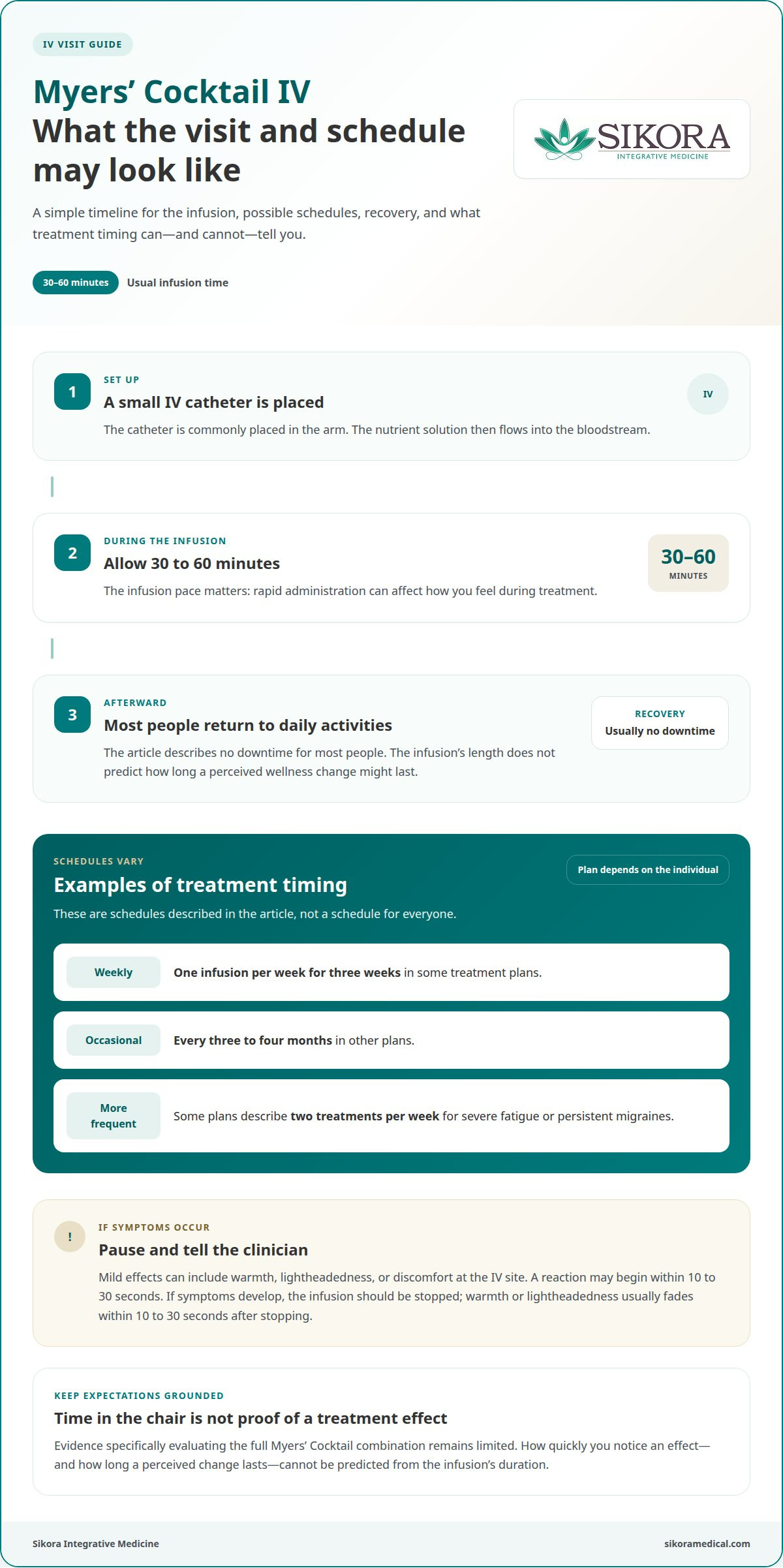
A Myers’ Cocktail infusion usually takes 30 to 60 minutes. The full visit includes placing a small IV catheter, commonly in the arm, and allowing the nutrient solution to flow into the bloodstream. The infusion’s pace matters because rapid administration can affect how you feel during treatment.
How long does a Myers IV treatment take, and how often is it given? Plan for an infusion lasting 30 to 60 minutes. Schedules vary: some treatment plans use one infusion weekly for three weeks, while others involve occasional sessions every three to four months.
During treatment, the formula enters your bloodstream without first passing through the digestive system. This changes the route of absorption, but doesn’t show how quickly you’ll notice effects. The length of an infusion also doesn’t predict how long a perceived wellness change might last. The immune system and other body functions respond through complex processes, not on a fixed timetable.
Frequency depends on the treatment plan. Some plans use two treatments per week for severe fatigue or persistent migraines. That is an example of a schedule described for specific concerns, not a universal routine. Other plans may space sessions farther apart, such as every three to four months. A schedule should reflect the intended purpose and the person’s clinical circumstances.
Many people return to daily activities after an infusion without planned downtime. Still, how you feel during treatment can affect what you do immediately afterward. If you feel lightheaded or unwell, pause and tell the clinician rather than rushing away.
Think of duration and frequency as separate decisions: the infusion takes about 30 to 60 minutes, while repeat sessions follow a broader plan. A weekly course, a twice-weekly schedule for certain concerns, and occasional treatments are distinct patterns. The formula and the reason for treatment inform that plan; the infusion’s length alone doesn’t determine how often it should be repeated.
How much does Myers IV therapy cost in the United States?
To assess a Myers’ Cocktail IV, start by clarifying the decision you’re making. Are you exploring general wellness or hoping to address a specific symptom? Defining your goal helps focus a conversation with a clinician on your health rather than broad promises attached to an infusion.
Before moving forward, identify what you want to understand or track. For example, if fatigue is your concern, note when it occurs and how it affects daily activities. This context can help a clinician discuss whether an infusion is relevant or whether another evaluation better fits your concern.
Use the appointment to clarify the proposed treatment’s purpose and limits. You can discuss:
- Goal: What specific concern is the treatment intended to address?
- Reasoning: How does the proposed approach relate to that concern?
- Alternatives: What other care approaches may be considered?
- Decision point: What information would help you decide whether to proceed?
These questions help distinguish a clearly defined care goal from a general promise of feeling better. They also leave room to discuss whether an infusion belongs alongside other medical care, rather than replacing an evaluation of persistent symptoms.
When comparing treatment plans, consider their purpose and clinical reasoning, not just their names. A familiar therapy label doesn’t explain why it might suit your situation. Ask for a plain-language explanation of the intended goal, how the clinician will assess whether the plan remains appropriate, and what might prompt a different approach.
For patients in Vero Beach, a useful next step is a conversation that connects your concern to an appropriate care plan. Briefly describe what you hope to address, then discuss whether this therapy may be suitable for you.
Sikora Integrative Medicine
Sikora Integrative Medicine can help you discuss how a wellness concern fits your broader health goals. The team explains the evidence and regulatory status before you decide, so you can weigh potential benefits and limitations with context rather than relying on general claims.
If your concerns extend beyond vitamin infusions, a conversation may also explore whether Hormone Therapy, Stem Cells, PRP, or Exosomes relate to your individual needs. These are distinct services, and their relevance depends on the concern being addressed, not on the name of an IV formula.
Contact Sikora Integrative Medicine to discuss your questions and possible next steps.
Choose a next step that fits your health goals
Let your next decision start with the health concern you want to address, not a promise attached to a treatment name. Consider what has changed in your daily life and what you hope to understand better. A focused goal can make a medical conversation more useful and help you identify the questions that matter most.
If you’re still weighing IV Myers therapy, consider what information would help you make an informed choice. You may want to understand how the proposed plan relates to your concern, what alternatives could be considered, or how it fits with care you already receive. You don’t have to resolve every question at once; a thoughtful discussion can help identify a sensible next step.
For a personalized conversation about your wellness goals, request guidance from the medical team. Moving forward with clear questions and realistic expectations is a positive step toward informed care.
Frequently Asked Questions
What does IV Myers mean?
“IV Myers” is an informal shorthand, not a separate medical diagnosis or a specific symptom. It usually refers to the Myers’ Cocktail infusion discussed in this article. If you see the term in a treatment plan, clarify which procedure it describes and the clinician’s intended goal. This keeps a shorthand label from replacing a clear care plan.
What is an IV Myers cocktail?
The phrase refers to a type of intravenous wellness treatment, not one universally identical product. The name describes the general approach, while the clinician’s plan should explain how it applies to your situation. When reviewing written treatment information, remember that the label alone doesn’t explain the treatment goal, expected monitoring, or how it fits with other care.
What ingredients are in a Myers cocktail IV?
The exact contents depend on the formulation. Ask for the ingredient list and amounts for your planned infusion instead of relying on a general description or familiar treatment name. This can help you identify nutrients that overlap with supplements or medications you already take. Share that information with the clinician responsible for your care.
What are the claimed benefits of a Myers IV?
Claims often focus on general wellness, but your reason for considering treatment should be more specific. For example, describe the symptom or daily activity you hope to improve and ask how the proposed plan relates to it. A clear goal makes it easier to discuss what would count as a meaningful change without assuming that a broad wellness claim applies to you.
What medical evidence supports Myers IV therapy?
When reviewing evidence, look for information about the same combination, route of administration, and health concern you’re considering. Evidence about one nutrient or a different treatment doesn’t automatically show whether this infusion helps with your particular goal. Ask the clinician to distinguish established nutrient functions from research on patient outcomes, then use that distinction to assess how much confidence to place in a proposed benefit.
What are the risks and side effects of a Myers IV?
Your personal risk discussion should account for your health conditions, medications, and the planned formulation. Before treatment, provide a complete medication and supplement list and mention relevant medical history, including kidney, heart, or blood-pressure concerns. Ask how the infusion will be monitored and which symptoms to report during the visit. A qualified healthcare provider can assess these factors in context.

Article by
Alita G. Sikora, MD
Dr. Alita Gonsalves Sikora, MD, specializes in Physical Medicine and Rehabiltation (also known as Physiatry) and has practiced in Vero Beach since 2007. She started her own practice, Sikora Integrative Medicine, in 2017 in Vero Beach and also offers telemedicine to Florida residents.
Physical Medicine and Rehabilitation is a medical specialty focused on restoring function and treating pain in the bones, muscles, joints, and nervous system, most often without surgery. She trained at the University of Connecticut School of Medicine and did her residency training at NY Presbyterian (Columbia and Cornell) in NYC.
She offers regenerative and integrative approaches, treating chronic pain and musculoskeletal conditions with stem cells, PRP, exosomes, peptides, shockwave therapy, laser therapy, acupuncture, and prolotherapy, as well as traditional medications and injections. She also certifies qualified patients for medical marijuana in the state of Florida.
She also offers bioidenical hormone optimization including pellets, medical weight loss, peptides, IV vitamin therapy, and functional lab testing.

 1255 37th St. Suite B,