
 772-228-6882




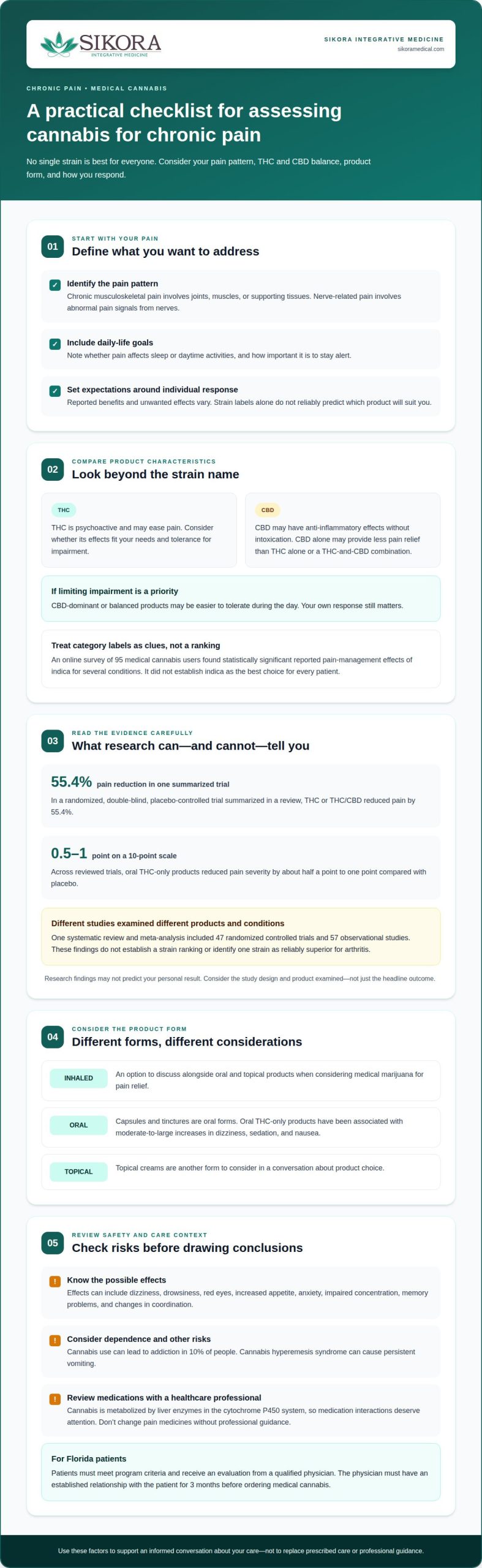
The best cannabis strain for chronic pain is not necessarily the one with the most THC. The right fit depends on your pain, the balance of THC and CBD, and your individual response. Medical marijuana for pain relief may involve inhaled products, capsules, tinctures, or topical creams.
If ongoing pain is affecting your life in Vero Beach, you may be considering whether medical cannabis could help manage symptoms. Evidence is still developing, and potential benefits and unwanted effects vary from person to person.
You’ll learn how strain characteristics and product forms may relate to chronic pain, what risks and side effects to consider, and where research remains limited, so you can have a more informed conversation about your care.
Key Takeaways
- Compare strain profiles by THC and CBD balance, intended effects, and how they may fit your pain symptoms.
- Weigh possible relief against side effects such as dizziness, drowsiness, impaired concentration, and medication interactions.
- Understand why findings for chronic pain are encouraging in some areas but remain limited for certain cannabinoids and conditions.
- Explore how inhaled, oral, and topical forms differ, then consider whether a medical marijuana evaluation may fit your care needs.
What are the possible risks and side effects of using cannabis for pain?
Cannabis may affect pain, mood, sleep, and immune responses through the endocannabinoid system. THC is psychoactive and may ease pain, while CBD may have anti-inflammatory effects without intoxication. CBD alone may provide less pain relief than THC alone or a THC-and-CBD combination. CBD-dominant or balanced products may be easier to tolerate during the day when limiting impairment is a priority.
Effects can include dizziness, drowsiness, red eyes, increased appetite, anxiety, impaired concentration, memory problems, and changes in coordination. Oral THC-only products have been associated with moderate-to-large increases in dizziness, sedation, and nausea. Cannabis use can lead to addiction in 10% of people, and cannabis hyperemesis syndrome can cause persistent vomiting. Cannabis is metabolized by liver enzymes in the cytochrome P450 system, so interactions with other medications deserve attention. Don’t change pain medicines without guidance from a healthcare professional.
For chronic musculoskeletal pain, consider cannabis as a possible addition when existing treatment leaves symptoms difficult to manage, rather than as a reason to stop prescribed care. A clinician can weigh your pain pattern, current medications, desired alertness, and tolerance for psychoactive effects. If a product causes dizziness or impaired coordination, those effects can affect daily activities. Under the federal rule described, some hemp-derived CBD products containing less than 0.3% THC became federally legal in the United States, according to the United States Congress. That federal rule does not establish that every CBD product is FDA-approved.
Rheumatologists’ familiarity and comfort discussing cannabis can vary, so bring specific questions about benefits, side effects, and medication interactions to your care conversation. An international survey conducted from November 2023 to April 2024 included 215 rheumatologists and allied health providers; rheumatologists made up 86% of respondents. Those figures describe the survey participants, not each clinician’s knowledge or comfort. Ask how cannabis might fit your care plan, what effects to monitor, and how to report unwanted symptoms. This discussion is especially relevant if you have rheumatoid arthritis or another chronic musculoskeletal condition.
What are the best cannabis strains for chronic pain?
No single strain is best for everyone with chronic pain. Evidence suggests possible benefits, but the type of pain, THC and CBD balance, and individual response all matter.
Evidence for Chronic Pain Relief
Chronic musculoskeletal pain includes ongoing pain involving joints, muscles, and other supporting tissues. In a randomized, double-blind, placebo-controlled trial summarized in a review, THC or THC/CBD reduced pain by 55.4%. Across reviewed trials, oral THC-only products reduced pain severity by about half a point to one point on a 10-point scale compared with placebo.
A systematic review and meta-analysis included 47 randomized controlled trials and 57 observational studies. These findings don’t establish a strain ranking because studies examined different products and conditions. For arthritis, the evidence does not identify one strain as reliably superior, so reported effects and tolerability are more useful than strain labels alone.
Cannabis for Nerve-Related Pain
Nerve-related pain, or neuropathic pain, occurs when nerves send abnormal pain signals. Some people with neuropathy report relief after adding medical cannabis to their treatment plans, but these reports do not show which strains work best.
THC and CBD interact with cannabinoid receptors involved in pain signaling. A strain’s cannabinoid balance may affect both pain and mental alertness. If nerve pain affects your sleep or daytime activities, include those concerns in a discussion about treatment.
Eligibility for a medical marijuana card varies by state. In Florida, patients must meet program criteria and receive an evaluation from a qualified physician; requirements differ elsewhere, and online platforms such as cmeddata.com can provide medical evaluations to help patients navigate the process.
In Florida, the process begins with an evaluation by a qualified physician. The physician must have an established relationship with the patient for 3 months before ordering medical cannabis. State rules and program procedures differ, so eligibility in one state doesn’t establish eligibility in another.
For a strain comparison, focus on the studied product and condition rather than assuming a category label predicts your response. An online survey of 95 medical cannabis users found statistically significant reported pain-management effects of indica for several conditions, but it did not establish indica as the best choice for every patient.
Evidence gaps and need for further research
Studies of cannabis report possible changes in pain and opioid use, but their methods and products differ. When considering pain management, look at how a study was designed, not just its reported outcome.
Research on Pain Relief and Opioid Use
Research on pain relief and opioid use examines whether patients report changes in symptoms or medication use alongside cannabis. A survey of almost 3,000 medical cannabis users found that 30% had used opioids during the previous six months. Among respondents who had used opioids, 81% agreed or strongly agreed cannabis worked better alone than with opioids, and 97% said they could decrease opioid use while taking cannabis.
Survey responses describe patients’ experiences; they do not establish that cannabis caused a reduction in opioid use. Treat these findings as points to discuss with a healthcare provider, not as a reason to stop or change an opioid prescription without professional guidance.
Limitations in the Research
Research limitations are features that make findings harder to apply across patients, products, and conditions. A systematic review and meta-analysis of cannabinoids for medical use included 79 trials, but only 4 had low risk of bias. Many chronic-pain studies had fewer than 100 participants, limiting how confidently results apply to broader groups.
Minor cannabinoids, including CBG, CBC, CBN, and THCV, remain poorly studied. Recent randomized trials of products containing mainly or only CBD found almost no improvement in pain management. A result for one cannabinoid or formulation cannot establish the effects of another.
Pain scores also miss outcomes that matter in daily life. A 3-year survey asked medical cannabis users about effects on their conditions over time, while reports from rheumatology patients described changes in sleep disruption and anxiety alongside pain. Such measures can reflect quality of life and mental health, but they do not show whether the endocannabinoid system changes caused those outcomes.
For rheumatoid arthritis, evidence that cannabis reduces joint pain or improves mobility remains limited. When reviewing claims, distinguish reported symptom changes from controlled trial findings, and note the condition, product type, and outcome measured. This helps you assess whether the evidence relates to your own pain-management goals.
Forms of medical marijuana, including inhaled, oral, and topical products
Medical cannabis comes in inhaled, oral, and topical forms, each offering a different way to use the plant. The route shapes how you take the product and the kind of response you can observe.
Inhaled cannabis enters through the lungs; oral products are swallowed or held in the mouth. Capsules and tinctures are oral forms, while topical creams are applied to the skin. The format matters when discussing potential benefits and side effects.
Capsules provide a discrete serving, while tinctures are administered as liquids. Oral products pass through digestion and liver metabolism, where enzymes can affect how substances are processed. Cannabis may interact with other medications, so share your medication list during a clinical discussion rather than changing treatment on your own.
A topical cream is applied to a selected area of skin, which may appeal when discomfort is localized, such as around an arthritic joint. Applying a product to the skin does not establish that it will reach deeper tissues or relieve joint inflammation. The ingredients also matter: a topical’s THC and CBD content may affect its effects, including possible psychoactive effects if THC is absorbed.
For fibromyalgia, where pain may affect several areas of the body, a localized cream and an oral product are different approaches. Track the symptom you hope to address, the form used, and any unwanted effects. This record can help a clinician discuss whether the product’s effects fit your pain-management goals. Evidence for one route or substance does not necessarily apply to every product.
If you’re considering a product form as part of care in Vero Beach, schedule a medical marijuana evaluation to discuss eligibility, potential effects, and relevant medication interactions.
Sikora Integrative Medicine: Medical Marijuana Evaluations
Sikora Integrative Medicine provides medical marijuana evaluations for Florida patients considering whether medical cannabis may fit their care. If chronic pain affects your daily activities, an evaluation can address program eligibility and how cannabis may relate to your broader pain-management needs. The clinical team discusses evidence and regulatory status so you can weigh potential benefits and risks.
Medical cannabis isn’t the only consideration in pain care. If your needs call for a broader discussion, Pain Management may help frame options alongside your symptoms and treatment goals. Dr. Alita Sikora has practiced in Vero Beach since 2007.
Contact Sikora Integrative Medicine to discuss a medical marijuana evaluation and your next steps.
Make Your Next Pain-Care Conversation Personal
Choosing a direction for chronic pain care starts with your priorities: the daily activities you want to regain, your main concerns, and the tradeoffs you find acceptable. Medical marijuana for pain relief may be part of a discussion about your care, alongside other approaches suited to your health and goals. A personalized conversation can help you consider next steps without assuming one option is right for everyone.
Sikora Integrative Medicine’s clinical team can discuss Medical Marijuana Evaluations and how they relate to your care. The practice also offers Pain Management, Stem Cells, PRP, and Hormone Therapy, giving you options to discuss as your needs evolve. If you’re ready to talk through your situation, contact Sikora Integrative Medicine. A thoughtful conversation can help you move forward with greater clarity and confidence.
Frequently Asked Questions
Does cannabis interact with other pain medications?
Cannabis can interact with pain medications. Give your healthcare provider a complete list of prescriptions, over-the-counter medicines, and supplements, including each product’s name, form, and frequency of use. If you notice an unexpected change after combining treatments, note when it began and tell your provider. This information can support a medication review.
How do you deal with severe chronic pain?
For severe chronic pain, arrange a medical assessment and describe how it affects walking, sleep, work, or self-care. Note when it began, where it occurs, and what changes it. If severe pain starts suddenly or comes with symptoms such as trouble breathing, seek urgent medical attention. A clear account of your symptoms and daily function can help clinicians assess appropriate care.
How does cannabis help with pain and inflammation?
Cannabis may change how the body experiences pain, but pain relief does not necessarily mean the underlying cause has improved. For example, discomfort may lessen while joint swelling or restricted movement persists. Track pain alongside function, such as gripping or walking, to distinguish symptom changes from changes in the condition itself.
Is cannabis better than opioids?
No single answer applies to every patient or pain condition. Compare options in light of your treatment goals, current medicines, daily function, and potential risks. Cannabis is not an automatic substitute for a prescribed opioid. Discuss your options with a healthcare provider, especially if your current plan is not meeting your goals.
What are the negatives of cannabis?
Cannabis can cause unwanted physical or mental effects and may make activities requiring attention or coordination less safe. Do not drive or operate equipment if you feel impaired. Keep cannabis products secured, away from children and pets, and in their original packaging. If use disrupts work, sleep, or daily responsibilities, discuss the change with a healthcare provider.
What is Medical Marijuana?
Medical marijuana refers to cannabis used for medical purposes rather than recreational use. The term covers products with different cannabinoid profiles and forms, so it does not describe one standard treatment or promise a particular result. In Florida, medical cannabis is accessed through the state program. This information is for educational purposes only, not medical advice. Consult a qualified healthcare provider.

Article by
Alita G. Sikora, MD
Dr. Alita Gonsalves Sikora, MD, specializes in Physical Medicine and Rehabiltation (also known as Physiatry) and has practiced in Vero Beach since 2007. She started her own practice, Sikora Integrative Medicine, in 2017 in Vero Beach and also offers telemedicine to Florida residents.
Physical Medicine and Rehabilitation is a medical specialty focused on restoring function and treating pain in the bones, muscles, joints, and nervous system, most often without surgery. She trained at the University of Connecticut School of Medicine and did her residency training at NY Presbyterian (Columbia and Cornell) in NYC.
She offers regenerative and integrative approaches, treating chronic pain and musculoskeletal conditions with stem cells, PRP, exosomes, peptides, shockwave therapy, laser therapy, acupuncture, and prolotherapy, as well as traditional medications and injections. She also certifies qualified patients for medical marijuana in the state of Florida.
She also offers bioidenical hormone optimization including pellets, medical weight loss, peptides, IV vitamin therapy, and functional lab testing.

 1255 37th St. Suite B,